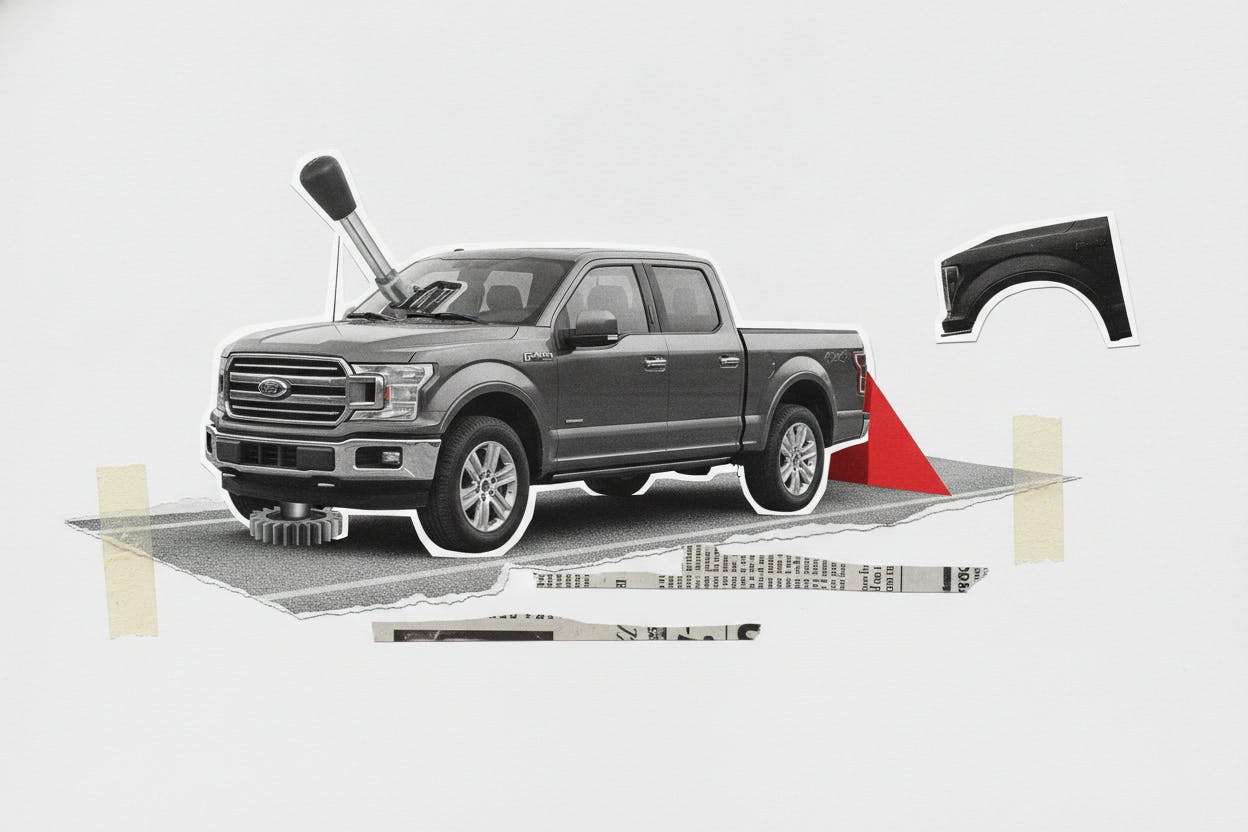
Ford Motor Company has announced a major recall of 741,195 vehicles in the United States after regulators identified a transmission defect that could prevent some models from staying securely in park, increasing the risk of unintended rollaways. The campaign, disclosed in filings with the National Highway Traffic Safety Administration (NHTSA), affects several of Ford's best-selling nameplates and underscores the ongoing tension between software-driven fixes and traditional hardware quality issues in modern vehicles.
Which Vehicles Are Affected and What's the Problem?
The recall covers certain 2018-2021 Ford Expedition and Explorer SUVs, 2018-2021 Lincoln Navigator and Aviator models, and 2021 F-150 pickups. These are among Ford's highest-volume and most profitable vehicles, making the scope of the recall significant for both owners and investors. The defect involves a transmission component that may fail to engage the park mechanism properly, potentially allowing the vehicle to roll away even when the driver believes it is safely parked.
Ford's remedy is tiered. Dealers will first install a free software update designed to address the underlying issue. If the update alone is insufficient, technicians will inspect the transmission and replace any damaged components at no cost to the owner. This two-step approach is common in modern recalls, where software patches can often resolve problems that might otherwise require costly hardware repairs. However, the inspection step introduces uncertainty: if many transmissions show physical damage, the per-vehicle cost could rise sharply.
Separately, Ford is recalling 36,046 Bronco SUVs in the US because the fender flares can detach while driving, posing a hazard to other road users. Dealers will inspect and, if necessary, repair or replace the flares for free. While smaller in scale, this recall highlights that traditional hardware quality issues persist even as the industry shifts toward software-defined vehicles.
What This Means for Investors
For investors, the 741,195-vehicle recall puts warranty costs front and center. Recalls typically flow through the income statement as higher warranty and recall expenses, which can pressure automotive operating margins, particularly in Ford's North America segment where these vehicles were sold. The key variable is the mix of repairs: if most owners only need the software update, the per-vehicle cost remains low—often just a few dollars for the dealer's time. But if a significant portion of transmissions fail inspection and require component replacement, the average cost could climb into the hundreds of dollars per vehicle, multiplying across nearly three-quarters of a million units.
Investors will be watching for whether Ford increases its warranty reserves in upcoming quarterly reports. An unexpected reserve build can dent earnings even if the long-term brand impact is limited. The speed of dealer throughput also matters: a slow repair process can delay revenue recognition and tie up service bay capacity, affecting profitability in the near term. Ford's ability to manage this recall efficiently will be a test of its operational discipline.
This recall comes amid a broader industry trend where software fixes are increasingly used to address safety issues. For example, NHTSA recently closed a probe into Tesla steering problems after the company issued a software recall covering 376,000 vehicles. NHTSA Closes Tesla Steering Probe After Software Recall Fixes 376,000 Cars. Similarly, automakers like Honda and Nissan are exploring standardization of car computers and software to reduce complexity and improve reliability. Honda and Nissan Near Deal to Standardize Car Computers, Software.
Despite the recall volume, Ford has shown resilience in quality perception. The automaker recently topped JD Power's initial quality rankings, even while leading the industry in total recall numbers. Ford Tops JD Power Quality Rankings Despite Leading in Recalls. That paradox suggests that while recalls grab headlines, they don't always translate into lasting consumer distrust—especially when the fixes are free and relatively painless.
Broader Context and What to Watch Next
The recall also highlights the growing role of software in automotive safety. As cars become more dependent on code, the line between a software bug and a hardware defect blurs. Ford's approach—starting with a software update and escalating to physical inspection—reflects this reality. It also raises questions about the long-term cost structure of vehicle ownership: if software can fix many issues remotely, warranty expenses may become more predictable. But when hardware damage is involved, the old economics of parts and labor still apply.
For everyday investors, the takeaway is that recalls are a normal part of the auto industry, but their financial impact varies widely. Ford's stock may see short-term volatility as the market digests the potential warranty hit, but the company's diversified lineup and strong brand loyalty provide a buffer. The real test will be how quickly and cost-effectively Ford can resolve the issue across its dealer network.
Investors should also keep an eye on NHTSA's ongoing oversight. Regulators are increasingly scrutinizing software-based fixes, as seen in the Tesla probe. Any indication that NHTSA demands more extensive hardware repairs could raise costs for Ford and the industry at large. For now, the focus remains on execution: can Ford turn this recall into a minor operational hiccup rather than a major profit drag?