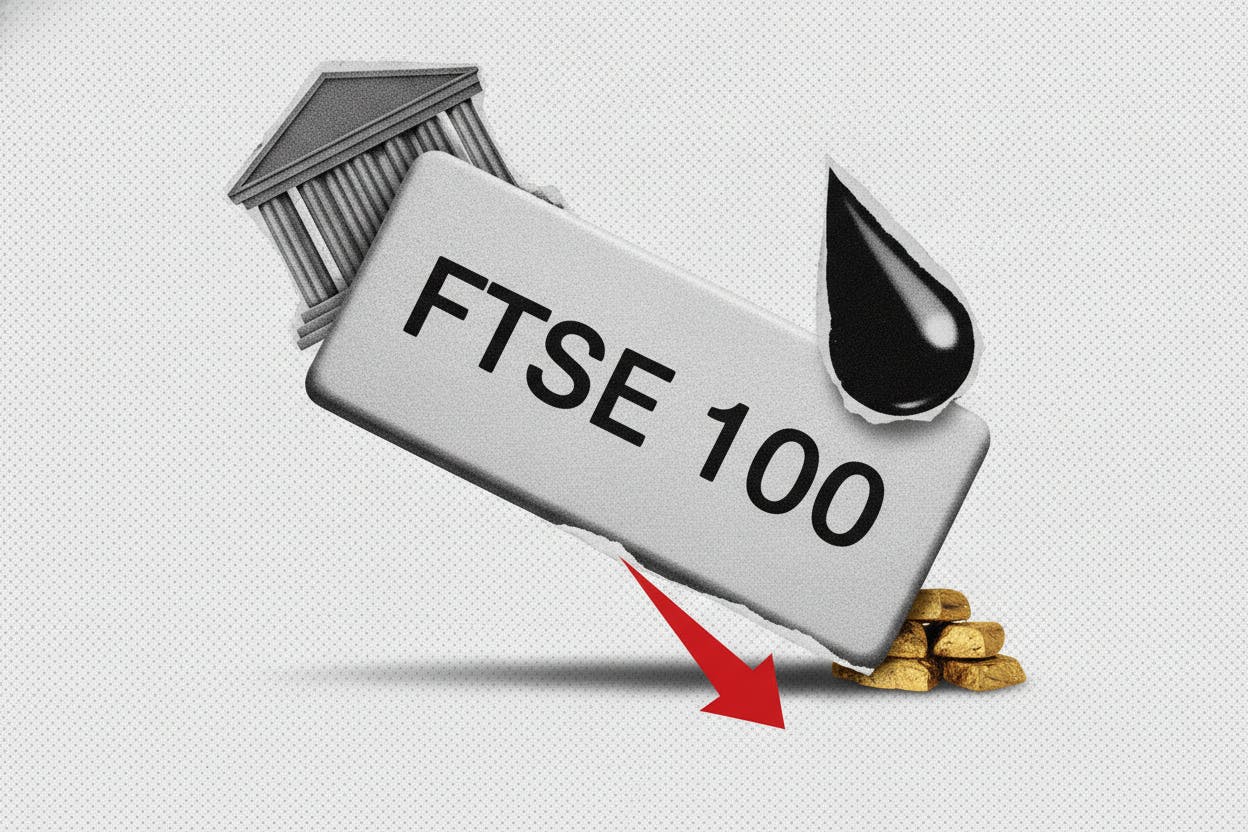
London's FTSE 100 slipped 0.2% on Friday, as falling oil prices and a slide in bank stocks outweighed strong gains from money-transfer firm Wise and a rally in gold miners. The day's moves highlight how a handful of heavyweight sectors can drive the UK's flagship index, even when other parts of the market are performing well.
Oil Drop Hits Energy Giants
Crude oil prices fell 2.3% after shipping through the Strait of Hormuz resumed, easing supply concerns that had pushed prices higher earlier in the week. The decline hit oil majors Shell and BP, both of which fell more than 0.9%. Because energy companies make up a large chunk of the FTSE 100, their share prices have an outsized impact on the index. When oil prices fall, investors typically expect lower future profits for these firms, since their earnings are closely tied to the price of crude.
This dynamic is a reminder that the FTSE 100 is heavily influenced by global-facing sectors. For context, a similar pattern played out in other markets: oil prices tumbled 3% as WTI fell below $70 in a recent session, and energy stocks were mixed in premarket trading. The Strait of Hormuz is a critical chokepoint for global oil shipments, and any disruption there can quickly move prices. Friday's resumption of traffic helped calm those fears, at least for now.
Bank Stocks Weigh on Sentiment
The banking sector was another drag, falling 1.4% on the day. Bank shares are sensitive to interest rate expectations, because rates affect how much lenders can earn on the gap between what they charge borrowers and what they pay depositors. When traders shift their views on where central bank rates are headed, bank stocks can move quickly. Friday's decline suggests investors are reassessing the path of interest rates, which also influences perceived loan losses and overall profitability.
This isn't unique to London. In Australia, for example, the ASX 200 was flat as miners rose and banks fell on RBA rate uncertainty. The broader point: bank stocks are often a bellwether for how the market views the economic outlook and monetary policy.
Bright Spots: Wise Surges, Gold Miners Climb
Not everything was down. Wise, the money-transfer firm, jumped 9.6% after reporting 21% growth in active customers, reaching 18.9 million, and announcing a new share buyback program. The strong customer growth signals that the company is gaining traction in the competitive cross-border payments space, and the buyback is a sign of confidence from management in the company's financial health.
Gold miners also had a good day, rising 2.5% as a weaker dollar supported gold prices. When the dollar falls, gold becomes cheaper for buyers using other currencies, which tends to boost demand and lift prices. That's good news for miners, whose revenues are tied to the price of the precious metal. This pattern has been seen before: gold miners rallied 5%+ as a weaker dollar lifted the TSX, while energy slipped on oil easing.
What It Means for Investors
Days like Friday are a useful reminder that the FTSE 100 is not a pure read on the UK economy. It is heavily influenced by a few global-facing sectors—energy, mining, and banking—that can move the index in ways that don't reflect the health of domestic businesses. When crude drops, energy giants can pull the whole benchmark down, even if other pockets are doing well. And when traders shift their expectations for where interest rates go next, bank shares can move quickly because rates affect profits and perceived loan losses.
The upshot: the headline FTSE 100 move can look weaker—or stronger—than what's happening across a wider mix of UK companies, including the more domestically focused FTSE 250. For everyday investors, this means it's worth looking beyond the headline index to understand what's really driving the market. A dip in the FTSE 100 doesn't necessarily mean all UK stocks are falling, and a rise doesn't mean everything is rosy.
Looking ahead, investors will be watching oil prices closely, especially given the ongoing geopolitical tensions that can affect supply routes like the Strait of Hormuz. They'll also keep an eye on central bank signals for clues about the direction of interest rates, which will continue to influence bank stocks and the broader market. For now, Friday's mixed session is a reminder that diversification—across sectors and geographies—remains a key principle for managing risk.