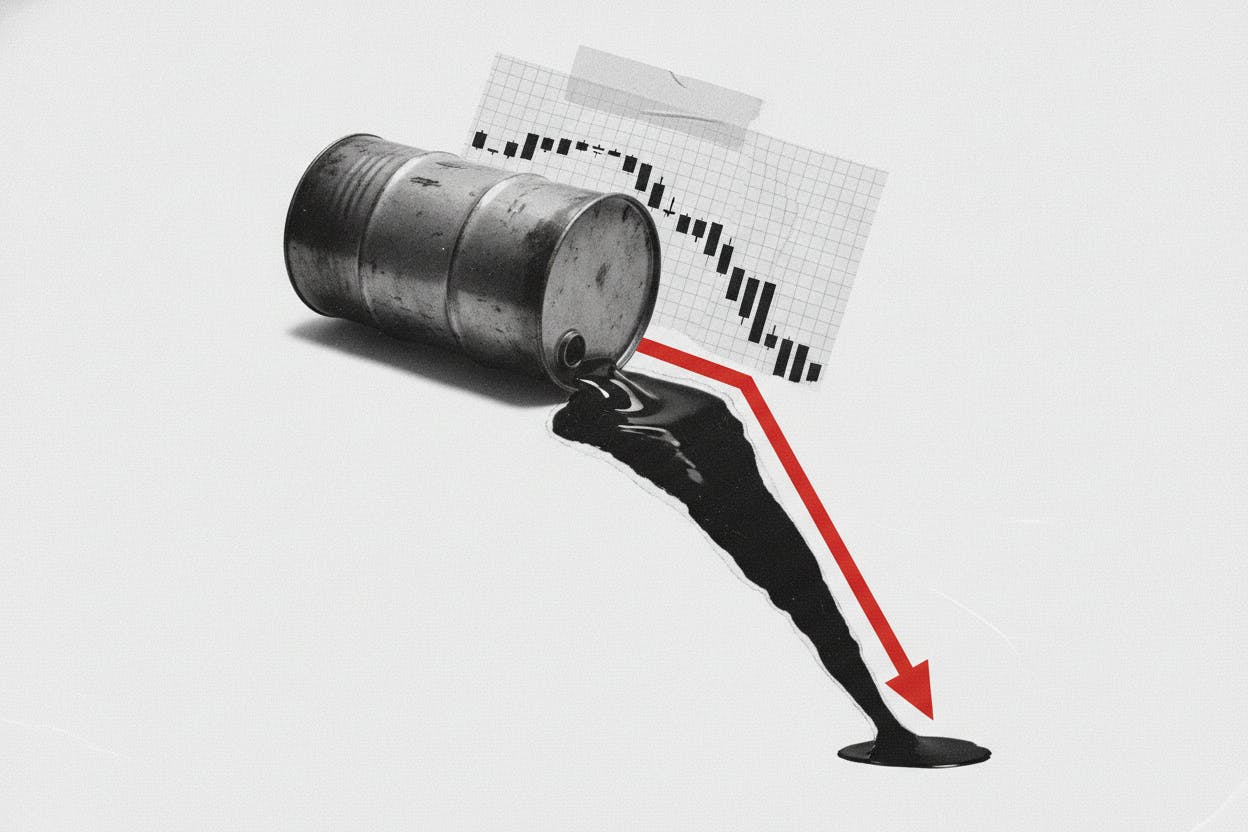
Oil prices took a sharp hit on Friday, sending crude below $70 a barrel for the first time in weeks and dragging energy stocks lower in premarket trading. West Texas Intermediate (WTI) crude fell 3.2% to $69.64 a barrel, while the global benchmark Brent crude slid 3.5% to $72.64. The move was broad but not uniform across energy-related assets, offering a clear lesson in how different types of energy investments respond to the same headline.
What drove the sell-off?
The drop in oil prices appeared to reflect a combination of demand concerns and easing supply fears. Recent data has pointed to slowing economic growth in major economies, which tends to reduce the outlook for oil consumption. At the same time, worries about potential disruptions to oil shipments through the Strait of Hormuz have eased, removing a key source of geopolitical risk that had been supporting prices. As we reported in Dubai Stocks Dip as Oil Retreats on Eased Strait of Hormuz Supply Fears, the relaxation of those tensions has weighed on crude markets across the region.
The pullback was swift and visible in products tied directly to crude. The United States Oil Fund (USO), a commodity fund designed to track the daily price of WTI, fell about 3% in premarket trading, closely mirroring the drop in the underlying commodity. That is by design: USO and similar exchange-traded funds (ETFs) are built to deliver returns that match the day-to-day moves in oil prices, making them highly sensitive to sudden swings.
Energy stocks: a different story
In contrast, the Energy Select Sector SPDR ETF (XLE), which holds a basket of major US energy companies such as Exxon Mobil and Chevron, was only about 0.4% lower in premarket trading. That gap is normal and instructive. While oil-tracking funds move almost one-for-one with the spot price, energy stocks reflect a company's expected profits over months and years, not just today's quote. Large integrated oil companies often have diversified revenue streams from refining, chemicals, and trading, as well as hedging programs that can smooth out the impact of short-term price moves. Dividends also provide a cushion, making the shares less volatile than the commodity itself.
Not everything in the energy sector moved lower. Natural gas futures rose 1.5% to $3.39 per million British thermal units, helping the United States Natural Gas Fund (UNG) gain 2.3%. This divergence highlights that energy is not a single asset class; different fuels respond to different supply-and-demand dynamics, and investors should be careful not to treat all energy investments as interchangeable.
Company-specific news adds noise
Individual company developments also contributed to the mixed picture. Norway's Equinor, a major energy producer, fell more than 1% after announcing it will end offshore wind activities in Japan and close its Tokyo office by year-end. The move underscores the challenges facing renewable energy projects, even as the broader energy transition continues. In Europe, France's TotalEnergies edged just 0.2% lower after a Paris court rejected a legal challenge that sought to block new oil and gas projects or force production cuts under France's duty of vigilance law. The case highlights how litigation risk can sit alongside commodity price swings as a factor for energy investors to watch.
What it means for investors
For everyday investors, Friday's action illustrates a key distinction between commodity funds and equity ETFs. When crude whips around, oil-tracking funds like USO typically mirror those day-to-day moves because they are built to follow oil prices as closely as possible. Energy-stock ETFs like XLE usually react less because their holdings earn money across months and years, and those profits can be cushioned by hedges, refining and trading businesses, and dividends. So a repeatable pattern shows up: in choppy oil markets, commodity funds can look much more volatile than broad energy equities. That performance gap matters for anyone comparing "energy exposure" across products, since the same headline move in oil can translate into very different results.
Investors should also note that broader market conditions are influencing energy stocks. As we covered in European Stocks Slip 1% as OpenAI IPO Delay Revives Tech Jitters, tech jitters have weighed on global equities, and energy shares are not immune to the overall risk-off mood. Meanwhile, Treasuries Rally as Tech Stocks Tumble in Asia; Nikkei Drops 4.5% shows that investors are rotating into safe-haven assets, which can further pressure commodity prices.
Looking ahead, oil markets will likely remain sensitive to economic data, geopolitical developments, and any signals from OPEC+ about production levels. For now, the message for investors is clear: not all energy exposure is created equal, and understanding the difference between commodity funds and equity ETFs is key to managing risk in a volatile market.