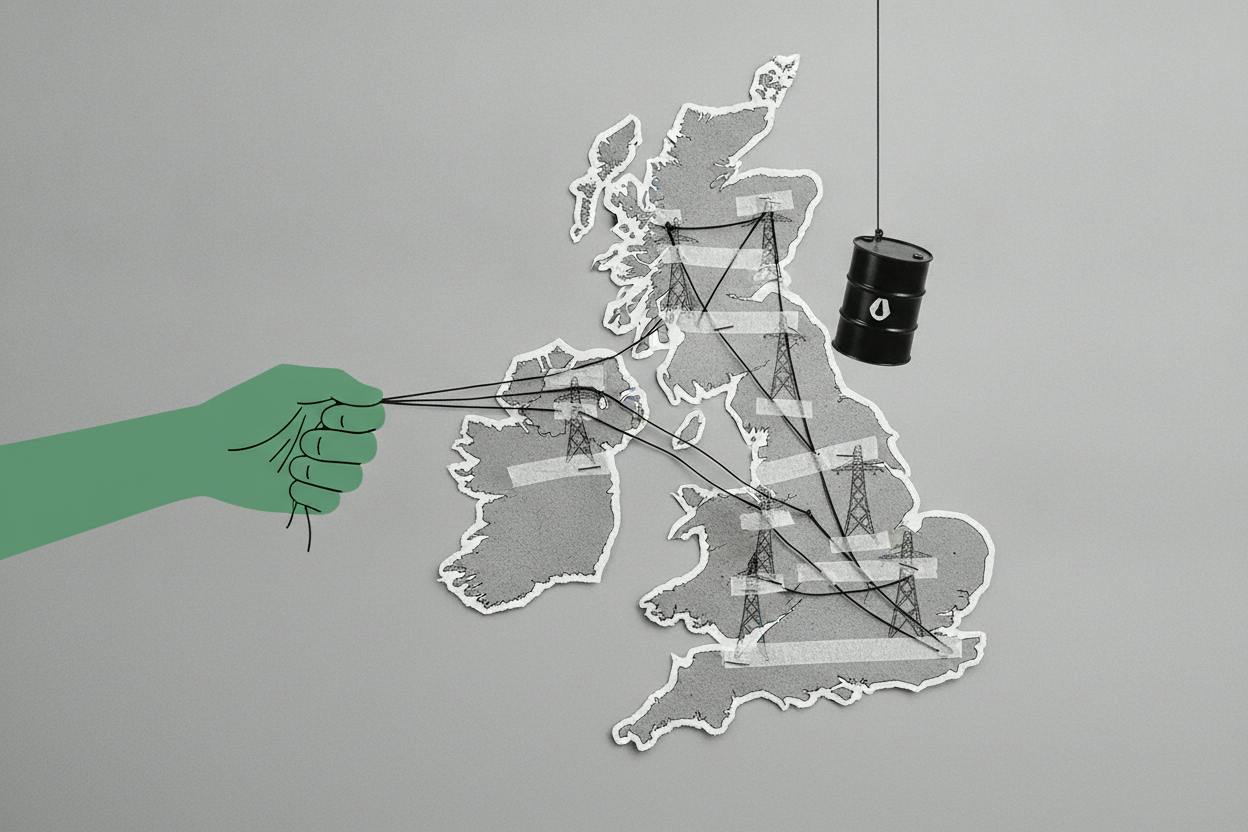
London's blue-chip index is poised to start Tuesday on a firmer footing, with FTSE 100 futures up 0.3% in early trading. The move comes as oil prices extended gains for a second session, driven by renewed concerns over potential supply disruptions from the ongoing US-Iran standoff, even as some regional exports show signs of recovery.
At the same time, UK politics has drifted back into the energy debate. At the Labour Party conference, delegates floated the idea of a publicly owned Great British Grid—a proposal that would nationalise the country's electricity transmission network. While the plan is still at the discussion stage, it adds a layer of uncertainty for investors in UK utilities and infrastructure.
Oil's double-edged impact on the FTSE
Crude prices have been climbing as traders weigh the risk that a worsening confrontation between Washington and Tehran could disrupt shipments from the Middle East, a region that accounts for a significant share of global supply. Even though some regional exports appear to be recovering, the market remains on edge.
For the FTSE 100, higher oil prices are often a net positive. The index is heavily weighted toward energy giants like Shell and BP, whose profits tend to rise with the price of crude. A stronger oil price can therefore lift the entire index, which is one reason futures are pointing higher this morning.
But the effect is not uniformly good. Businesses that depend on fuel, shipping, or petrochemicals face higher input costs, which can squeeze margins and weigh on their share prices. For the broader economy, sustained oil price rises can feed into inflation, complicating the Bank of England's efforts to bring price growth back to target. Investors may want to keep an eye on how energy costs ripple through corporate earnings in the coming quarters.
Labour's Great British Grid: what it could mean
Separately, the Labour conference has reignited a debate over the future of the UK's energy infrastructure. The proposal for a publicly owned Great British Grid would see the state take control of the transmission network that carries electricity from power stations to homes and businesses.
Nationalisation of this kind would be a major shift for the sector, potentially affecting the revenues and valuations of listed utilities and network operators. While the plan is not yet policy, markets often react to political signals, and any hint of increased state involvement can create uncertainty for investors in these companies.
It's worth noting that similar proposals have been floated in the past, and the practical hurdles—including compensation and operational complexity—are substantial. Still, the debate highlights how energy policy is becoming a more prominent factor in UK market sentiment.
What it means for investors
For everyday investors, the morning's moves offer a reminder of how intertwined global events and domestic politics can be with market performance. Oil prices are a key driver for the FTSE 100, and geopolitical tensions can create volatility that affects portfolios in both directions.
If you hold funds or ETFs that track the FTSE 100, a rise in crude prices may provide a short-term tailwind. But it's also worth considering the knock-on effects: higher energy costs can hit consumer-facing companies and increase inflationary pressure, which might influence interest rate decisions down the line. As we've noted before, inflation has remained stubbornly high, and energy prices are a key factor in that story.
Political developments, like the Labour grid proposal, are harder to price in. They tend to affect specific sectors rather than the whole market, but they can still create opportunities and risks. For now, the proposal is just an idea, but investors in UK utilities should watch how it develops.
Looking ahead, the market will be watching for any further escalation in US-Iran tensions, as well as the next set of economic data that could shape the Bank of England's policy path. As always, diversification and a long-term perspective remain sensible strategies for navigating these crosscurrents.