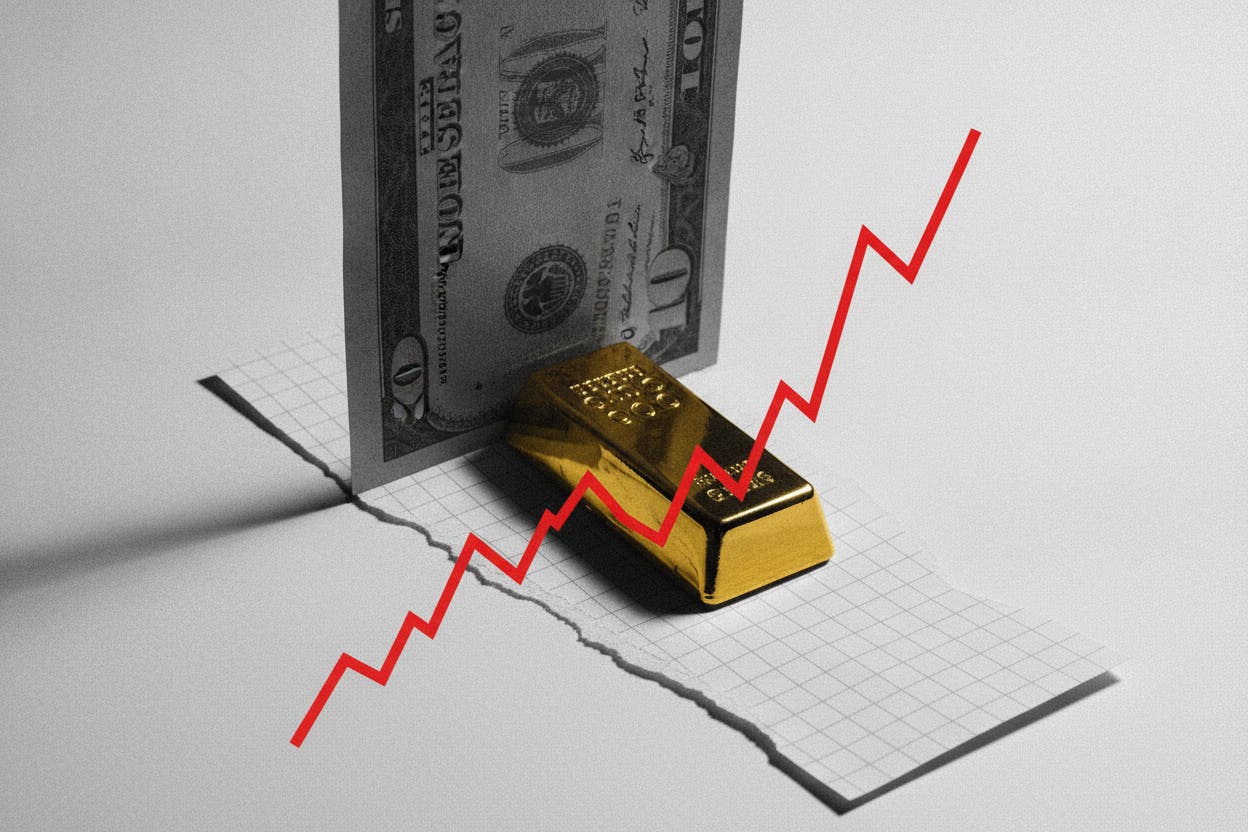
Gold prices tumbled on Tuesday, hitting their lowest level in nearly two weeks as a surging dollar and shifting expectations for Federal Reserve interest rate policy weighed on the precious metal. Spot gold fell 1.4% to $4,049.44 per ounce, extending losses that began after last week's Fed meeting.
What's Driving Gold Lower?
Two main forces are behind the move. First, the US dollar climbed to a 13-month high, making gold more expensive for buyers using other currencies. Second, traders have repriced their expectations for Fed rate hikes: the CME FedWatch tool now shows markets pricing in three quarter-point rate increases this year, up from just one a week ago.
Higher interest rates are a headwind for gold because the metal pays no interest or dividends. When rates rise, the opportunity cost of holding gold increases, as investors can earn a return from cash or short-term Treasury bonds instead. This dynamic is captured in "real yields" — the return on bonds after accounting for inflation — which have moved sharply higher since the Fed meeting.
According to Reuters, bullion has now fallen more than 4% since the Fed's latest policy decision. UBS analyst Giovanni Staunovo noted that weak investor demand, visible in declining holdings of gold-backed exchange-traded funds (ETFs), is adding to the pressure.
Broader Market Context
The dollar's strength is not just affecting gold. Other commodities have also come under pressure, with copper heading for a weekly drop as a strong dollar and tariff jitters reshuffle inventories. The greenback's rally has been broad-based, also weighing on currencies like the Australian and New Zealand dollars.
Investors are also watching developments in US-Iran nuclear talks, which could affect geopolitical risk premiums in gold and oil markets. Any progress toward a deal might reduce safe-haven demand for gold, while a breakdown could provide some support.
What It Means for Investors
For everyday investors, the key takeaway is that gold's near-term direction is heavily tied to interest rate expectations and the dollar. When markets anticipate more rate hikes, gold typically struggles. This relationship has been on full display since the Fed meeting, with gold acting almost like a "real-yield readout" — moving in lockstep with changes in inflation-adjusted bond yields.
The next major test for gold comes Thursday, when the US releases its Personal Consumption Expenditures (PCE) price index — the Fed's preferred inflation gauge. A higher-than-expected reading would likely reinforce the "higher-for-longer" rate narrative, keeping downward pressure on gold. A softer reading, however, could undercut the rate hike bets that have been weighing on bullion and potentially trigger a rebound.
It's worth noting that not all forces are negative for gold. Central bank buying has remained steady in May, according to data cited by Reuters, and that could offer some support beyond the very near term. However, central bank purchases tend to be slow-moving and are unlikely to offset the rapid repricing happening in futures markets.
For context, this is not the first time gold has faced headwinds from a strong dollar and rate hike expectations. Earlier this year, gold headed for a fourth weekly drop under similar conditions. The pattern is well-established: when the dollar rallies and rate bets shift, gold tends to take the hit.
Looking Ahead
Thursday's PCE data will be crucial. If it confirms that inflation remains sticky, the case for three rate hikes this year will strengthen, and gold could test lower levels. If it surprises to the downside, the recent sell-off could pause or reverse.
Investors should also keep an eye on the dollar index and real yield movements, as these will likely continue to drive gold's day-to-day action. While geopolitical events and central bank buying provide some floor, the dominant force for now is the repricing of Fed policy — and that suggests more volatility ahead.