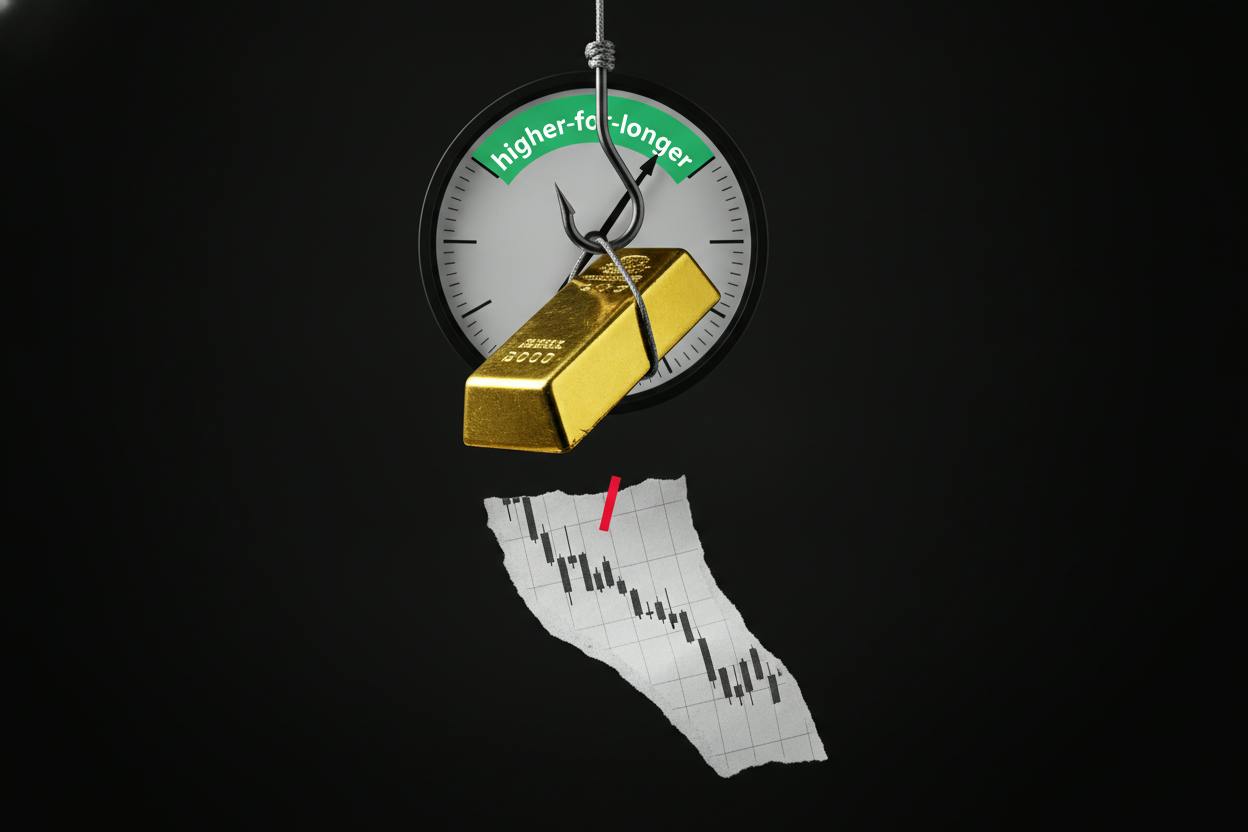
Gold prices held their ground near $3,567 an ounce on Tuesday, as investors weighed the prospect of another Federal Reserve rate increase against persistent physical demand for the metal. The steadiness comes after a strong US inflation reading reinforced expectations that the central bank will tighten policy again in December.
For everyday investors, the key takeaway is that gold is caught in a tug-of-war. On one side, higher interest rates make cash and short-term bonds more attractive, which tends to weigh on gold. On the other, real-world buying—especially from China—is helping to put a floor under prices.
Why higher rates pressure gold
Gold is a unique asset because it doesn't pay interest or dividends. When you hold bullion, your return depends entirely on price changes. That puts it in direct competition with assets that do generate income, like Treasury bills or high-yield savings accounts.
When investors expect the Fed to raise its benchmark rate, yields on those cash-like investments tend to climb. That raises what economists call the “opportunity cost” of holding gold—the income you give up by parking money in a metal that just sits there. As a result, rate hike expectations can act as a headwind for gold, even if prices don't drop immediately.
According to the CME FedWatch Tool, markets are currently pricing in a 66% chance of a larger half-point rate increase in January, on top of a widely expected quarter-point move in December. That suggests the Fed's “higher-for-longer” stance could persist well into next year.
Equity weakness could add pressure
HSBC, a global bank, notes that ongoing weakness in stock markets could add further pressure on gold, potentially dragging it below $3,400 an ounce. The reasoning: during stressful selloffs, investors sometimes need to raise cash quickly, and they often sell whatever is most liquid—including gold. That can temporarily break the metal's usual safe-haven status.
This is a crucial point for diversification. Many investors turn to gold as a hedge against stock market turbulence, but in a sharp downturn, gold can fall alongside equities as traders meet margin calls or cut risk. That's not a forecast, but a level to watch if rate expectations stay high while stocks remain shaky.
Physical demand provides a floor
One counterweight to these pressures is physical demand. China's net gold imports via Hong Kong rose 1.6% in October from September, reaching the highest level since April. That suggests real-world buyers—jewelers, investors, and central banks—are stepping in to take advantage of any price dips, which can slow or limit a pullback.
This kind of demand is often less sensitive to interest rate moves than financial investors. It's driven by cultural traditions, industrial use, and long-term wealth preservation, making it a stabilizing force in the market.
What it means for investors
For those holding gold as part of a diversified portfolio, the current environment requires patience. The simple math works against bullion when rates are rising: cash and short-term Treasuries pay more, while gold's return relies mainly on price appreciation.
But the bigger risk is timing. If you're using gold to hedge against stock market declines, be aware that in a sudden selloff, gold can briefly lose its safe-haven glow. That's why financial advisors often suggest keeping gold allocations modest—typically 5% to 10% of a portfolio—and focusing on the long term rather than trying to time short-term moves.
For those considering adding to gold positions, the current price level near $3,567 is a balancing point. If the Fed's rate path keeps getting reinforced, gold could test lower levels. But if physical demand remains strong, it may continue to find support.
As always, it's wise to keep an eye on upcoming Fed meetings and inflation data. The next policy decision is scheduled for December, and any surprises could quickly shift the outlook for gold and other assets.
In related news, oil prices slipped as traders balanced geopolitical risks against supply expectations, and Gulf stocks held steady amid shipping concerns. Meanwhile, South African producer inflation jumped, and Ghana's cedi weakened further, highlighting broader emerging market pressures.