Gaztransport & Technigaz (GTT) reported half-year results that looked flat on the surface, but the underlying picture is far more encouraging. The French engineering firm, which designs the containment systems used to transport and store liquefied natural gas (LNG), secured 65 new orders during the period, pushing its order book to a record €1.9 billion. That backlog gives the company revenue visibility stretching beyond 2029, a rare luxury in most industries.
GTT is not a household name, but it plays a critical role in the global energy supply chain. Nearly every LNG carrier and storage facility relies on its patented membrane technology to keep gas at extremely low temperatures. As the world shifts toward natural gas as a cleaner alternative to coal and oil, demand for LNG shipping and storage has grown steadily. GTT earns royalties and engineering fees on each new vessel built, so its order book is a direct gauge of future LNG infrastructure investment.
Why the order book matters more than revenue
Investors often focus on headline revenue, but for a company like GTT, the order book is the more telling metric. Revenue reflects work completed in the past six months, while the order book represents future work already contracted. A record backlog means GTT has a clear pipeline of projects that will generate income for years to come, reducing uncertainty about future earnings.
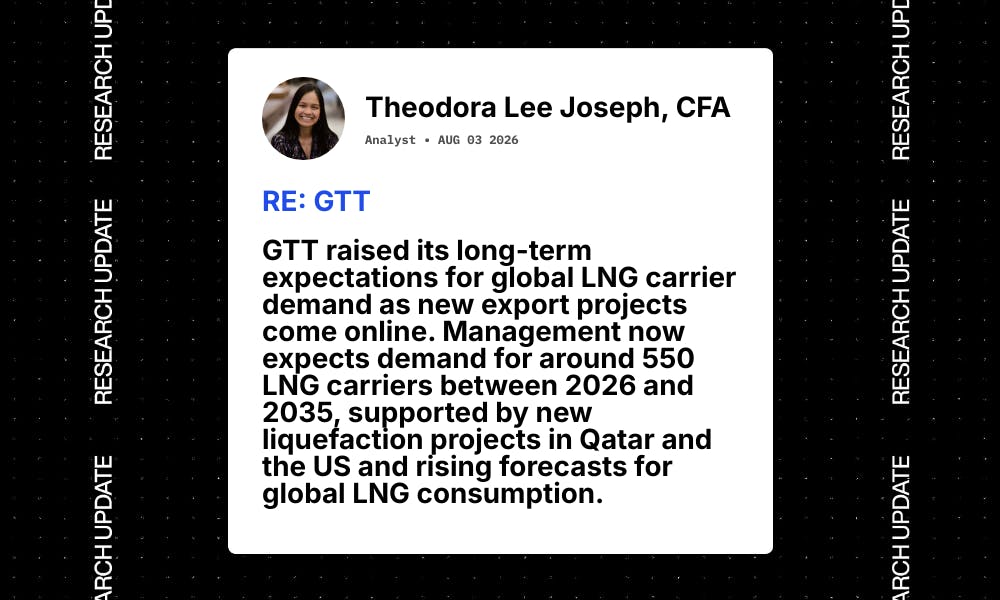
The 65 new orders secured in the half-year span a range of vessel types, including LNG carriers and floating storage units. This diversification helps smooth out volatility in any single segment. The company also raised its long-term expectations for global LNG carrier demand, citing new export projects coming online. Management now expects demand for around 550 LNG carriers between 2026 and 2035, supported by new liquefaction projects in Qatar and the US and rising forecasts for global LNG consumption.
That upgraded outlook is significant. It suggests that the recent wave of LNG project approvals is not a one-off but part of a sustained multi-year expansion. For GTT, each new carrier represents a potential contract, so a higher demand forecast directly translates into a larger addressable market.
What this means for investors
For everyday investors, GTT's results offer a window into the health of the global LNG trade. The company's order book is a leading indicator for the broader LNG shipping industry. When GTT is busy, it usually means shipyards are building more carriers, which in turn reflects confidence in future LNG demand.
The raised demand forecast also aligns with broader trends in the energy sector. As Europe and Asia seek to reduce reliance on pipeline gas and coal, LNG imports have become a strategic priority. The US and Qatar are both expanding export capacity, and those projects will require a fleet of new carriers to move the gas to market. GTT is well positioned to benefit from that build-out, as its technology is the industry standard.
However, investors should be aware of the cyclical nature of the business. LNG shipping demand can be volatile, and order books can shrink if energy prices fall or if projects are delayed. GTT's record backlog provides some cushion, but it does not guarantee future growth indefinitely. The company's fortunes are tied to the pace of global LNG project development, which can be affected by regulatory changes, geopolitical tensions, and shifts in energy policy.
That said, the current outlook is robust. The company's raised demand forecast for LNG carriers through 2035 suggests that management sees a long runway of growth. For investors looking to gain exposure to the energy transition without directly owning oil or gas producers, GTT offers a way to play the infrastructure side of the LNG boom.
Other companies in the shipping and energy space are also seeing stronger demand. For example, Mitsui OSK Lines raised its profit forecast on stronger shipping demand, and Engie lifted its full-year guidance after a stronger-than-expected first half. These moves underscore the broader strength in energy and shipping markets.
GTT's record order book is a clear sign that the LNG industry is entering a period of sustained investment. For investors, the key takeaway is that the company's growth story is not just about the past six months but about the next decade. With revenue visibility beyond 2029 and a raised demand forecast, GTT looks well placed to benefit from the global push for cleaner energy.
As always, it's important to consider how any single stock fits into a diversified portfolio. GTT's performance is tied to the LNG cycle, which can be unpredictable. But for those willing to accept that risk, the company's latest results offer a compelling reason to stay invested.