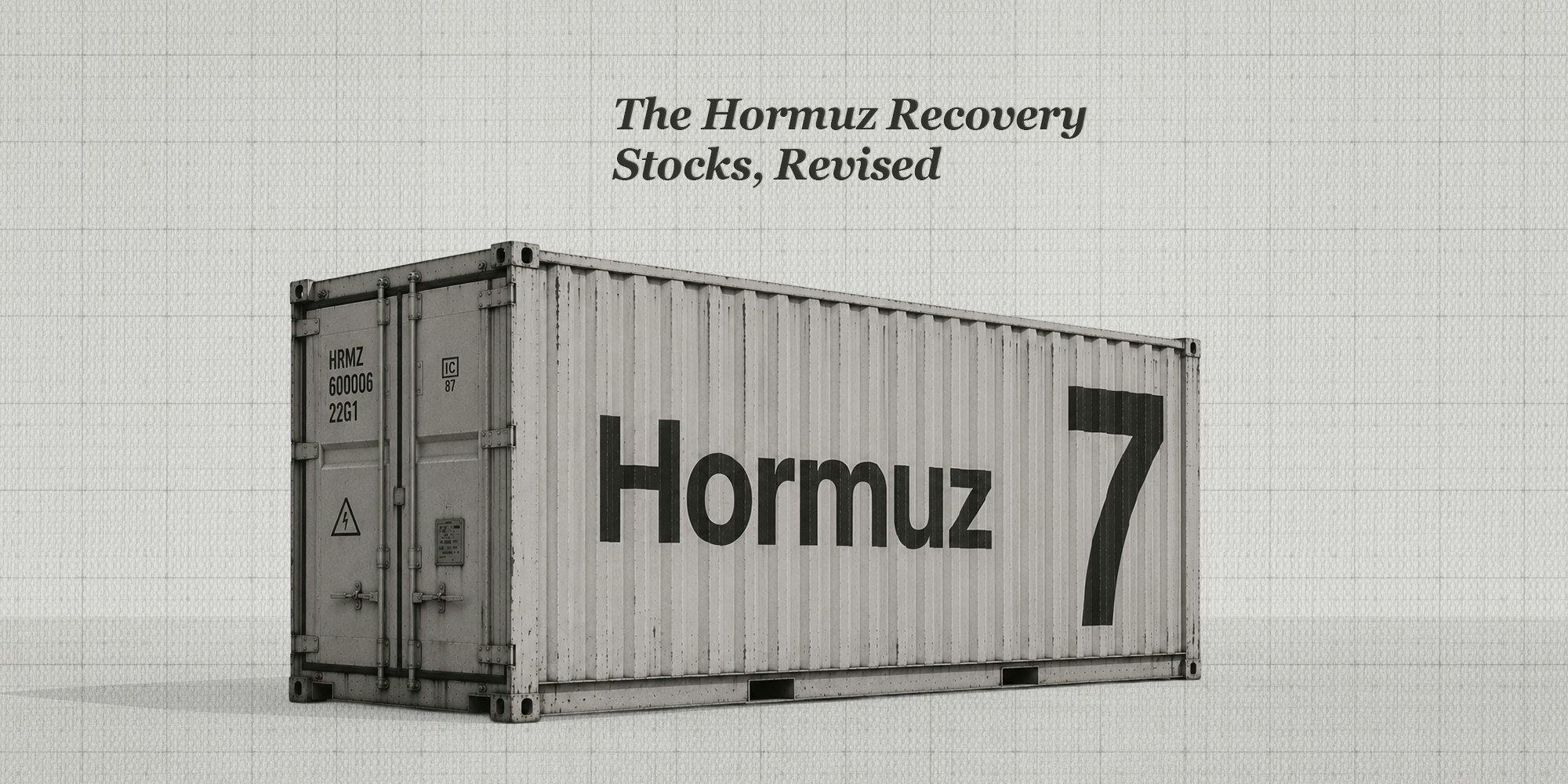
Almost two months ago, the Finimize Hormuz Recovery Basket was launched with eight stocks that had been battered by the war in Iran, surging energy prices, supply-chain disruptions, inflation, and rising interest-rate expectations. The idea was simple: if a ceasefire took hold, energy prices would fall, inflation would ease, supply chains would unclog, and those hard-hit stocks would have room to recover. Before the conflict, all eight companies were up for the year, so a return to normalcy seemed promising.
The basket started as a half-sized position on May 26, when a peace deal was still uncertain. By mid-June, as the ceasefire looked more durable—tankers were moving again, oil had fallen back toward pre-war levels—the position was increased to full size. The original investment case appeared to be playing out nicely.
Then last week, Iran and the US resumed strikes, and energy prices once again moved higher. Seven weeks can feel like a long time in these markets, especially when missiles, oil tankers, and central banks are involved. So it’s a good moment to see how the basket has fared, revisit the broader economic forces, and decide which stocks still deserve their place.
Part 1: The Big Picture
Brent crude was trading at roughly $71 a barrel at the end of February, before the war broke out. By early May, it had climbed to $113. Then the ceasefire took hold, and the picture improved. In early July, Saudi crude exports moved back to roughly 90% of their pre-war level. The total daily oil flow through the Strait of Hormuz popped back above ten million barrels. On one particularly encouraging day, 35 oil and gas tankers exited the waterway—the first time traffic had returned to its normal pre-war range. Brent responded by falling all the way back to $71.
Unfortunately, that state of affairs didn’t last. The renewed strikes have pushed oil prices back above $80, and the uncertainty has returned. For investors, this means the original thesis—that a ceasefire would lead to a sustained recovery in beaten-down stocks—is now on shakier ground. The broader market has also been volatile, with oil prices jumping to $80+ but energy stocks staying flat, a sign that investors are still weighing the risks.
What’s Staying, What’s Going, and What’s Joining
The basket is being revised to reflect the new reality. Stocks that were heavily dependent on lower energy prices and smoother supply chains are being re-evaluated. Some companies that had strong fundamentals before the war—and that have shown resilience during the ceasefire—are staying in. Others that were more speculative or tied to a quick normalization are being removed.
New additions are being considered that could benefit from the current environment, such as those with pricing power or exposure to sectors less sensitive to oil price swings. The goal is to maintain a basket that can still recover if tensions ease again, but that also has some downside protection if the conflict drags on.
What It Means for Investors
For everyday investors, this situation highlights the risks of betting on geopolitical outcomes. The original Hormuz Recovery Basket was a bet on peace, and for a few weeks, it looked like a smart one. But as the conflict has flared again, the basket’s performance has been mixed. Investors should remember that such events are inherently unpredictable, and that diversification across sectors and geographies can help cushion the blow.
The broader economic backdrop also matters. Higher oil prices can feed into inflation, which in turn affects interest-rate expectations. Central banks have been watching energy costs closely, and a sustained spike could delay rate cuts. That would hit growth stocks particularly hard, as higher rates reduce the present value of future earnings. Meanwhile, supply-chain disruptions could weigh on companies that rely on imports through the Strait of Hormuz, such as those in the chemicals and manufacturing sectors.
For those following the basket, the key is to stay disciplined. The revised basket will be smaller and more focused, with a clearer view of which companies can weather the storm. As always, no single stock or basket is a sure thing—but understanding the forces at play can help investors make more informed decisions.