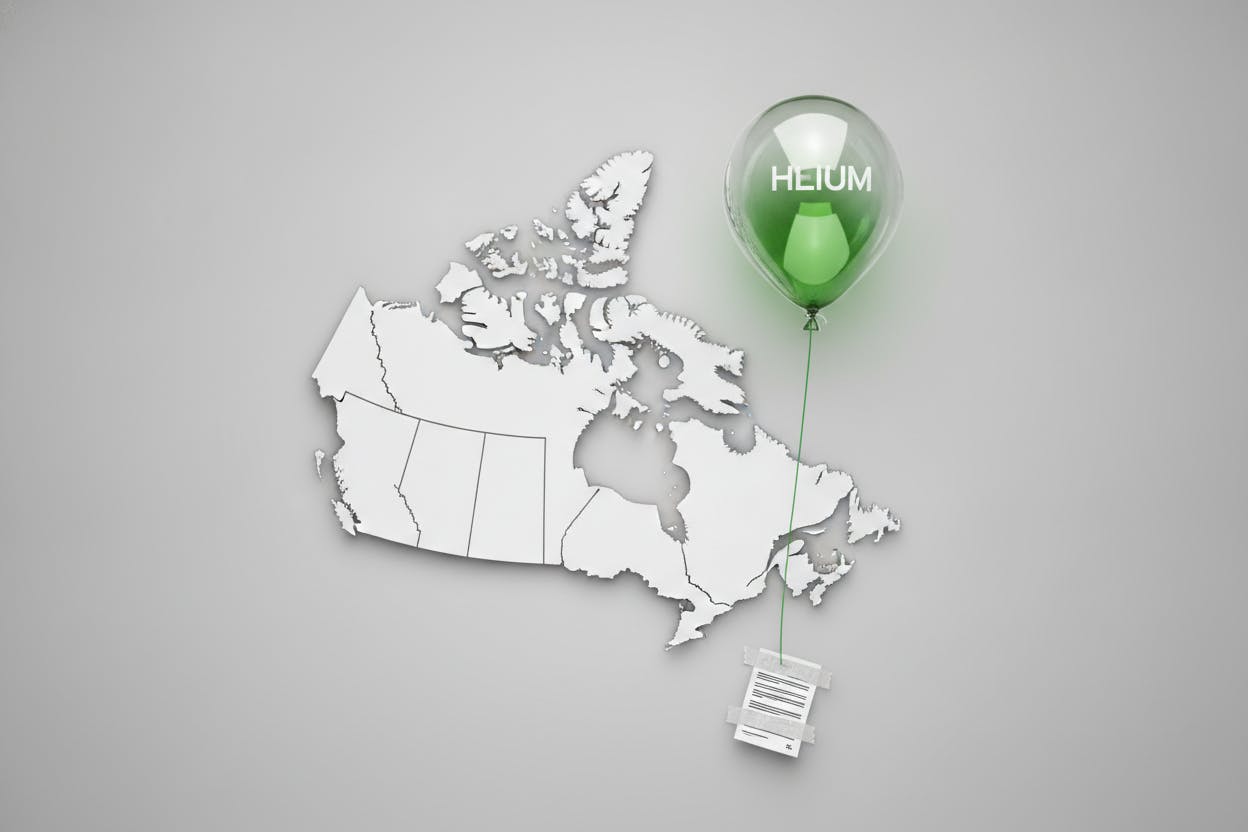
Higher helium prices are prompting a fresh look at Canada's helium potential, with TD Economics flagging Alberta and Saskatchewan as unusually rich sources of the niche gas. The research arm of Canadian bank TD says Canada has the world's fifth-largest potential primary helium reserves, and that its deposits are often higher grade than elsewhere.
What is Helium and Why Does It Matter?
Helium is a colorless, odorless gas best known for filling party balloons, but its industrial uses are far more critical. It is essential for cooling MRI machines, as a shielding gas in welding, and—most importantly—in semiconductor manufacturing. Helium helps create the inert atmosphere needed to produce microchips, and there are few easy substitutes. This makes it a strategically important resource, especially as demand for chips continues to grow with the rise of artificial intelligence and other technologies. For context, the growing complexity of AI chips has put pressure on the entire supply chain, as noted in our recent article on Arteris Gets a Fresh Look as AI Chips Get More Complex.
Canada's Geological Advantage
According to TD Economics, Canadian helium resources average about 1% concentration, compared to roughly 0.1% globally. That means more helium per unit of gas processed, which can significantly lower production costs. The firm also notes that some Canadian deposits sit alongside nitrogen rather than methane, which can reduce exposure to natural gas price swings and may lower production emissions. This is a key advantage for developers, as it makes projects more predictable and potentially more environmentally friendly.
This geological edge matters for Saskatchewan's ambition to supply 10% of global usable helium demand by 2030. Scaling output over the next three to five years will hinge on turning these geological advantages into reliable, financeable projects.
What It Means for Investors
For everyday investors, the story here is less about helium prices themselves and more about the business model behind production. A higher helium grade means a better yield: producers can get more saleable helium from each unit of gas a plant handles, which can improve unit costs and make volumes more predictable. That predictability is key for big buyers like chipmakers, who need steady deliveries of a hard-to-replace input and often prefer long-term supply deals.
For developers, those multi-year offtake contracts—agreements where customers commit to buying set volumes—can be what convinces lenders that future cash flows are dependable enough to fund new processing and export capacity. So the big test for projects in Alberta and Saskatchewan is less whether prices stay elevated, and more whether producers can sign contracts that underwrite build-outs within TD's next-three-to-five-year window. If they do, Saskatchewan's 2030 share goal looks more like an execution challenge than a geological one.
Broader Market Context
The renewed interest in Canadian helium comes at a time when commodity markets are seeing mixed signals. While oil prices have jumped recently, energy stocks have remained flat, as we covered in Oil Prices Jump to $80+ but Energy Stocks Stay Flat: What Investors Missed. Meanwhile, the broader economic backdrop remains uncertain, with the Bank of Canada expected to hold rates steady until 2027, according to a recent UBS forecast (UBS Predicts Bank of Canada Will Hold Rates Until 2027 Amid Economic Slack). This low-rate environment could make financing for new helium projects more attractive, as borrowing costs remain manageable.
What to Watch Next
Investors should keep an eye on any announcements of offtake agreements from Canadian helium producers. If major chipmakers or industrial gas companies sign long-term contracts, it would signal that the projects are moving from exploration to production. Also watch for updates from Saskatchewan's government on its 10% target, as policy support could accelerate development. For now, the key question is whether Canada's geological riches can translate into commercial success—and that depends on the deals yet to be signed.