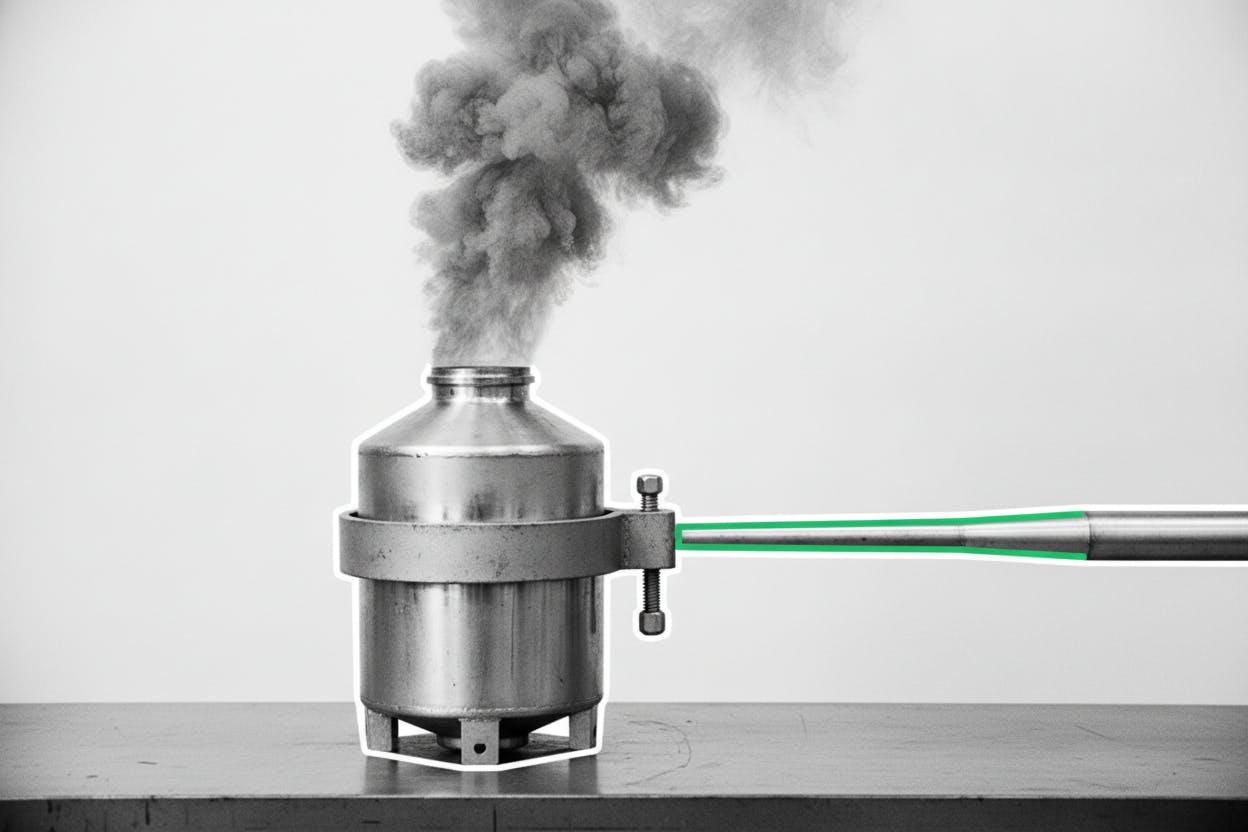
HPQ Silicon (HPQ) has announced that its fumed silica reactor (FSR) has moved past the pilot validation stage and into project-specific engineering, a key step toward commercial deployment. The milestone follows a review by partner PyroGenesis, a Canadian industrial technology company, which confirmed the pilot operating results and the projected economics of the technology.
Fumed silica is a fine, powdery material used as a thickening agent and reinforcing filler in products like silicone sealants, paints, adhesives, and even pharmaceuticals. HPQ's reactor aims to produce it more efficiently and with lower environmental impact than conventional methods. The shift from pilot to project-specific engineering means the focus is now on designing a real-world installation: locking down costs, timelines, and equipment specifications for an industrial plant.
From Pilot to Plant: What the Engineering Phase Means
Pilot validation answers the question, “Does the technology work?” Project-specific engineering asks, “How do we build it at scale?” This is where the rubber meets the road for any emerging industrial process. HPQ says PyroGenesis completed an engineering review of the pilot data and is now confident the numbers hold up at commercial scale. That confidence is critical because it reduces the risk that the technology will fail when deployed in a real factory.
The partnership between the two companies is also deepening. PyroGenesis is in the final stages of buying a 50% stake in HPQ Silica Polvere (HPSI), the subsidiary that holds the fumed silica technology. Under the arrangement, PyroGenesis will remain the exclusive supplier of the equipment used to commercialize the reactor. That means the same company that validated the technology will also build and supply the hardware for every future installation.
Next up, HPQ and HPSI plan to continue discussions with multiple industrial players while completing the project-specific engineering needed to support signed deployment agreements. The goal is to move from engineering packages to actual equipment orders with clear timelines.
What It Means for Investors: Concentration of Risk and Reward
For investors tracking HPQ Silicon, the news shifts the narrative from “does the tech work?” to “can this one vendor deliver bankable designs and hardware on schedule?” PyroGenesis’ planned 50% stake in HPSI concentrates the rollout path. When the same partner is both a co-owner and the sole equipment supplier, the market’s focus naturally turns to execution.
On the positive side, this alignment reduces the potential for finger-pointing if projects hit snags, because PyroGenesis shares directly in the upside of scaling. Both companies have a strong incentive to make the technology work. But it also concentrates execution risk and pricing power at the equipment layer. Every deployment depends on one supplier’s manufacturing capacity, delivery timing, and commercial terms. If PyroGenesis faces production bottlenecks or pricing disputes, the entire rollout could slow.
So the next catalysts for HPQ are less about more pilot headlines and more about the first project-specific engineering packages translating into signed industrial deployments and, eventually, equipment orders with clear timelines. Investors will want to watch for announcements of specific customers, project locations, and delivery schedules.
This kind of technology transition is common in the industrial sector, where a promising pilot must survive the “valley of death” between lab-scale success and commercial viability. The engineering phase is where many technologies stumble, but it is also where the most value can be created if the numbers hold up. For a broader look at how companies navigate such transitions, see our coverage of Golden Horse's resource estimate progress and FireFly Metals' economic studies.
Meanwhile, the broader market backdrop for industrial commodities remains mixed. Oil prices have been volatile, as noted in our recent report on oil's worst quarter since 2020, but demand for specialty materials like fumed silica is tied more to manufacturing and construction activity than to energy prices. Investors should also keep an eye on the European stock rally, which could signal improving industrial demand in key markets.
In summary, HPQ Silicon's fumed silica reactor has taken a meaningful step toward commercialization, but the real test lies ahead. The engineering phase will determine whether the technology can deliver on its promise, and the concentrated partnership structure means all eyes will be on PyroGenesis' ability to execute. For everyday investors, this is a story to watch for concrete milestones rather than speculative hype.