Huawei has unveiled its latest flagship smartphones, the Mate 90 series, marking another step in the company's long-running effort to compete in high-end devices despite strict US export controls on advanced semiconductors. The new phones run on HarmonyOS 7 and feature a Kirin 9050 Pro chip that Huawei says delivers more performance—even as China's access to cutting-edge chip manufacturing remains tightly constrained.
The launch is more than just a product release. It's a stress test of Huawei's ability to innovate under pressure, and a signal of how Chinese tech firms are adapting to a world where they can't simply buy the most advanced chips or the tools to make them.
What is 'LogicFolding'?
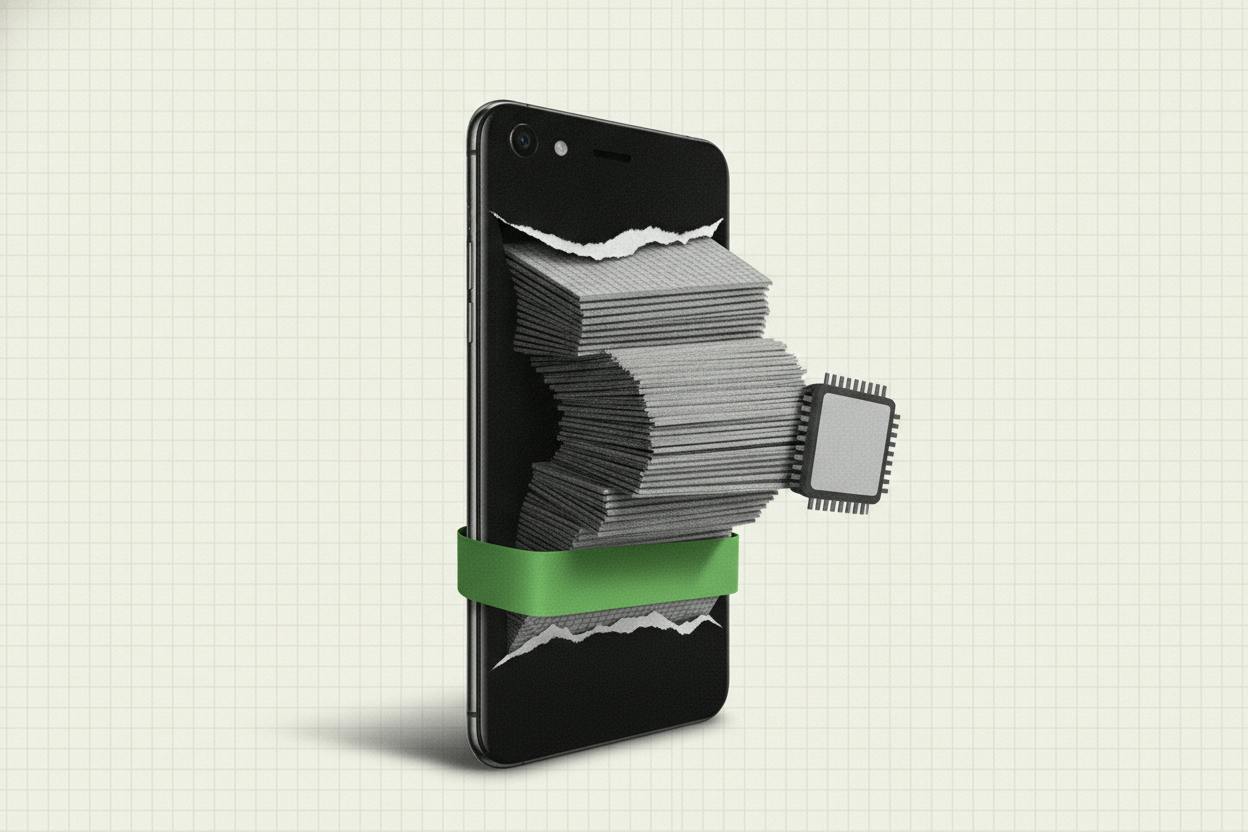
According to a Reuters report, the Kirin 9050 Pro uses a technique Huawei calls “LogicFolding.” In simple terms, it's a 3D-style rewiring approach that stacks or folds circuitry in a way that packs more transistors into a given space than a traditional flat, two-dimensional layout. This allows the chip to deliver higher performance without needing the most advanced manufacturing process—something that US restrictions have made difficult for Chinese companies to access.
Think of it like building a house: if you can't get the biggest plot of land (the most advanced fabrication plant), you build upward instead of outward. LogicFolding is an attempt to do exactly that at the microscopic scale of a computer chip.
The catch, as the report notes, is that this technique reportedly comes with trade-offs—likely in terms of heat, power consumption, or manufacturing complexity. But for Huawei, the goal is to squeeze as much performance as possible out of the tools and materials that China can still obtain.
The bigger picture: US-China chip war
Huawei has been at the center of the US-China technology rivalry since 2019, when the US placed the company on its Entity List, restricting its access to American technology. Subsequent rules have targeted the entire Chinese semiconductor supply chain, limiting exports of advanced chipmaking equipment and certain high-end chips.
Despite these hurdles, Huawei has continued to release new phones. Its previous Mate series, launched in 2023, surprised many by featuring a chip made by China's SMIC using older technology. The Mate 90 appears to push that strategy further, relying on design innovation rather than manufacturing breakthroughs.
This is part of a broader trend in China's tech industry. Other companies are also exploring ways to work around US restrictions, such as open-source tools that challenge Nvidia's CUDA software, which could help reduce dependence on US-designed ecosystems.
What it means for investors
For everyday investors, the Mate 90 launch is a reminder that the US-China chip battle is far from over—and that companies on both sides are adapting.
First, consider the competitive landscape. Huawei's continued presence in the premium smartphone market puts pressure on Apple and other high-end phone makers. If Huawei can deliver competitive performance with domestically produced chips, it could erode Apple's market share in China, a key growth market. Investors in Apple and its suppliers should watch how the Mate 90 is received by consumers.
Second, the chip industry itself is being reshaped. US export controls have forced Chinese companies to innovate in design, which could eventually lead to new technologies that challenge US dominance. This is a long-term risk for US chip equipment makers like Applied Materials and Lam Research, which have already seen their sales to China shrink due to export rules.
Third, for investors in semiconductor stocks broadly, this story highlights the importance of geopolitical risk. Supply chains that once seemed stable are now subject to sudden policy shifts. Companies that can adapt—whether through design innovation or by diversifying supply chains—may be better positioned than those that rely on a single source of technology.
It's also worth noting that Huawei's push into AI and software, including its HarmonyOS operating system, could have implications beyond phones. As China seeks to build its own tech ecosystem, companies that provide components, software, or services to that ecosystem could see new opportunities.
What to watch next
Investors should keep an eye on a few things in the coming months:
- Consumer reception: How well the Mate 90 sells in China and abroad will be a key indicator of whether Huawei's chip strategy is working.
- Supply chain developments: Any changes in US export policy, or new breakthroughs in Chinese chip manufacturing, could shift the balance.
- Competitor responses: Apple's next iPhone cycle and other Android makers' moves will show how the market reacts to Huawei's continued presence.
The Mate 90 is not just a phone—it's a test of whether design ingenuity can overcome manufacturing limits. For investors, it's a window into the future of the global chip industry, where geopolitics and innovation are increasingly intertwined.