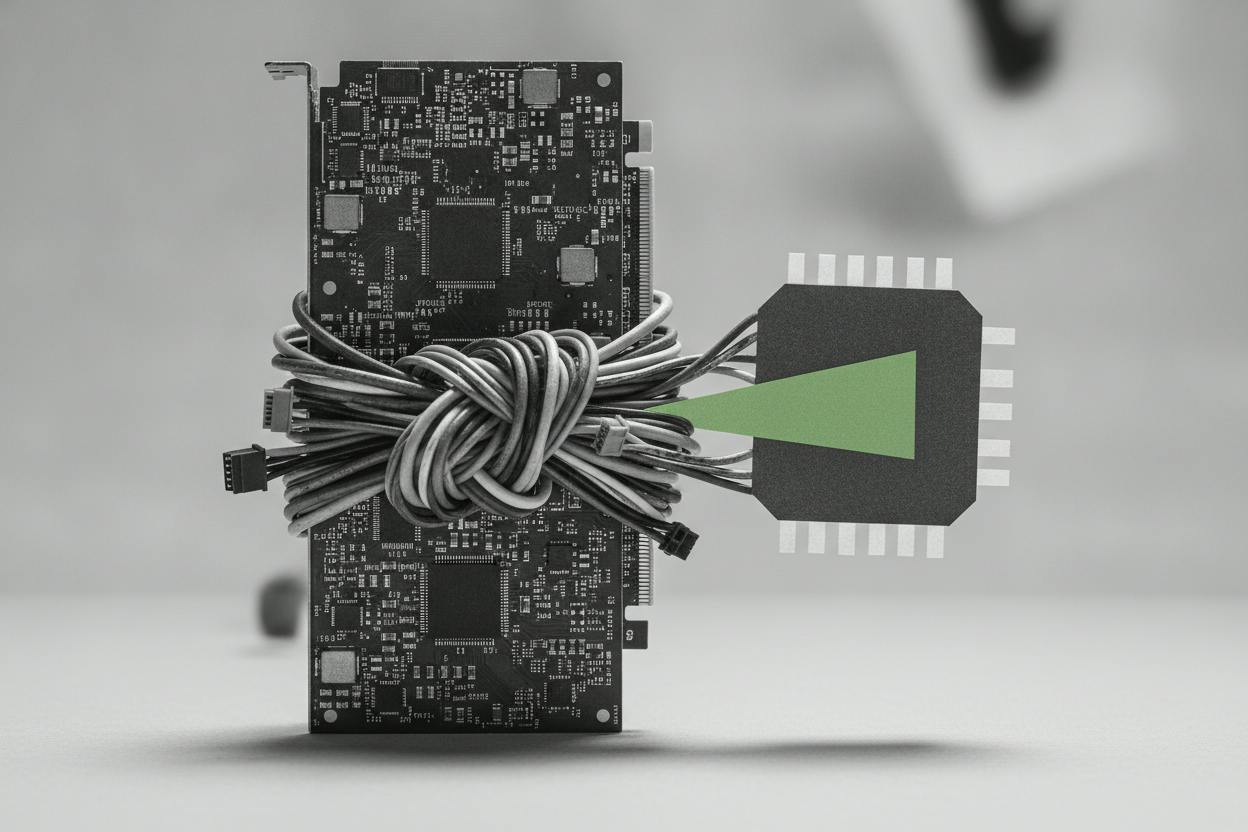
Chinese AI startup DeepSeek has announced a partnership with Huawei to open-source new programming tools for Huawei's Ascend chips. The goal is to make it easier for developers to build AI systems without relying on Nvidia's CUDA software platform, which has long been the industry standard.
In a post on the Chinese social media platform WeChat, DeepSeek said it would release key “compute” and “communication” libraries as open source. These are the building blocks that let AI models run efficiently across multiple chips, a critical part of training large models. By opening them up, DeepSeek hopes to lower the barrier for developers who might otherwise stick with Nvidia.
Why CUDA matters so much
Nvidia's dominance in AI isn't just about having the fastest chips. It's also about CUDA, the software layer that lets developers write code once and run it on Nvidia hardware. Over more than a decade, CUDA has built up a massive library of tools and a huge community of developers. That ecosystem makes it the default choice for AI research and production.
Competitors have struggled to break in partly because they lack an equivalent software stack. Huawei's Ascend chips have made progress in China, but developers often find them harder to work with. DeepSeek's move is an attempt to change that by giving Ascend a more developer-friendly foundation.
This isn't the first time DeepSeek has rattled the AI world. Earlier this year, the company's efficient AI models raised questions about whether the industry really needs as many expensive chips as it's been buying. That story, covered in our earlier report on DeepSeek's efficiency pitch, showed how a leaner approach to AI could shake up expectations for chip demand.
What open-sourcing actually means here
Open-sourcing software means making the source code freely available for anyone to use, modify, and share. For developers, that can reduce the risk of being locked into one vendor's proprietary tools. It also encourages a community to build on top of the software, which can accelerate improvements and attract more users.
DeepSeek's libraries are designed to handle two core tasks. Compute libraries manage the mathematical operations that power AI models, while communication libraries coordinate data flow between chips. Together, they form the backbone of training large models across many processors. Making these open source could give Huawei's Ascend a much-needed software ecosystem to rival CUDA.
The move also fits a broader trend in China, where companies are looking for alternatives to American technology. With export controls limiting access to advanced Nvidia chips, Chinese firms have been pushing domestic options. Huawei's Ascend is one of the most prominent, and this partnership could strengthen its position.
What it means for investors
For everyday investors, this story is less about a single company and more about the competitive landscape of AI. Nvidia's stock has soared on the back of its chip dominance, but that dominance depends on more than hardware. If open-source alternatives like this one gain traction, they could slowly erode Nvidia's software moat.
That doesn't mean Nvidia is in immediate danger. CUDA has years of momentum and a vast user base. But the rise of viable alternatives could give developers more choice, and over time, that could affect pricing power and market share. Investors should watch whether Huawei's Ascend chips start appearing in more data centers and whether developers actually adopt the new tools.
The broader context is also important. Chinese tech stocks have been volatile lately, with Beijing signaling more support for growth and factory profit growth slowing. Geopolitical tensions and export controls add another layer of uncertainty. For investors, the key takeaway is that the AI chip race is no longer just about hardware — software and ecosystems are becoming just as important.
Nvidia itself is also working to protect its position. The company recently announced new tools aimed at keeping AI agents from going rogue, as we noted in our coverage of Nvidia's safety tools. That shows Nvidia is thinking beyond raw performance, focusing on the full software stack that keeps developers loyal.
The road ahead
DeepSeek and Huawei's partnership is a clear signal that the battle for AI supremacy is expanding beyond chip speed. Software ecosystems, developer communities, and open standards are becoming key battlegrounds. For investors, that means watching not just which chips are fastest, but which platforms developers choose to build on.
It's still early days. Open-source projects need time to mature and attract contributors. But if DeepSeek's tools prove useful, they could give Huawei's Ascend a real foothold in the AI market. That would be a significant development for the industry and for investors who have bet heavily on Nvidia's continued dominance.