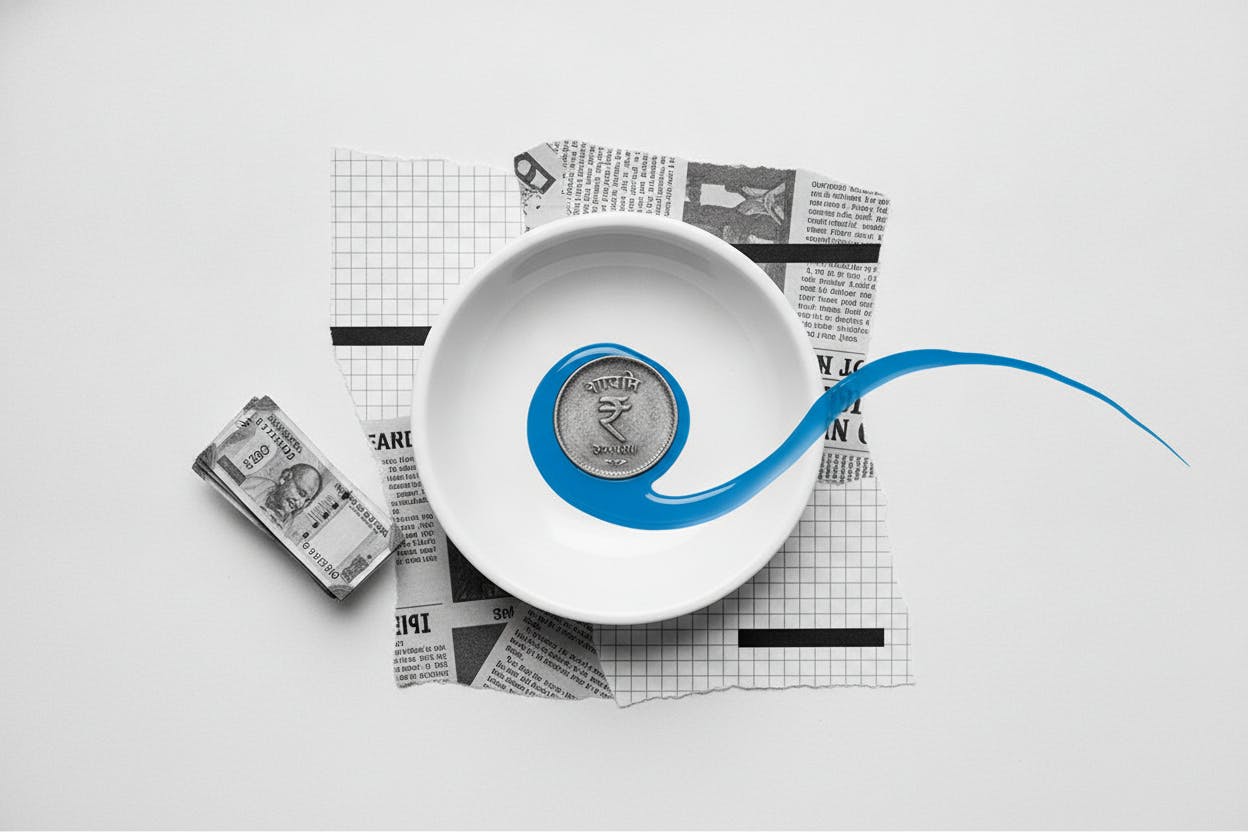
India's balance of payments (BoP) stayed in the red for a second consecutive month in May, as a net capital outflow of $2.4 billion helped turn last year's $4.4 billion surplus into a $4.4 billion deficit, according to central bank data cited by Reuters.
The BoP is essentially a record of all financial transactions between India and the rest of the world. When it is negative, more foreign currency has left the country than entered it, which can put downward pressure on the rupee and make imports more expensive.
What the numbers show
May's deficit of $4.4 billion is an improvement from April's $6.6 billion gap, but it still marks a sharp reversal from the $4.4 billion surplus recorded in the same month last year. The shift is largely due to capital outflows—money flowing out of Indian stocks, bonds, or other investments—rather than a sudden jump in imports or drop in exports.
Capital outflows of $2.4 billion in May were the main driver. These outflows can reflect global factors such as rising interest rates in developed economies, which make those markets more attractive to investors, or domestic uncertainty that prompts foreign investors to pull money out.
Why it matters for investors
A persistent BoP deficit can have several knock-on effects for ordinary investors. First, it can weaken the rupee, since more dollars are leaving the country than coming in. A weaker rupee makes imported goods—from oil to electronics—more expensive, which can feed into domestic inflation.
Second, a sustained deficit may force the Reserve Bank of India (RBI) to dip into its foreign exchange reserves to support the currency. While India's reserves remain ample, a prolonged drain could raise concerns about the country's external stability.
Third, capital outflows themselves can weigh on Indian stock markets, as foreign institutional investors sell local shares. This can create headwinds for equity returns, particularly in sectors that rely heavily on foreign capital.
For context, India's BoP has swung between surplus and deficit in recent years, often influenced by global oil prices, trade dynamics, and capital flows. The current back-to-back deficits come at a time when global central banks, including the U.S. Federal Reserve, have kept interest rates elevated, making dollar-denominated assets more attractive and pulling capital away from emerging markets like India.
What to watch next
Investors will be watching the June and July BoP data closely to see if the deficit narrows further or widens again. Key factors include the trajectory of global interest rates, India's trade balance, and the government's ability to attract foreign investment through policy measures.
India has been actively courting foreign capital, including through its push to boost semiconductor manufacturing with a $13.3 billion incentive package, as reported in India Approves $13.3 Billion More for Chip Push, Expands Phone Manufacturing Incentives. Such initiatives could help offset capital outflows over time.
Meanwhile, the RBI's monetary policy stance will also be in focus. If the BoP deficit persists, the central bank may need to balance its inflation-fighting interest rate decisions with the need to support the currency and attract capital.
For everyday investors, the key takeaway is that India's external finances are under some strain, but the deficit is still manageable relative to the size of the economy. A weaker rupee could benefit exporters and companies with foreign earnings, while import-heavy sectors like oil and electronics may face higher costs. As always, diversification across asset classes and geographies can help cushion against such macro shifts.