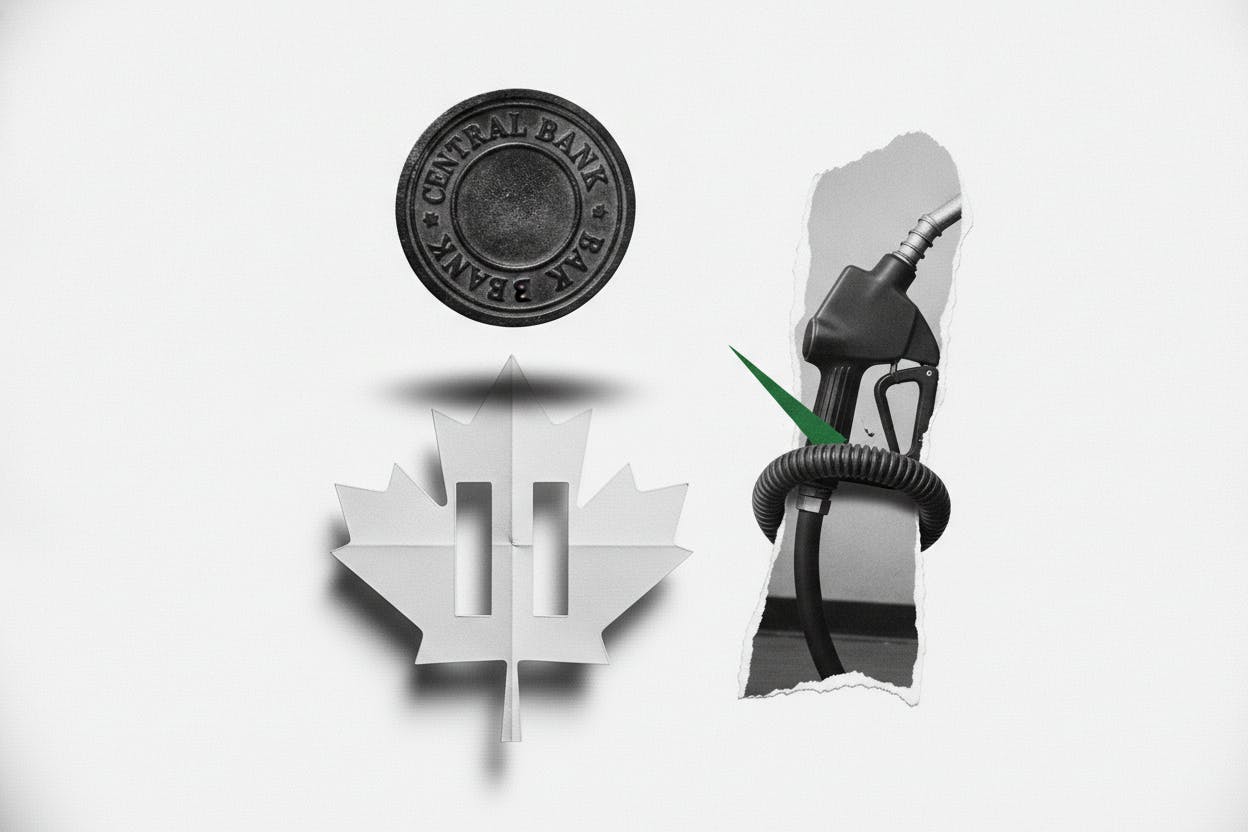
The Bank of Canada kept its key interest rate at 2.25% on Wednesday, pausing its tightening cycle and warning that the path back to 2% inflation hinges on where oil and gasoline prices go next. The decision was widely expected by markets, but the central bank's focus on energy costs underscores a growing split in Canada's inflation picture.
Headline consumer price inflation rose to 3.2% in May, driven largely by more expensive gasoline. Strip out fuel, however, and inflation was just 2.2%, while the bank's preferred core measures stayed close to 2%. That divergence leaves the Bank of Canada in a tricky spot: it can't declare victory on inflation until energy prices cooperate, but it also doesn't want to choke off the economy with higher rates if underlying price pressures are already cooling.
Why oil matters so much
Oil and gasoline are volatile components of the consumer price index. A spike at the pump can push headline inflation well above the bank's target even when other prices are behaving. That's exactly what happened in May, when gasoline prices jumped and lifted the overall CPI reading. The Bank of Canada's statement made clear that the return to 2% inflation "depends heavily" on energy costs, a nod to how much influence a single commodity can have on the central bank's policy path.
For everyday investors, this means that oil prices are now a key variable to watch alongside the usual economic data. If crude stays elevated or rises further, the Bank of Canada may be forced to keep rates higher for longer, even if the rest of the economy is slowing. That could weigh on interest-rate-sensitive sectors like housing and consumer discretionary stocks. Conversely, a drop in oil prices could give the bank room to cut rates sooner, which would likely boost bond prices and support equities.
What the pause means for your money
The hold at 2.25% means borrowing costs remain at a level that is still restrictive for many households and businesses. Variable-rate mortgage holders and those with lines of credit won't see any immediate relief, but they also won't face another increase. The bank's pause suggests it believes the current rate is high enough to eventually bring inflation down, provided external shocks like oil don't derail the process.
For investors, the key takeaway is that the Bank of Canada is in a wait-and-see mode. It is not yet ready to cut rates, but it is also not signaling further hikes. That neutral stance could keep Canadian bond yields range-bound in the near term. The Canadian dollar, which had been under pressure ahead of the decision, may find some support from the pause, but gains are likely limited as long as oil prices remain a source of uncertainty. As MUFG warned before the decision, the loonie's upside is capped by the Bank of Canada's cautious outlook.
The broader economic backdrop is mixed. Canada's factory sales hit a record C$78.1 billion in May, suggesting manufacturing is holding up well. But wholesale sales were flat in the same month, and inventories dipped, pointing to some softening in demand. The Bank of Canada will be watching these data points closely for signs that higher rates are cooling the economy enough to bring inflation down sustainably.
What investors should watch next
The Bank of Canada's next rate decision is scheduled for July. Between now and then, investors will be parsing every inflation and jobs report for clues. The June CPI report, due later this month, will be especially important. If headline inflation falls back because gasoline prices ease, the case for a rate cut later this year will strengthen. But if oil stays high and headline CPI remains above 3%, the bank may hold steady for longer.
Globally, oil prices are being influenced by a mix of supply constraints and geopolitical tensions. The recent rise in crude has been partly driven by Middle East tensions, as reported, and any escalation could push gasoline prices higher, complicating the Bank of Canada's task. Meanwhile, the US Federal Reserve is also grappling with sticky inflation, and its decisions will affect global financial conditions. If the Fed cuts rates later this year, that could ease pressure on the Bank of Canada to keep rates high.
For now, the message from Ottawa is clear: the Bank of Canada is done hiking for the moment, but it is not ready to cut. The ball is in oil's court. Investors should keep an eye on crude prices and the monthly CPI releases to gauge when the central bank might finally feel confident enough to lower borrowing costs.