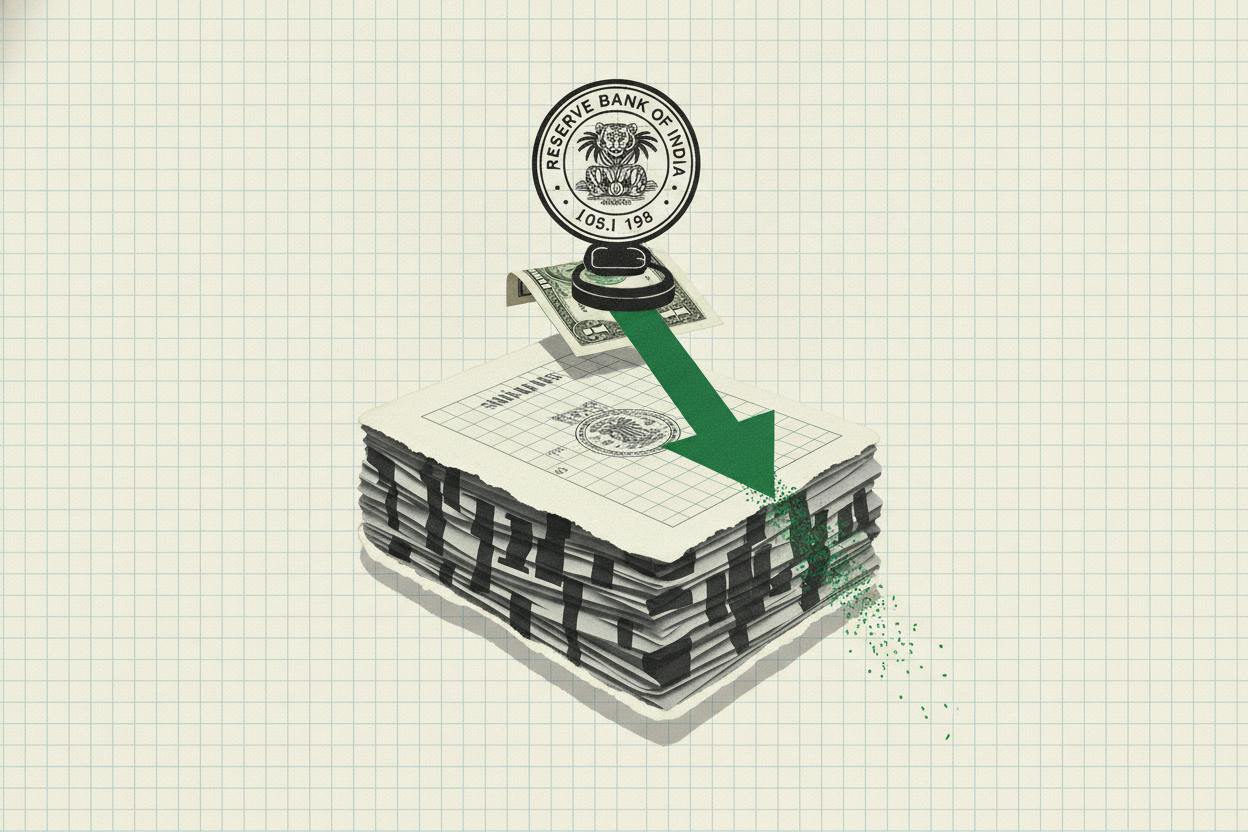
India's banking system just got a big cash boost. Deposits climbed to a record roughly 284 trillion rupees in late September, helped by a special Reserve Bank of India (RBI) facility that encouraged banks to bring in foreign currency. The central bank's dollar swap window, which closed on August 31st, attracted about $133 billion in inflows before it shut a month earlier than planned.
What was the dollar swap window?
The RBI opened this temporary window to nudge banks to raise deposits in foreign currencies, like dollars, and then convert them into rupees at a favorable exchange rate. In effect, it gave banks a cheap way to add rupees to their balance sheets. The idea was to inject liquidity into the system, making it easier for banks to lend and reducing pressure on them to compete aggressively for deposits.
According to RBI data cited by Reuters, deposits rose by about 20 trillion rupees between mid-June and August 31st, when the window closed. That's a substantial jump, and it shows how quickly banks took advantage of the offer.
But the inflows didn't stop there. Banks also tend to top up their funding buffers before quarterly reporting dates, a common practice known as quarter-end housekeeping. Reuters reported that another 7.73 trillion rupees came in over the two weeks ending September 30th. That pushed total deposits to the record level.
Why does this matter for you?
When banks have plenty of cash on hand, they don't need to pay high interest rates to attract your money. That's why deposit-rate competition has stayed "contained," according to CareEdge Ratings, an Indian credit ratings firm. With ample liquidity, banks can meet loan demand without having to offer sweetened rates on fixed deposits.
But that support can fade quickly. CareEdge warned that if loan growth continues to outpace deposit growth and the surplus shrinks, term deposit rates could move higher. In other words, the current calm in deposit rates might not last.
For savers, this is a key signal. Fixed deposit rates are more likely to rise than fall after the swap-window inflows fade. When banks need to lock in steadier funding for longer-term loans, they typically raise rates on term deposits to attract customers. So the rates you see advertised on fixed deposits could face upward pressure in the near term.
And because deposit rates are a big part of a bank's funding costs, any increase can eventually show up in borrowing rates. Banks may try to protect their profit margins by passing on some of those higher costs to borrowers, which could mean slightly more expensive loans down the line.
What to watch next
Investors and savers should keep an eye on how quickly the surplus liquidity gets absorbed. If loan demand stays strong and deposit growth slows, banks will likely start competing harder for deposits, pushing rates up. That could be good news for fixed deposit holders, but it might also signal tighter conditions for borrowers.
The RBI's move is part of a broader effort to manage liquidity in the banking system. It's a reminder that central bank actions can have direct effects on the interest rates you see on your savings and loans. For more on how the RBI has been managing currency pressures, you can read about how the central bank has used reserves to defend the rupee.
Also, the health of India's banking sector is closely tied to broader market sentiment. Recent developments, such as Fairfax's approval to buy a stake in IDBI Bank, show ongoing interest in India's financial sector. And for context on how global factors can influence Indian markets, consider how a weaker dollar can affect capital flows.
In the near term, the record deposit level provides a cushion for banks. But as the effect of the swap window wears off, the balance between loan growth and deposit growth will be the key metric to watch. For everyday investors, that means staying alert to changes in fixed deposit rates and loan costs, as they can directly impact your personal finances.