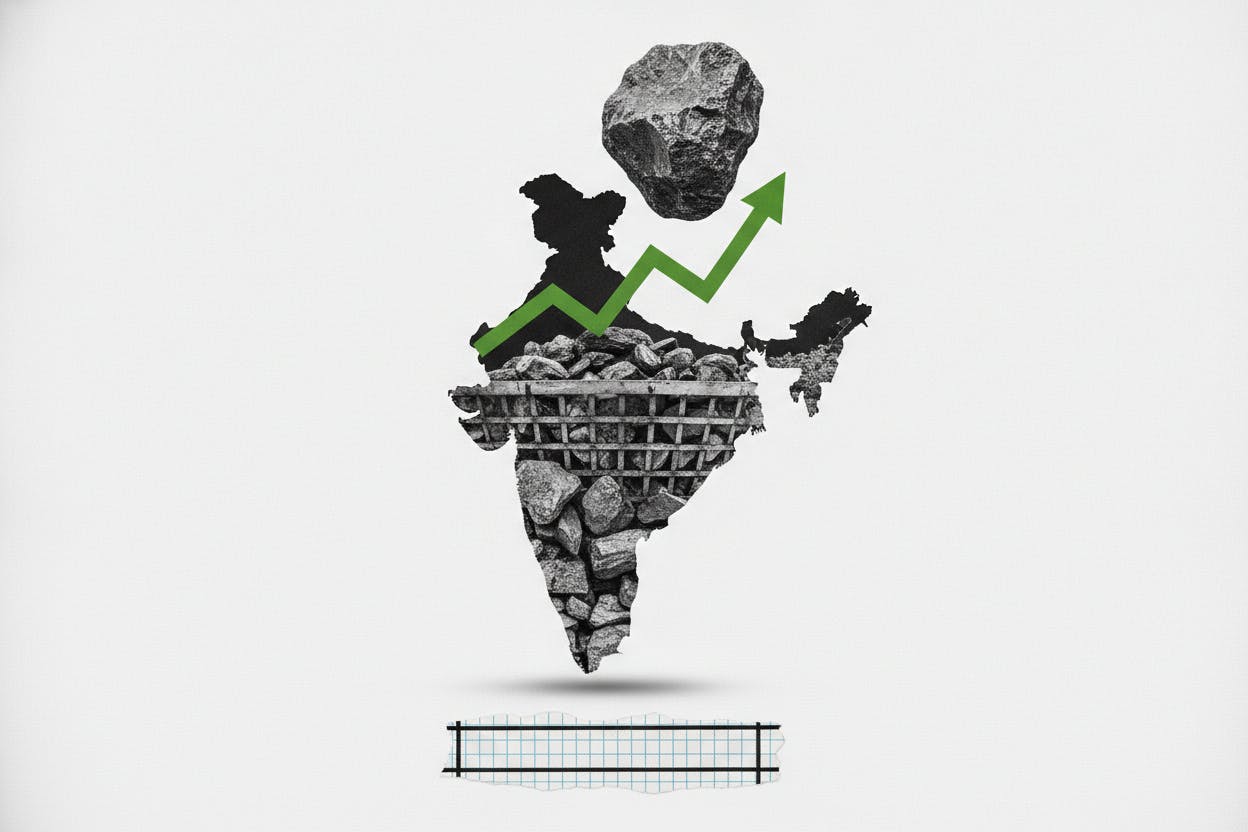
India's core infrastructure output grew 5.4% in July compared with the same month last year, a slight slowdown from June's revised 6% expansion. The figures come from the government's revamped index, which now uses 2022-23 as its base year and includes a broader basket of sectors.
The core sector index is a key gauge of activity in foundational industries such as coal, steel, cement, and electricity. Because these sectors feed into nearly every other part of the economy, the data is often seen as an early signal for broader industrial production and overall economic momentum.
What changed in the index
This is only the second monthly release under the new methodology. The government shifted the base year from 2011-12 to 2022-23, which updates the weights and reflects more recent production patterns. The basket has also been expanded to nine sectors, with iron ore added as a new component.
Base-year revisions are routine but important. They can change the headline growth rate even if actual production is unchanged, because the comparison is made against a different reference period. For investors, it means year-on-year numbers may not be directly comparable with earlier releases.
Mixed picture across sectors
July's headline masked a split performance. Cement output jumped 13.1% year-on-year, and coal rose 7.6%, suggesting strong demand from construction and power generation. On the other hand, steel growth eased to 2.9%, and electricity output grew 9%, slower than in recent months.
Iron ore, the newest addition, remained a standout but cooled sharply to 29.5% growth after June's revised 44.5% surge. That kind of volatility is common in commodity sectors, where prices and export demand can swing quickly.
The slowdown in steel and electricity may reflect softer industrial activity or seasonal factors. Cement's strength, however, points to continued infrastructure spending, which has been a priority for the government.
What it means for investors
For everyday investors, the core sector data is a useful health check on the Indian economy. Sustained growth in these industries typically supports corporate earnings in related sectors, such as construction, materials, and power utilities. A slowdown, even a modest one, can signal caution.
July's numbers are not alarming. The overall pace remains solid, and the mix of sectors suggests that infrastructure demand is still resilient. However, the cooling in iron ore and steel could weigh on mining and metal companies in the near term.
Investors should also keep an eye on how the revamped index affects future data releases. The new base year and expanded basket may lead to different growth patterns than what markets are used to. It's wise to focus on trends over several months rather than reading too much into a single month's figure.
Broader market context matters too. India's equity benchmarks have been volatile recently, with foreign investors pulling back amid global uncertainty. The Nifty's rebound after US Treasury moves shows how global factors can sway local sentiment. Core sector data adds to the domestic picture, but it's just one piece of the puzzle.
Meanwhile, the Reserve Bank of India has kept interest rates steady at 5.25%, leaving room for future hikes if inflation pressures build. The central bank's stance will influence borrowing costs for infrastructure projects, which in turn affects demand for cement, steel, and other core materials.
For those with exposure to Indian equities or mutual funds, the core sector data is a reminder to diversify. A slowdown in one area can be offset by strength in another, as July's numbers show. Cement and coal are doing well, while steel and electricity are cooling. That kind of divergence is normal and underscores the importance of a balanced portfolio.
Looking ahead, investors will watch whether the slowdown in steel and iron ore deepens or stabilizes. They'll also monitor government infrastructure spending, monsoon rains (which affect rural demand and power needs), and global commodity prices. Any of these could shift the trajectory in the coming months.
In short, July's core infrastructure growth is a mild deceleration, not a red flag. It reflects an economy that is still expanding, but at a slightly more moderate pace. For investors, the key is to stay informed and avoid overreacting to any single data point.