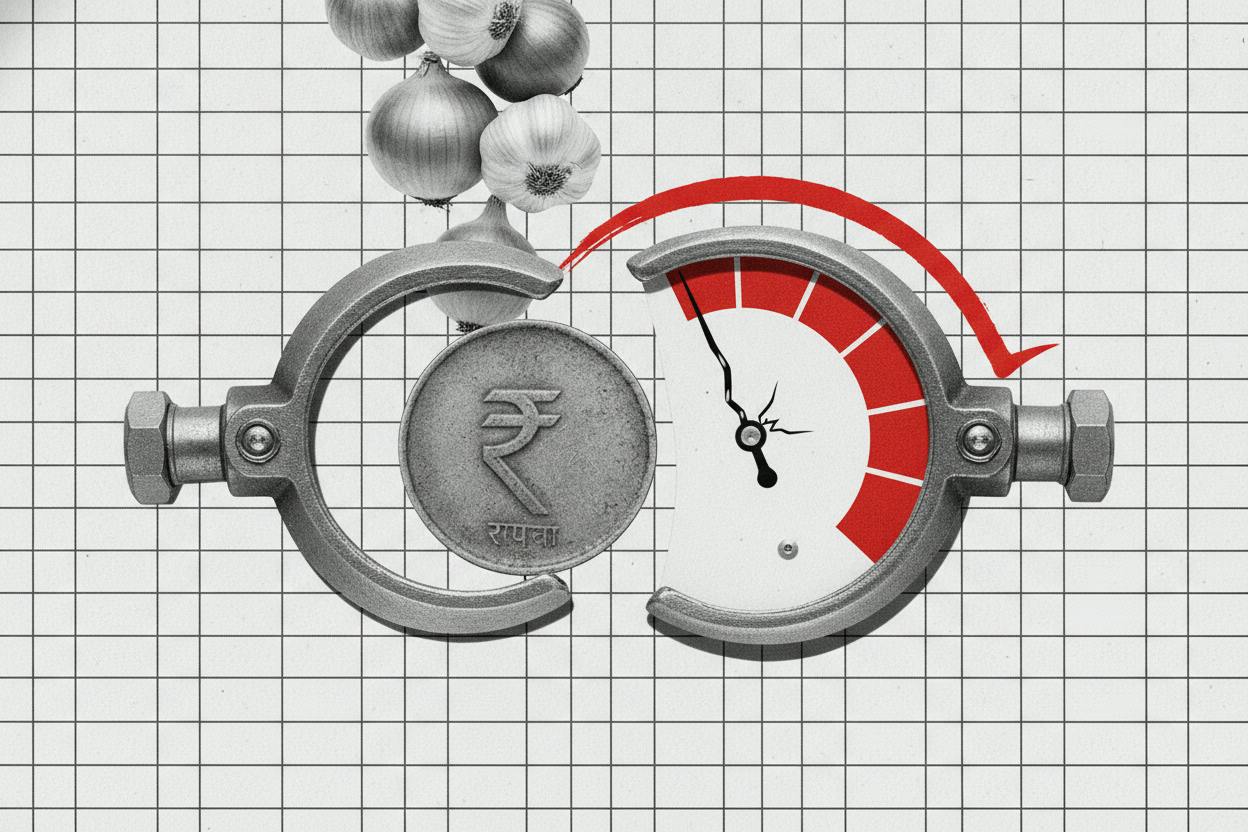
India's retail inflation accelerated to 6.09% in October, breaching the Reserve Bank of India's (RBI) 6% upper tolerance band for the first time in months. The rise, driven mainly by food and transport costs, has put rate-hike expectations back on the table and sharpened the focus on the central bank's credibility.
The reading came in above economists' forecasts and marked the fifth consecutive month that prices have stayed above the RBI's 4% medium-term target. The central bank only restarted tightening last month, lifting its benchmark repo rate for the first time in nearly four years, signaling concern that higher prices could become entrenched.
Food prices are the main culprit
Food accounts for almost 40% of India's consumer price index (CPI) basket, and food inflation accelerated to 8.94% in October. Everyday staples like onions and garlic became more expensive, squeezing household budgets and making the inflation problem harder for policymakers to ignore.
Food-led inflation tends to spread quickly because it hits what households buy every week. That raises the odds that workers demand higher wages and companies test higher prices elsewhere, creating what economists call "second-round" inflation. This is a particular worry for the RBI, which is trying to balance price stability with supporting economic growth.
Weather risks, including a weak monsoon and the El Nino phenomenon, can keep food prices jumpy and make inflation harder to predict. Even with some relief from oil prices, faster transport inflation showed the pressure isn't confined to groceries, leaving the RBI's own inflation forecasts uncomfortably close to the 6% line.
What it means for investors
When inflation breaches 6%, investors focus less on the decimal points and more on what happens next to expectations. The RBI is now more likely to sound hawkish, even if it's worried about growth, because letting a broad shock linger can create entrenched inflation.
In markets, the first signs usually show up in short-dated Indian government bonds, where yields move with the expected path of the repo rate, and in the rupee as traders reprice the chances of follow-up hikes. A more hawkish RBI could also weigh on Indian equities, as higher rates tend to dampen corporate earnings growth and make bonds relatively more attractive.
For everyday investors, this means keeping an eye on how the RBI communicates in the coming weeks. If it signals further tightening, borrowing costs for home loans and business credit could rise, affecting everything from monthly EMIs to company profit margins. On the flip side, if the central bank holds off, it risks letting inflation expectations become unanchored, which could hurt the economy in the long run.
The October inflation print also comes amid a broader global backdrop of sticky price pressures. In other emerging markets, hot inflation has revived bets on US Federal Reserve rate hikes, which can ripple into Indian markets. Meanwhile, India's weight in the MSCI emerging markets index has been boosted, reflecting its growing importance to global investors.
For now, the RBI faces a delicate balancing act. It must decide whether to prioritize fighting inflation or supporting growth, a choice that will shape the outlook for Indian assets in the months ahead. As always, the central bank's next move will be closely watched by markets and households alike.