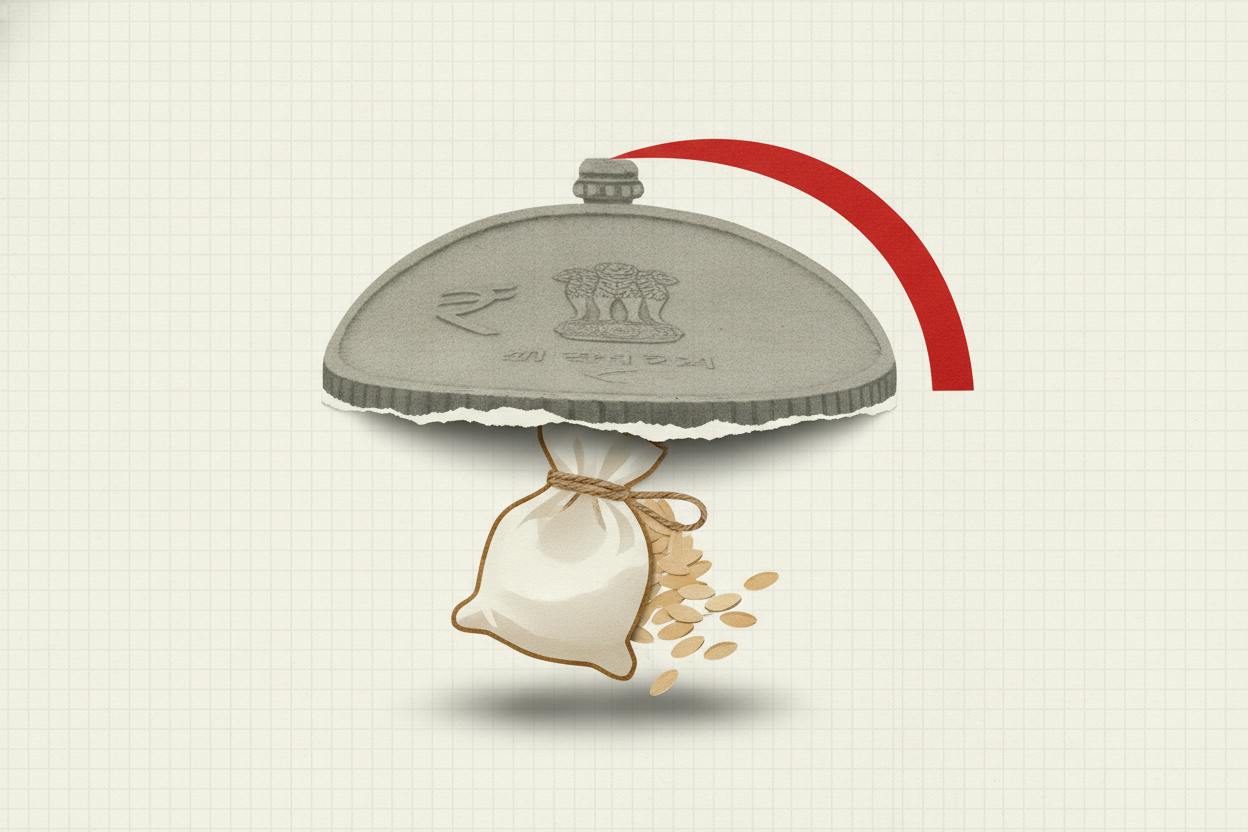
India's retail inflation accelerated to 6.09% in October on a year-on-year basis, according to official data released this week. The reading marks a sharp jump from September's 5.54% and pushes the headline number back above the Reserve Bank of India's (RBI) upper tolerance limit of 6%. Economists had expected a rise, but not this much—forecasts clustered around 5.9%.
The print is a setback for the central bank, which targets 4% inflation with a permissible band of 2% to 6%. October's figure breaches that ceiling, complicating the RBI's efforts to bring price pressures under control while supporting economic growth.
Food prices lead the surge
Economists at DBS Bank, one of Asia's largest lenders, attribute most of the acceleration to a spike in food prices. Food accounts for nearly half of India's consumer price index (CPI) basket, so swings in vegetable, cereal, and protein costs have an outsized impact on the headline number.
But DBS analysts also flagged a more worrying trend: price pressures may be spreading beyond groceries. Core inflation—which strips out volatile food and energy items—shows signs of firming, suggesting that the inflation problem is no longer confined to the kitchen. Last year's low base effect, where prices were unusually soft, also makes the current year-on-year figure look steeper than it might otherwise appear.
This matters because the RBI's monetary policy committee (MPC) sets rates based on its inflation forecast. A hotter-than-expected CPI print gives the MPC ammunition to revise its projections upward, and it strengthens the case for keeping interest rates elevated for longer. The central bank has held its benchmark repo rate at 6.5% since February 2023, but markets have been watching for any signal of a cut. Today's data pushes that prospect further into the distance.
What it means for investors
For everyday investors, the immediate takeaway is that Indian bonds and equities could face headwinds. Higher inflation typically leads to higher bond yields, which makes existing bonds less attractive and can weigh on stock valuations, especially for growth-oriented companies. The RBI's hawkish stance also means borrowing costs for businesses and consumers are likely to stay elevated, which can squeeze corporate margins and dampen consumer spending.
That said, the news is not uniformly negative. A firm RBI policy stance can help anchor inflation expectations over the long run, which is ultimately good for financial stability. Investors with diversified portfolios—holding a mix of equities, bonds, and cash—are better positioned to weather the volatility than those concentrated in a single asset class.
Looking ahead, all eyes will be on the RBI's next policy meeting in December. The central bank's updated inflation forecasts and any commentary on the path of rates will be crucial. If inflation remains sticky, the RBI may be forced to hike rates again, a move that would ripple through Indian markets and potentially attract foreign capital seeking higher yields. However, such a move could also slow economic growth, which is already showing signs of moderation.
For now, investors should brace for a period of elevated uncertainty. The inflation data also comes against a backdrop of global monetary tightening, as central banks worldwide grapple with similar price pressures. In that context, India's experience is not unique—but its high food price sensitivity makes it particularly vulnerable to weather shocks and supply chain disruptions.
As the RBI navigates this tricky terrain, the key variable to watch is the monsoon and agricultural output. A good harvest could ease food prices and bring inflation back within the target band, while a poor one could keep the pressure on. Until then, the central bank's hawkish stance is likely to persist, and investors should factor that into their expectations for Indian assets.