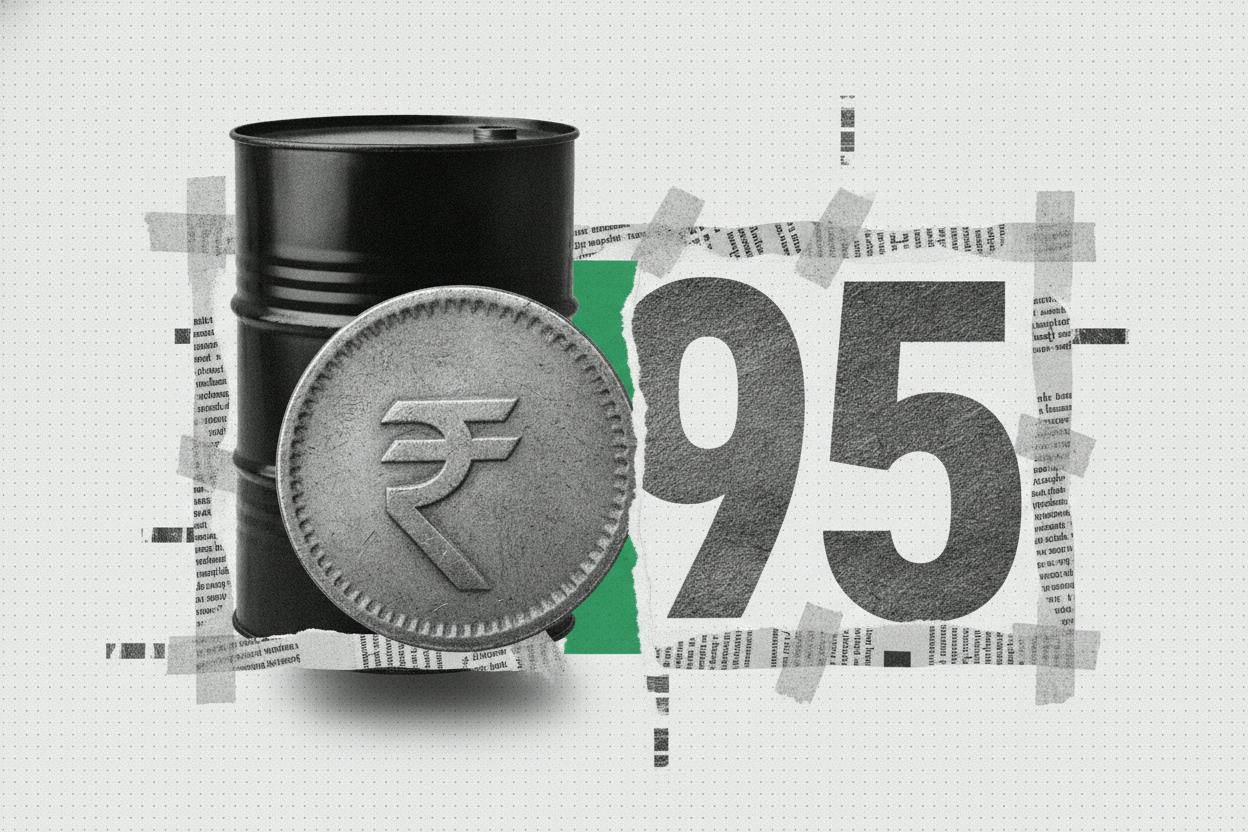
India's rupee is hovering near the psychologically important level of 95 per US dollar, as elevated oil prices keep the currency under pressure and traders watch for the central bank to step in. The rupee has repeatedly approached this mark, but moves beyond it have not lasted, leading traders to view 95 as an informal line of defense for the Reserve Bank of India (RBI).
The RBI has several tools to support the currency. It can sell dollars directly in the spot market, which reduces the supply of rupees and helps steady the exchange rate. It has also used sell/buy swaps—transactions that sell dollars now and agree to buy them back later—to support the spot rate without depleting its dollar reserves as quickly. These measures can smooth day-to-day swings, but they do not address the underlying pressure.
Why oil matters for the rupee
The main driver of the rupee's weakness is the price of crude oil. Brent crude, the global benchmark, is hovering around $108 a barrel after briefly topping $110. India imports most of its oil and pays for it in dollars, so higher oil prices mean larger import bills. This widens the country's trade deficit and increases demand for dollars, both of which tend to weaken the rupee.
Intervention can slow the decline, but if oil stays high, the pressure on the rupee is likely to persist. The RBI's support is not without cost. India's foreign-exchange reserves have fallen by almost $60 billion since early September, to $726 billion as of October 9, according to the brief. That decline shows the central bank has been spending some of its firepower to defend the currency.
What it means for investors
For investors, the RBI's defense of the 95 level has implications beyond the exchange rate itself. Spot dollar selling can pull rupees out of the banking system, tightening local liquidity even when the headline rate looks calm. Using swaps can relieve some of that strain in the spot market, but it often shifts the stress to the forward market, where companies and investors lock in future exchange rates.
The result is a trade-off: a steadier rupee near 95, but potentially higher forward points—the extra cost embedded in forward contracts—which raises the price of hedging dollar exposure. This matters most for foreign investors and Indian firms with dollar costs, especially while oil keeps demand for dollars elevated.
For everyday investors, the key takeaway is that the rupee's stability is being bought with reserves and may come with higher hedging costs. If you are an Indian investor with overseas exposure or a foreign investor with Indian assets, these dynamics can affect your returns. However, the RBI's actions are aimed at smoothing volatility, not at reversing the trend, so the currency's path will likely depend on oil prices and global dollar strength.
Related reading: Rupee's best week in seven months shows how intervention can temporarily steady the currency, while RBI's FX rule tweaks highlight the complexities of managing the market. For broader context on how central banks are navigating global pressures, see traders pushing Fed rate cut bets.



