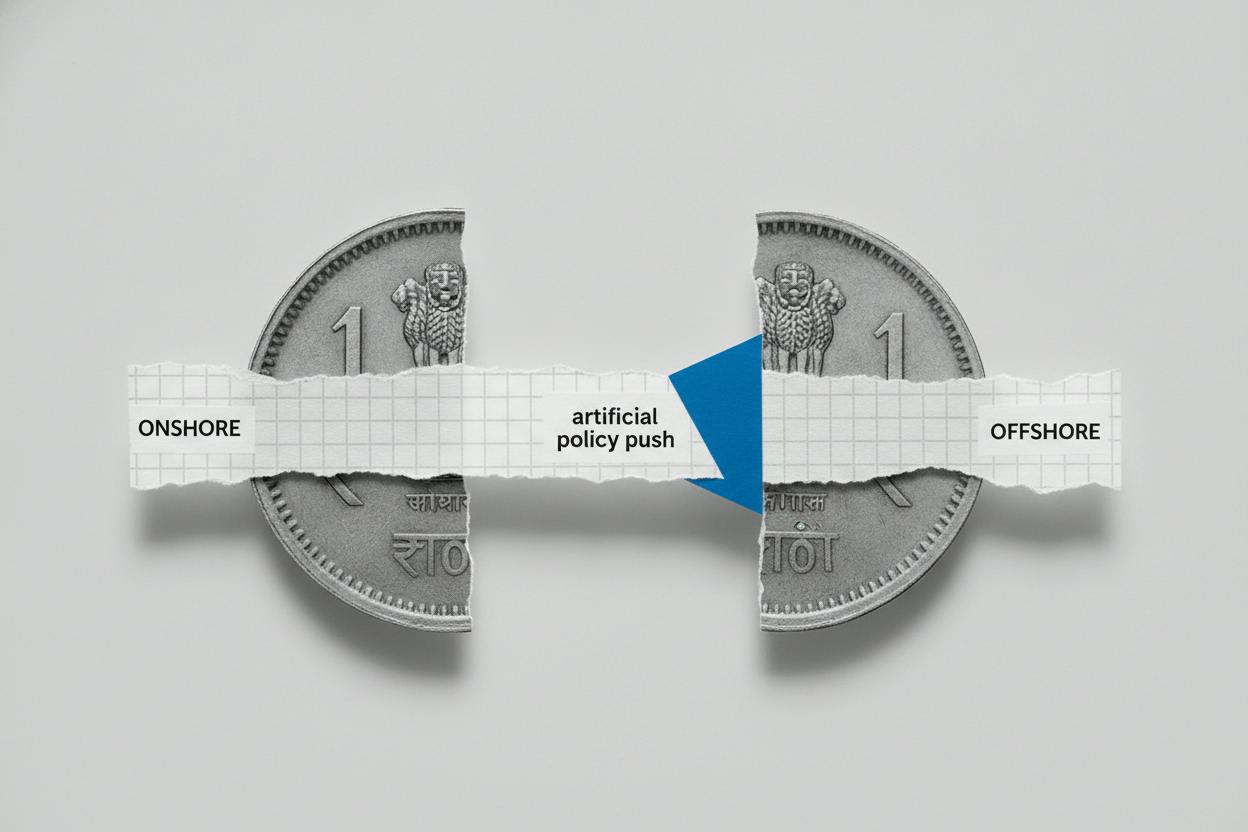
The Reserve Bank of India's rapid-fire adjustments to foreign-exchange hedging rules are fragmenting the rupee market, according to Allianz Global Investors. The asset manager warns that repeated changes are splitting liquidity between onshore India and offshore trading hubs, and if the currency remains under pressure, the central bank may have to resort to interest-rate hikes as its next line of defense.
What's happening with the rupee?
The rupee has been under periodic pressure this year, with the RBI stepping in to steady markets. The central bank has used a mix of direct dollar sales and regulatory tweaks to manage volatility. But Allianz GI's Ze Yi Ang notes that the RBI has made it harder or costlier for some importers and banks to hedge, including reinstating a rule that bans "rebooking" a canceled FX contract. That rule, which was previously relaxed, prevents companies from canceling a hedge and then re-entering a similar contract at a better rate, a practice that can amplify dollar demand when the rupee weakens.
These changes are designed to reduce speculative pressure on the currency, but they also have a side effect: they are driving a wedge between onshore and offshore rupee markets. When rules differ between Mumbai and offshore hubs like Singapore or London, trading volumes can shift, and price discovery becomes less efficient. That fragmentation can make it harder for companies to manage currency risk and for the RBI to gauge true market conditions.
Why hedging rules matter
For everyday investors, the rupee's value affects everything from the cost of imported goods to the returns on Indian stocks and bonds when converted back to dollars or other currencies. When the RBI tightens hedging rules, it's trying to reduce the demand for dollars that comes from companies and banks protecting themselves against further rupee weakness. But these measures can also increase the cost of doing business for Indian firms, which may pass those costs on to consumers.
The RBI's approach is part of a broader toolkit. Central banks typically defend a currency by selling foreign reserves, raising interest rates, or using administrative measures to limit speculation. The RBI has already used reserve sales and regulatory tweaks. If those prove insufficient, rate hikes become the next option. Higher rates can attract foreign capital and make holding the rupee more attractive, but they also slow economic growth and can hurt stock markets.
What it means for investors
For investors in Indian assets, the key takeaway is that currency risk is not just a macro story—it directly affects portfolio returns. A weaker rupee can erode the dollar value of Indian equities and bonds, even if those assets perform well in local currency terms. Conversely, a stable or strengthening rupee can boost returns for foreign investors.
The RBI's rule changes also signal that the central bank is willing to use unconventional tools to manage the currency. That can create uncertainty, as companies and investors adjust to shifting regulations. For those with exposure to Indian markets, it's worth monitoring how the onshore-offshore gap evolves, as it could indicate how much pressure the RBI is under.
Allianz GI's warning suggests that if the rupee continues to slide, the RBI may have to choose between defending the currency with rate hikes or letting it depreciate further. Rate hikes would likely weigh on Indian equities, which have recently seen a strong rebound—Indian IT stocks surged 10.4% in their best week since 2008 on strong earnings, but that rally could be tested if borrowing costs rise.
The rupee itself has shown resilience recently, posting its best week in seven months as the RBI stepped in to steady markets. But the central bank's interventions have limits, and the hedging rule changes are a sign that it's trying to stretch those limits.
The bigger picture
India's trade deficit has widened, with imports outpacing exports, which puts structural pressure on the rupee. The RBI's tightening measures are part of a broader effort to manage that imbalance. Earlier this year, the central bank tightened policy to steady the rupee after a 6% slide, and it may need to do more if the currency weakens again.
For now, the RBI seems to prefer regulatory tweaks over rate moves, but Allianz GI's warning highlights that this approach has limits. If the onshore-offshore split worsens, it could undermine the effectiveness of the RBI's tools, leaving rate hikes as the only credible option. Investors should watch for any signs that the RBI is shifting toward a more hawkish stance, as that would have broad implications for Indian markets.
In the meantime, the fragmentation of rupee liquidity is a reminder that currency management is a delicate balancing act. For those invested in India, staying informed about these regulatory changes is as important as watching the latest earnings reports or GDP data.