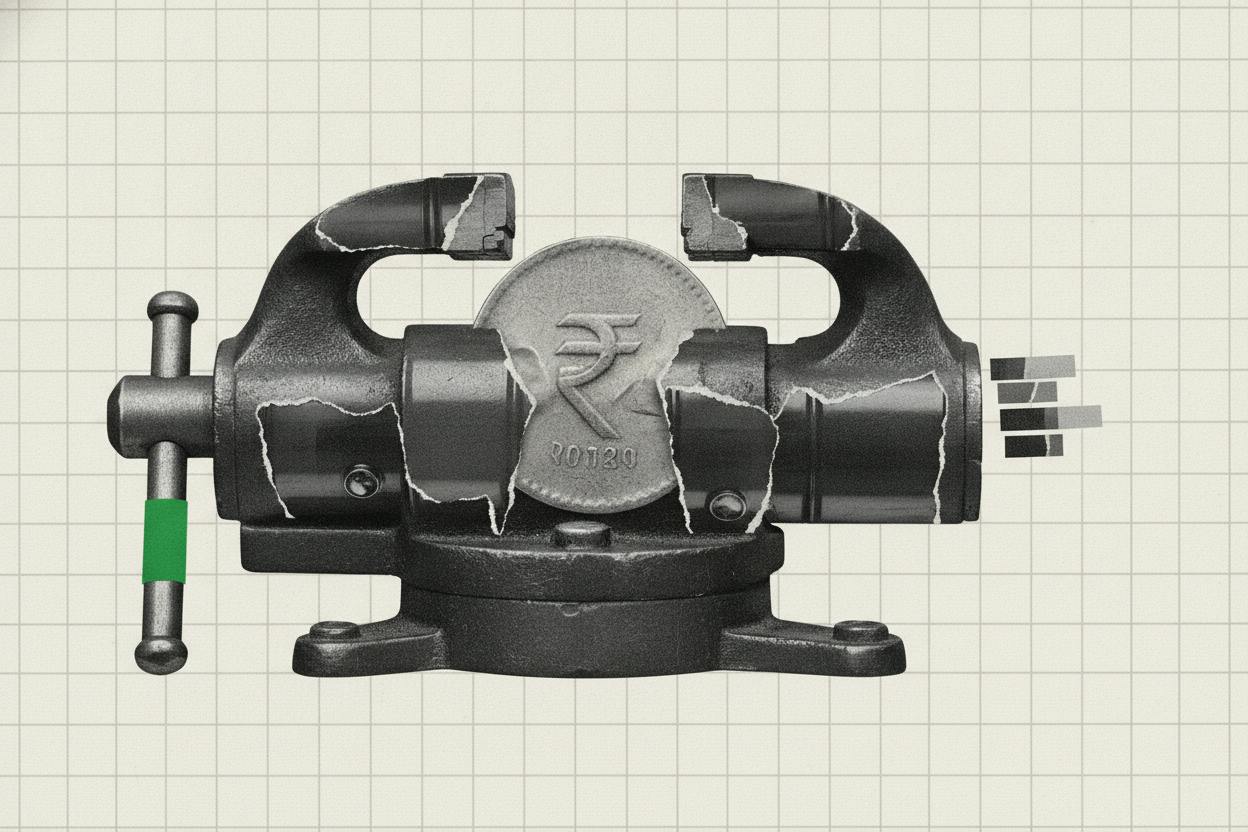
India's stock market is heading into the week with two looming headaches: hotter-than-expected inflation and oil prices hovering near $105 a barrel. Together, they are keeping pressure on the rupee and on interest rates, and investors are bracing for more volatility.
September retail inflation came in at 5.54%, according to the latest data. That's uncomfortably close to the Reserve Bank of India's (RBI) upper tolerance band of 6%. While the reading is still within the central bank's target range, it leaves little room for the RBI to ease policy even as economic growth shows signs of cooling.
Why oil matters so much for India
India is one of the world's largest importers of crude oil, so when global prices climb, the costs ripple through the economy. Higher oil prices mean more expensive fuel, transportation, and raw materials, which eventually show up in the prices of everyday goods. That's why a sustained rise in Brent crude can be a double-edged sword for Indian markets: it pushes inflation higher and widens the country's trade deficit, both of which tend to weaken the rupee.
A weaker rupee makes imports even more expensive, creating a feedback loop that can keep inflation elevated. It also makes Indian assets less attractive to foreign investors, who have been selling for 12 straight sessions, according to the data. That steady outflow adds to the downward pressure on the rupee and on stock prices.
The RBI's balancing act
The RBI has been trying to support the rupee without choking off growth. One tool it has used is raising the cost of betting against the currency, a move that makes it more expensive for speculators to short the rupee. That can help stabilize the exchange rate, but it also tightens financial conditions, which can weigh on stocks.
With inflation near the top of its target range, the RBI is in a tough spot. If it cuts interest rates to boost growth, it risks fueling inflation further and putting more pressure on the rupee. If it holds rates steady or hikes them, it could slow an economy that is already facing headwinds from global uncertainty.
What it means for investors
For everyday investors, the key takeaway is that Indian stocks are likely to remain sensitive to two global forces: oil prices and the U.S. dollar. When oil stays high, energy costs eat into corporate margins, especially for companies in transportation, aviation, and consumer goods. When the dollar strengthens, foreign money tends to flow out of emerging markets like India, which can drag down stock prices.
Investors should also watch how the RBI responds. If inflation stays near 6%, the central bank may be forced to keep policy tight for longer, which could limit the upside for stocks. On the other hand, if oil prices ease and inflation cools, the RBI could gain room to support growth, which would be a positive for markets.
It's also worth noting that India's situation is part of a broader global trend. Central banks around the world are grappling with sticky inflation and high energy costs. In Japan, for example, wholesale inflation has cooled but pressure on the Bank of Japan remains. And in the U.S., investors are awaiting key inflation data that could influence the Federal Reserve's next move.
What to watch next
Oil prices will be a key driver. If Brent crude breaks above $105 and stays there, expect more pressure on the rupee and on Indian equities. Conversely, a pullback in oil could provide some relief. The RBI's next policy meeting will also be closely watched for any signals on rates.
Foreign investor flows are another indicator. If the selling streak continues, it could signal deeper concerns about India's near-term outlook. But if foreign money returns, that would be a sign of renewed confidence.
For now, the message is clear: India's markets are navigating a tricky environment where inflation and oil are the twin forces to watch. Staying informed and keeping a long-term perspective is often the best approach for everyday investors.