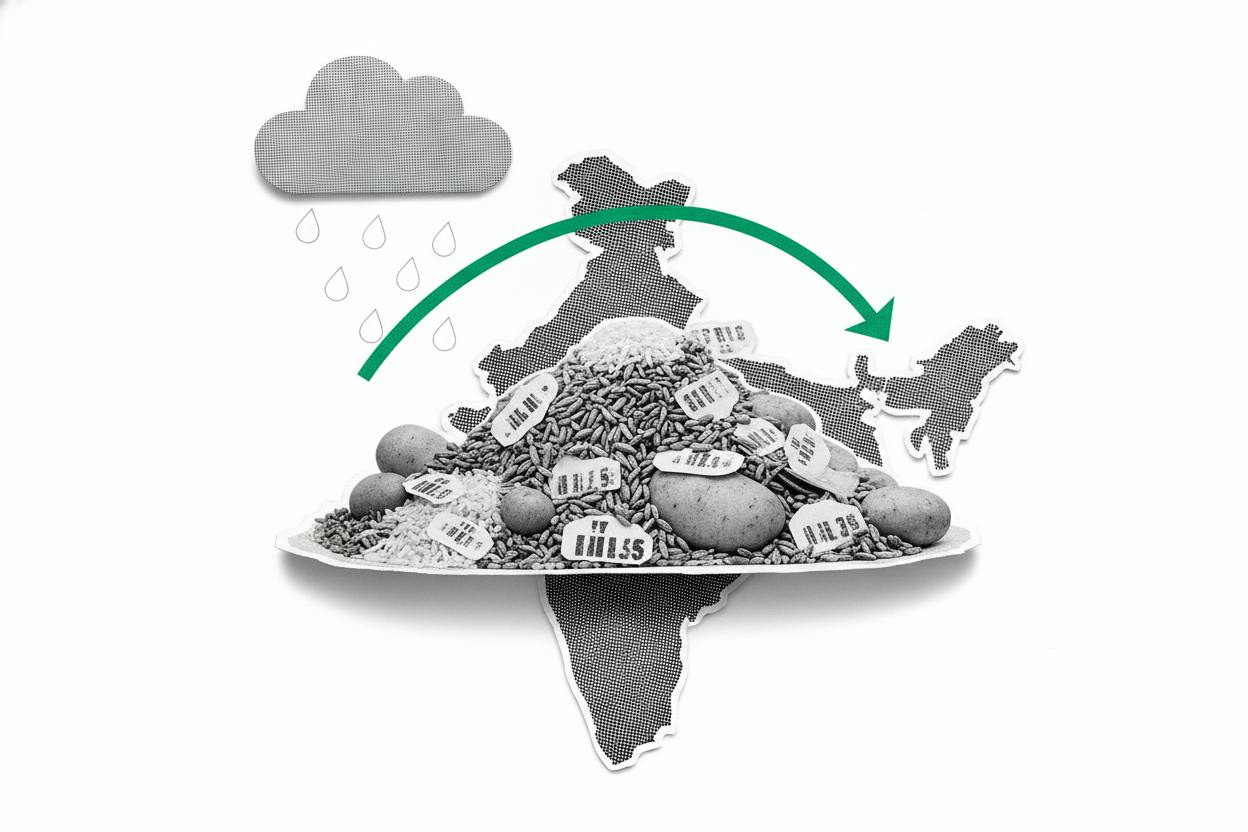
India's top government economist expects food inflation to ease by the end of the year, even as the country grapples with a monsoon that has delivered about 15% less rainfall than normal. In remarks that offer some relief to households and markets, Chief Economic Adviser V. Anantha Nageswaran said August food inflation stood at roughly 6% and that a strong summer crop harvest should help cool prices in the coming months.
Food prices carry unusual weight in India's inflation picture. Food and beverages make up nearly 37% of the consumer price index (CPI), so swings at the grocery store can quickly move the headline inflation number that the central bank watches. That means the path of onion, vegetable, and grain prices is not just a kitchen-table concern—it is a key driver of interest rates and economic policy.
Why the monsoon matters
India's monsoon season, which runs from June to September, is the lifeblood of its agriculture sector. The rains determine how much farmers can plant and how well crops grow, which in turn shapes food supply and prices. A rainfall deficit of 15% would normally raise alarm bells, but Nageswaran described the shortfall as "manageable."
His confidence rests on planting data. Summer-sown crop acreage is only 2% to 3% lower than last year, according to the adviser, and he expects output for most of these crops to be strong. That suggests the deficit has not yet translated into the kind of widespread crop damage that would push prices sharply higher.
Still, the monsoon is not over, and the distribution of rain matters as much as the total. Some regions may have received adequate moisture while others face dry spells. Farmers and policymakers will be watching the final weeks of the season closely.
What this means for inflation and interest rates
For everyday investors, the key question is what this means for the Reserve Bank of India's interest rate decisions. India's central bank has a mandate to keep inflation within a 2% to 6% target range, and food prices are often the biggest swing factor. If food inflation cools as the adviser predicts, it could give the RBI more room to hold rates steady or even consider cuts later.
On the other hand, if food prices stay sticky, the RBI may need to keep policy tight for longer, which can affect everything from loan rates to stock market valuations. Investors in Indian equities and bonds will be parsing every piece of inflation data in the months ahead.
The adviser's comments come against a backdrop of global inflation concerns. Rising oil prices have stoked fears of broader price pressures, and bond yields in Europe have hit multi-year highs. India, as a major oil importer, is sensitive to energy costs, but food is the more immediate domestic worry.
Broader economic context
India's economy has shown resilience, with recent data pointing to a healthy jobs market. The unemployment rate fell to 5% in August, a six-month low, suggesting that the economic recovery is reaching more people. That, combined with manageable food inflation, could support consumer spending and corporate earnings.
Investors have also been paying attention to India's capital markets. Global asset managers are lining up for the anchor book of the National Stock Exchange's initial public offering, a sign of strong international interest in Indian financial assets. Meanwhile, regulators are considering changes to derivatives trading rules to reduce volatility on expiry days.
For now, the adviser's outlook is cautiously optimistic. But inflation is notoriously hard to predict, and weather remains a wildcard. A poor finish to the monsoon or a spike in global food prices could quickly change the picture.
What investors should watch
For those with exposure to Indian markets, the key indicators to track are monthly inflation releases, monsoon progress, and any commentary from the RBI. Food inflation data will be especially important, as it often sets the tone for the central bank's decisions.
It's also worth remembering that India's inflation story is not just about numbers—it's about the real economy. Lower food prices can boost household purchasing power, which is good for consumer-facing companies. Higher food prices, by contrast, can squeeze budgets and hurt demand for discretionary goods.
As always, no single data point tells the whole story. The adviser's view is one input among many, and investors should consider a range of scenarios. But for now, the official line is that India's food inflation problem is likely to fade by year-end, and that is a message many will welcome.