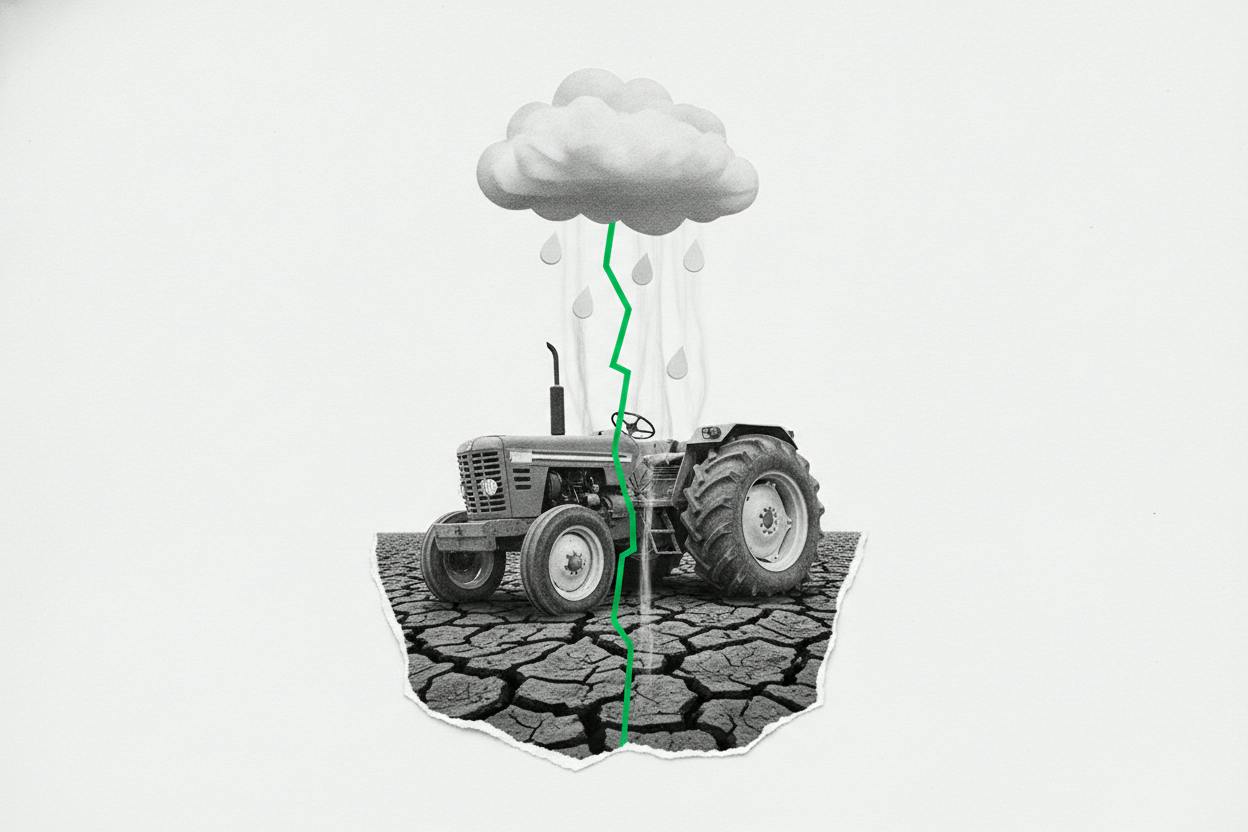
India's tractor market hit a rough patch in September, with retail sales sliding 12.6% from the previous month to 76,906 units, according to data from the Federation of Automobile Dealers Associations (FADA). The decline points to a familiar culprit: a weak monsoon that has squeezed rural incomes and made farmers hesitant to make big-ticket purchases.
The drop stands in contrast to the broader auto market, where two-wheelers and passenger vehicles helped overall retail sales climb 31.8% year-on-year to 2.54 million units. That growth was aided by last year's tax cuts, even as carmakers raised prices to cover higher input costs.
Why the monsoon matters for tractors
The June-September monsoon is the lifeblood of Indian agriculture, delivering close to 70% of the country's annual rainfall. This season, rainfall landed 12.6% below normal, the weakest in more than a decade. Patchy rains and long dry spells can drag on crop yields and delay post-harvest payments, which are the moments when many farmers typically have cash in hand.
Tractors are often the first purchase to be postponed when rural finances get tight. They are usually bought when crop income arrives or when lenders feel confident about a farmer's ability to repay a loan. When the monsoon comes up short, that confidence erodes quickly, and a planned purchase turns into a "not yet."
FADA's numbers reflect this dynamic. The month-on-month decline in tractor sales is a direct signal that the rural income and credit channel is already tightening. Farmers are not just buying fewer tractors; they are also likely delaying payments on existing loans and cutting back on other discretionary spending.
What it means for investors
For investors, the tractor sales figure is a quick check on rural credit conditions. When rural demand softens, it can show up as slower growth in rural loans and increased pressure on lenders, dealers, and manufacturers tied to countryside spending. Companies that sell tractors, farm equipment, and other rural-focused goods may see their sales growth cool in the coming quarters.
The broader auto market's resilience, however, offers a counterpoint. Two-wheelers and passenger vehicles have been buoyed by last year's tax cuts, which made them more affordable. But dealers warn that affordability is the key watchpoint for the next quarter. If carmakers continue to raise prices to offset higher costs, that tax-cut cushion could thin, and the stronger segments might cool as well.
For now, the split is clear: rural-facing demand is soft, while urban and tax-supported segments are holding up. That divergence could persist, and investors should watch whether it widens or narrows in the months ahead.
Broader context
The tractor sales data comes amid a mixed picture for the Indian economy. While urban consumption has been relatively robust, rural areas have faced headwinds from uneven rainfall and rising input costs. The government has tried to support farmers through various schemes, but the monsoon's shortfall is a reminder of how dependent rural incomes are on the weather.
For investors, the key takeaway is to monitor rural-facing sectors closely. If the monsoon's impact lingers, it could affect not just tractor makers but also two-wheeler manufacturers, consumer goods companies, and banks with large rural loan books. On the other hand, a recovery in rainfall or government support measures could quickly revive sentiment.
As always, the data is a snapshot, not a verdict. But for those watching India's rural economy, September's tractor numbers are a clear warning sign that the monsoon's shortfall is already showing up in the real economy.