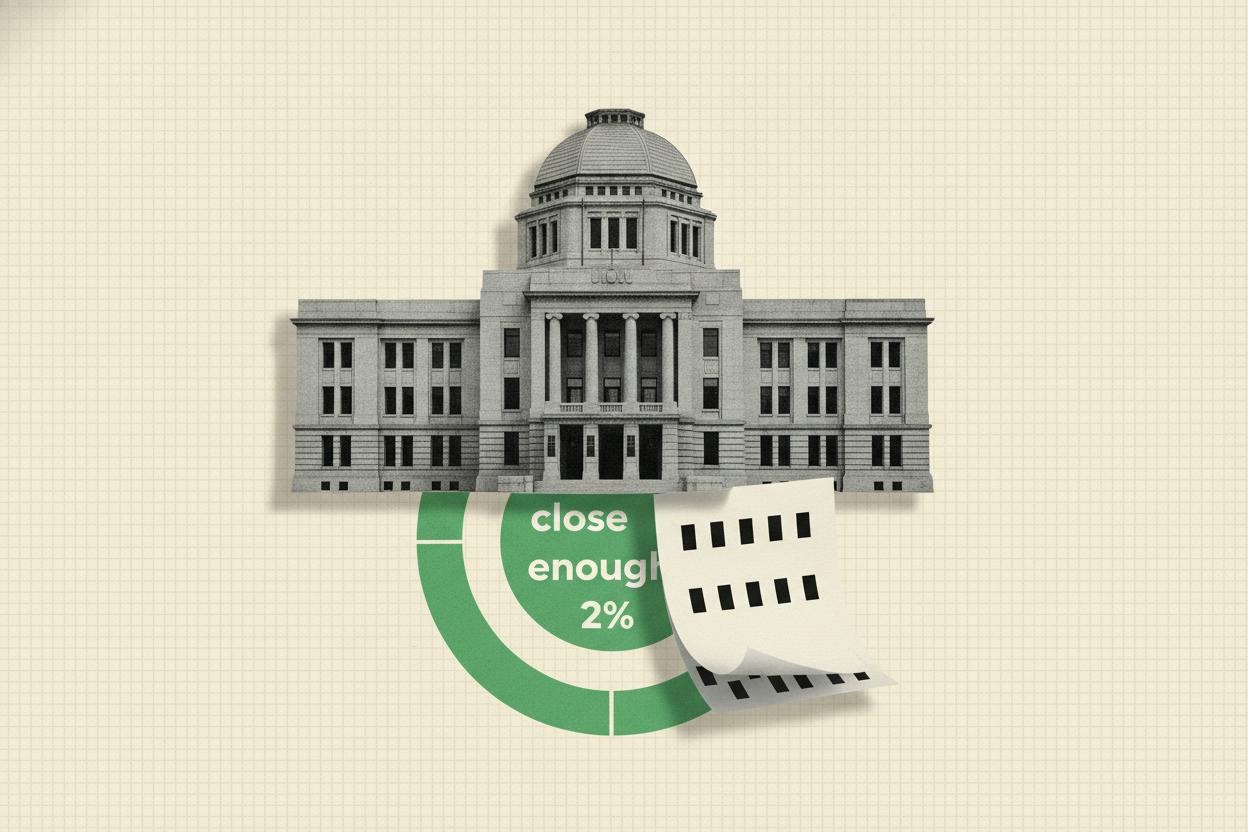
The Bank of Japan (BOJ) may soon shift its language to suggest that inflation is now "close enough" to its 2% target, according to Reuters. While the change would be largely symbolic, it could reinforce market expectations that the central bank will raise interest rates again in December.
Policymakers are holding off on any immediate action, preferring to wait for more data before their next meeting on October 29-30. But the subtle wording change could be an important signal for investors watching Japan's gradual exit from years of ultra-low interest rates.
What's behind the possible shift?
The BOJ has been slowly moving away from its long-standing policy of keeping borrowing costs near zero. The central bank's goal is to achieve sustainable inflation of 2%, driven by steady domestic demand rather than temporary factors like energy price spikes or a weak yen.
According to Reuters, recent indicators—including Tokyo consumer inflation and the BOJ's quarterly tankan business survey—suggest that price gains are sitting "quite close" to the 2% target. Importantly, these figures do not show the kind of acceleration that would force the central bank to act immediately. That gives the BOJ room to wait and see, while still signaling that a rate hike could come soon.
The tankan survey, which measures business sentiment among large Japanese manufacturers, is closely watched by investors as a gauge of the economy's health. Tokyo inflation, meanwhile, is often seen as a leading indicator for nationwide price trends.
Why the wording matters
Central banks often use careful language to manage expectations. When the BOJ says inflation is "close enough" to its target, it suggests that the central bank sees progress but not perfection. That could be a way of preparing markets for a rate hike without committing to one just yet.
For investors, the key takeaway is that a December rate hike remains on the table. If the BOJ does raise rates, it would be another step in normalizing monetary policy after years of negative interest rates. That could affect everything from the yen's value to Japanese government bond yields and global carry trades.
Japan's situation is part of a broader global trend. Central banks around the world are grappling with how quickly to ease or tighten policy as inflation cools from multi-decade highs. In contrast, the BOJ is one of the few major central banks still considering rate increases, while others like the U.S. Federal Reserve have started cutting rates. This divergence has been a key driver of currency movements, with the yen under pressure against the dollar for much of the past year.
Recent market moves reflect this dynamic. For instance, Japanese stocks jumped when expectations of U.S. rate hikes cooled, while the euro hit a 17-month low amid France's budget troubles. Meanwhile, Japanese consumer confidence has dipped as inflation expectations climb, a sign that households are feeling the pinch of higher prices.
What it means for investors
For everyday investors, the BOJ's language matters because it influences the yen, Japanese stocks, and global bond markets. A rate hike in December could strengthen the yen, which would be good for Japanese consumers but could weigh on exporters' profits. It could also push up Japanese government bond yields, which might attract global investors seeking higher returns.
If you hold Japanese stocks or funds, a rate hike could lead to short-term volatility. However, the BOJ is likely to move gradually, so the impact may be muted. For those with international portfolios, the yen's direction can affect returns when converted back to your home currency.
The BOJ's decision will also be watched closely by other central banks. If Japan raises rates while others are cutting, it could create new opportunities and risks in currency markets. For now, the message is clear: the BOJ is edging closer to normalizing policy, but it wants to see more evidence before pulling the trigger.
As always, it's wise to keep an eye on the data. The October 29-30 meeting will provide the next clue, and any surprises could move markets. But for now, the "close enough" language suggests that the BOJ is preparing investors for a possible December move—without promising one.