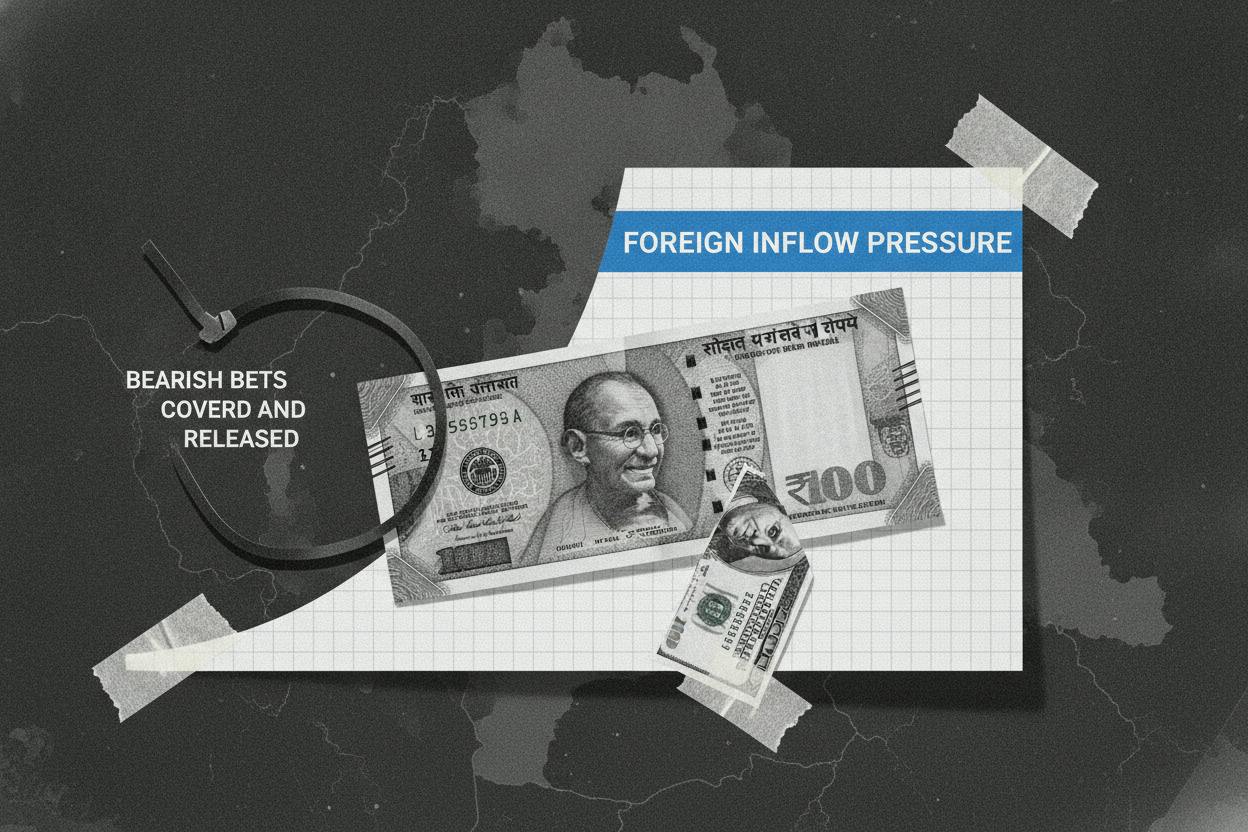
The Indian rupee climbed to a seven-month high on Tuesday, closing at 93.47 against the US dollar. The move came as heavy foreign buying of Indian equities and traders closing out bearish currency bets outweighed a broader slide in Asian technology shares.
Foreign investors have been net buyers of Indian stocks this month, with inflows tracking around $10 billion, according to Reuters. That demand tends to lift the rupee because overseas buyers ultimately need rupees to pay for shares. When foreign money flows into the country, it increases demand for the local currency, pushing its value higher.
At the same time, activity in dollar-rupee non-deliverable forwards (NDFs) suggested short-covering. NDFs are offshore derivatives that settle in dollars rather than rupees, often used by international investors to bet on currency moves without actually holding rupees. Short-covering happens when traders who had bet against the rupee (expecting it to weaken) buy it back to close their positions, which can add upward pressure on the currency.
Why the rupee is strengthening
The rupee's rally is part of a broader trend of foreign money returning to Indian markets. Earlier this year, global investors were cautious about India due to concerns over valuations and the pace of economic growth. But a combination of factors—including a slide in oil prices, which reduces India's import bill, and expectations of policy stability—has helped revive appetite for Indian assets.
India is a major oil importer, so cheaper crude directly benefits the country's trade balance and reduces pressure on the rupee. Lower oil prices also help contain inflation, which can support the currency by making Indian assets more attractive to foreign investors.
The rupee's strength comes even as other Asian currencies have struggled. The Australian and New Zealand dollars, for example, recently slid to multi-month lows as risk-off sentiment gripped markets. A stronger US dollar has also been a headwind for many emerging market currencies, but the rupee has managed to buck that trend thanks to the surge in equity inflows.
What it means for investors
For everyday investors, a stronger rupee has mixed implications. On the one hand, it signals confidence in the Indian economy and can make imported goods cheaper, which may help keep inflation in check. On the other hand, a rising rupee can hurt Indian exporters, as their goods become more expensive for foreign buyers.
For those with investments in Indian stocks, the inflows are a positive sign. Foreign buying often boosts share prices, and the rally in equities has been supported by the same factors driving the rupee. However, investors should be aware that currency moves can be volatile, and a sudden reversal in global sentiment could quickly change the picture.
The rupee's gains also have implications for those holding US dollars or investing in dollar-denominated assets. A stronger rupee means that converting dollars into rupees yields fewer rupees, which could reduce the local-currency value of dollar-based investments.
What to watch next
Traders will be watching whether foreign inflows continue at this pace. The $10 billion monthly figure is already a record for November, and if the trend persists, the rupee could test higher levels. However, much depends on global factors, including the path of US interest rates and the strength of the dollar.
Recent data showing a firming dollar—partly due to expectations of higher US rates—has pressured other currencies. If the dollar continues to strengthen, it could eventually weigh on the rupee as well. Investors will also keep an eye on oil prices, as any rebound in crude could reverse some of the rupee's gains.
The rupee's strength is also tied to the performance of Indian equities, which have been buoyed by foreign inflows and cheaper oil. As noted in our earlier coverage, cheaper oil and record foreign inflows have kept India's stock rally alive. That dynamic is likely to persist as long as global conditions remain supportive.
For now, the rupee's seven-month high is a clear sign that foreign investors are betting on India's growth story. But as with any currency move, it's important to remember that markets can turn quickly, and what goes up can come down.