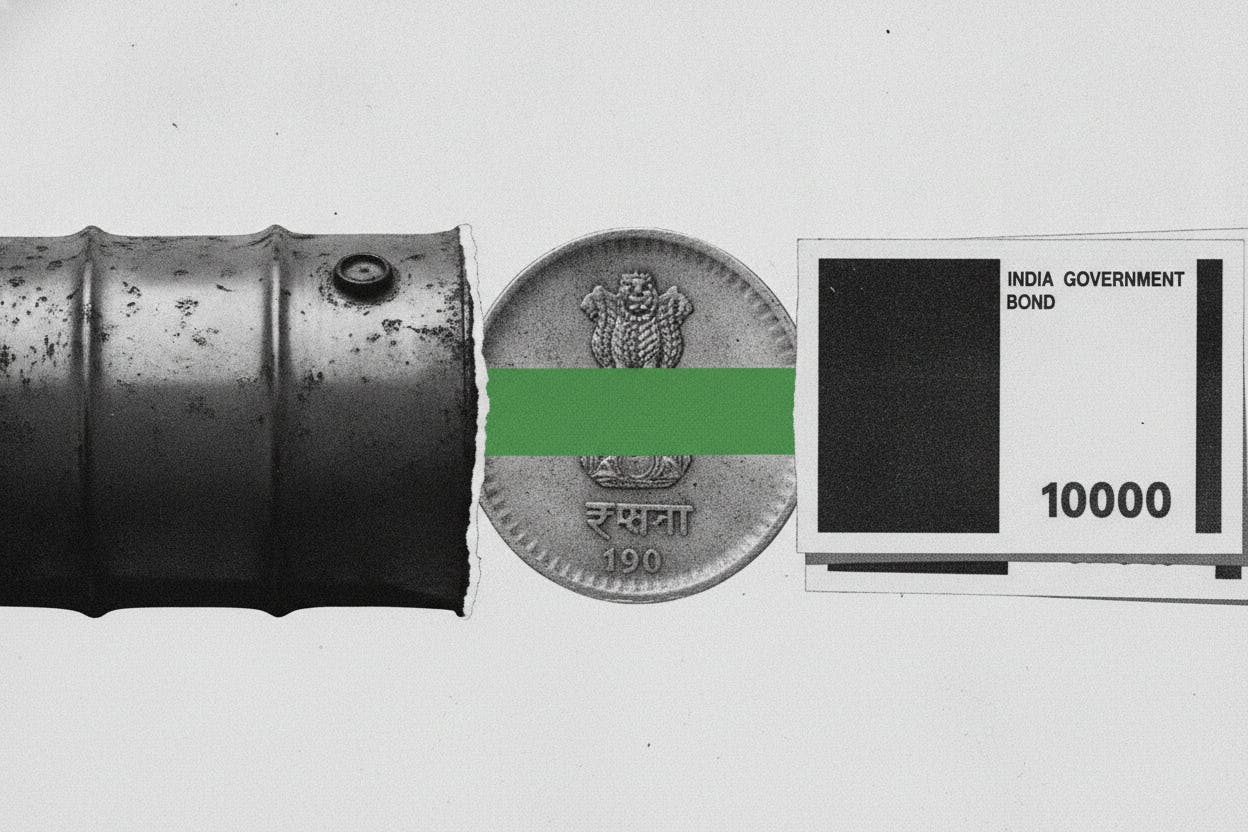
Indian stocks and the rupee took a sharp hit on July 8th as a fresh escalation in Middle East tensions sent oil prices soaring. The benchmark Sensex and Nifty indices recorded their biggest single-day drop in three months, falling 2.15% and 2.12% respectively, after former US President Donald Trump said a peace memorandum with Iran was 'over' and the two countries exchanged strikes.
The sell-off was broad-based, with energy, banking, and auto stocks among the hardest hit. The 10-year government bond yield also climbed to 6.7636%, reflecting investor anxiety about higher inflation and borrowing costs.
Why Oil Matters So Much for India
India is the world's third-largest oil importer, buying roughly 85% of its crude from overseas. When global oil prices spike, the country's import bill swells, forcing energy companies and refiners to buy more US dollars to pay for shipments. That extra demand for dollars puts downward pressure on the rupee, which is exactly what happened on July 8th: the currency weakened 0.6% to 95.555 per US dollar.
A weaker rupee compounds the problem for Indian companies that import raw materials or have foreign-currency debt. It also raises the cost of everything from fuel to plastics, feeding into domestic inflation. The Reserve Bank of India (RBI) may face pressure to step in with dollar sales to support the rupee, but that can drain foreign exchange reserves.
Bond Yields Rise as Investors Reprice Risk
The jump in the 10-year bond yield to 6.7636% signals that bond investors are demanding higher compensation for holding Indian government debt. Higher oil prices tend to push up inflation expectations, which can lead the RBI to keep interest rates higher for longer. That's a headwind for bond prices (yields move inversely to prices) and for stocks, as higher rates make borrowing more expensive for companies and consumers.
This dynamic is playing out across global markets. In the Gulf, stock markets slid as Strait of Hormuz tensions pushed oil above $76, while in China, stocks dipped as similar geopolitical worries and looming inflation data weighed on sentiment. The broader Asia region saw a split, with South Korea tumbling 6.1% while Singapore hit a record on bank gains.
What This Means for Investors
For everyday Indian investors, the key takeaway is that geopolitical shocks can quickly ripple through portfolios. A spike in oil prices doesn't just hit petrol pumps—it affects the value of your stock holdings, the rupee's purchasing power, and the returns on your fixed-income investments.
Investors should watch for a few things in the coming days:
- Oil price direction: If tensions ease and crude retreats, Indian markets could recover some lost ground. But if the situation escalates further, more pain may be ahead.
- RBI response: The central bank may intervene in currency markets or signal its stance on interest rates. Any hawkish comments could add to market pressure.
- Earnings season: Companies that rely heavily on imported inputs—like airlines, paint makers, and fertilizer producers—may see their profit margins squeezed. Watch for commentary in upcoming quarterly results.
Historically, Indian markets have been sensitive to oil price shocks. The 1990 Gulf War, the 2014 oil price crash, and the 2022 Russia-Ukraine conflict all triggered significant volatility. This time is no different, though the scale of the move is still within the range of normal corrections.
For those with a long-term horizon, sharp dips can sometimes present buying opportunities, but it's important to stay diversified and not overreact to daily headlines. The best approach is to focus on your asset allocation and avoid making impulsive decisions based on short-term geopolitical noise.
As always, keep an eye on the broader picture: oil prices, the rupee, and bond yields are all interconnected, and changes in one can quickly affect the others. Staying informed is the best defense against market turbulence.