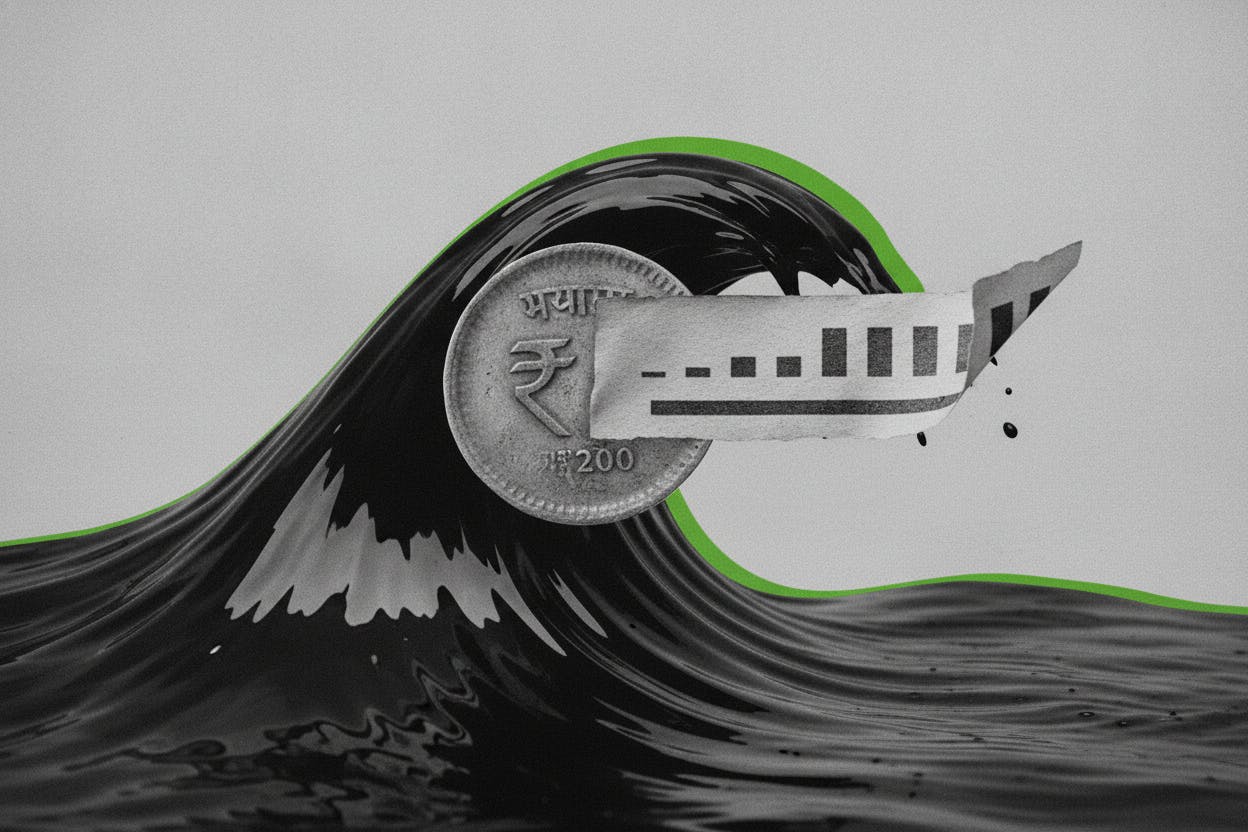
India's financial markets took a hit on Tuesday after a sudden jump in oil prices rattled investors. The trigger: US President Donald Trump declared the Iran peace deal was “over,” sending Brent crude up nearly 6% and sparking a global risk-off mood. For India, the world's third-largest oil importer, that's bad news on multiple fronts.
The sell-off was broad. India's benchmark stock indexes fell, the rupee weakened, and bond yields rose sharply. The 2036 government bond yield logged its biggest one-day rise since April 2, reflecting a swift repricing of inflation and interest rate expectations.
Why Oil Matters So Much for India
India imports about 85% of its crude oil, so every dollar increase in the price of oil adds billions to its annual import bill. That directly pressures the country's trade deficit and current account balance. But the pain doesn't stop there: higher oil costs also feed into domestic inflation, because transportation and manufacturing costs rise, pushing up prices for everything from fuel to food.
That's why bond traders reacted quickly. The one-year overnight index swap (OIS) — a key gauge of where markets think the Reserve Bank of India (RBI) will set interest rates — ended the day at 5.80%, up seven basis points. A rise in OIS rates signals that traders expect the RBI to keep policy tighter for longer to combat inflation.
For everyday investors, this means bond prices fall when yields rise, so anyone holding Indian government bonds saw the value of their holdings drop. It also suggests that the RBI may delay any future rate cuts, which could slow economic growth.
Stocks and Rupee Under Pressure
The stock market also felt the heat. Energy-intensive sectors like airlines, chemicals, and logistics — which rely heavily on oil — were among the hardest hit. Meanwhile, the rupee slipped against the dollar, as foreign investors pulled money out of Indian assets in search of safer havens.
The currency's weakness adds another layer of worry: a weaker rupee makes imports even more expensive, including oil, creating a vicious cycle. The RBI may step in to support the rupee by selling dollars from its reserves, but that can only go so far.
For a deeper look at how the oil surge affected Indian equities and the currency, see our earlier coverage: Indian Stocks, Rupee Hit by Oil Surge After US-Iran Tensions Escalate.
What It Means for Investors
For investors with exposure to Indian markets, this is a reminder of how vulnerable the country is to geopolitical shocks in the Middle East. Oil price spikes tend to be temporary, but they can cause significant short-term volatility.
- Bond investors should watch for further yield increases if oil stays elevated. Higher yields mean lower bond prices, so long-duration bonds are most at risk.
- Equity investors may want to look at sectors that benefit from higher oil, like energy producers, but be cautious with oil-sensitive industries such as aviation and consumer goods.
- Rupee holders should be prepared for more weakness if oil prices remain high. Importers and companies with foreign debt will feel the pinch.
The broader context is that global markets are already on edge due to trade tensions and slowing growth. The Iran deal collapse adds a fresh geopolitical risk that could keep oil prices elevated for a while. For more on how this is playing out across emerging markets, check out: Oil Surges 5% as Trump Declares Iran Deal Over, Emerging Markets Slide.
What to Watch Next
Investors will be closely watching for any further developments in US-Iran relations. If tensions escalate further, oil could spike again. Also on the radar: the RBI's next monetary policy meeting, where the central bank will have to weigh the inflation risks from higher oil against the need to support growth.
For now, the message is clear: India's markets are in for a bumpy ride as long as oil stays high. Stay tuned for updates on how this story evolves. For related coverage on the impact on Gulf stocks and the Strait of Hormuz, see: Gulf Stocks Slide as Strait of Hormuz Tensions Push Oil Above $76.