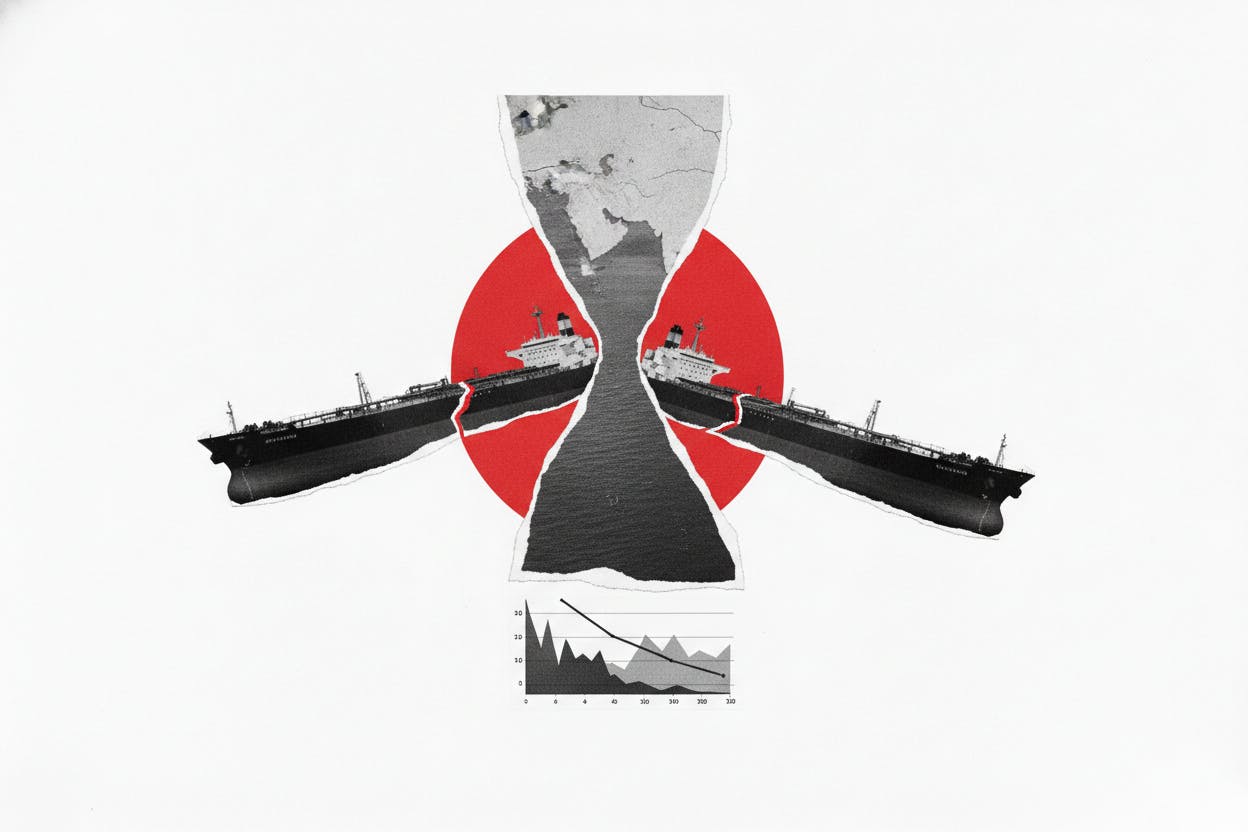
Stock markets across the Gulf region fell on Tuesday as a sharp rise in oil prices, triggered by tanker incidents near the Strait of Hormuz and new US sanctions on Iranian oil, stoked fears that a fragile ceasefire in the Middle East could unravel.
Brent crude, the international benchmark, jumped 3.2% to $76.56 a barrel, its highest level in weeks. The move came after reports of tanker incidents near the Strait of Hormuz, a narrow waterway that handles about a fifth of the world's oil and a significant share of liquefied natural gas shipments. Any disruption there quickly feeds into global energy prices.
What triggered the oil surge?
The immediate catalyst was a series of tanker incidents near the Strait of Hormuz, though details remain sketchy. At the same time, the United States announced new sanctions targeting Iranian oil exports, including revoking a waiver that had allowed Iran to sell some oil internationally. The US also said it struck Iranian air-defense and surveillance sites, escalating military tensions.
Iran responded by calling the US moves a breach of a framework meant to end the war, raising doubts about whether a ceasefire can hold. For markets, the combination of military action and tighter sanctions creates a direct threat to oil supply routes.
This is not the first time this year that tensions around the Strait of Hormuz have rattled markets. In recent months, similar flare-ups have caused oil to spike and then retreat as diplomatic efforts resumed. But the latest developments suggest the risk of a prolonged disruption is rising.
Why Gulf stocks are feeling the heat
Gulf stock markets, including those in Saudi Arabia, the UAE, and Qatar, tend to be sensitive to oil price swings because their economies are heavily dependent on energy revenues. However, a sharp oil rise driven by geopolitical risk is a double-edged sword for these markets.
On one hand, higher oil prices boost government revenues and support energy stocks. On the other, they raise the risk of inflation, higher interest rates, and economic instability if the conflict escalates. Investors are also worried that a sustained oil rally could hurt global demand, which would eventually weigh on Gulf exporters.
In a similar vein, oil surges on US-Iran strikes have weighed on the FTSE 100 while lifting energy stocks, showing how the same event can split markets between winners and losers.
What it means for everyday investors
For ordinary investors, the key takeaway is that geopolitical events in the Middle East can create sudden volatility in oil prices and stock markets worldwide. When oil jumps sharply, it often pushes up costs for businesses and consumers, which can feed into inflation and influence central bank policy.
Higher oil prices are generally bad for importing countries like India, which rely heavily on foreign crude. Indian stocks have already fallen as oil surges on US-Iran tensions hit import costs, and similar pressures could spread to other Asian markets.
For investors with diversified portfolios, this is a reminder that energy stocks can act as a hedge during geopolitical shocks, but the broader market impact is often negative. Bonds may also wobble if inflation expectations rise, as seen in recent oil jumps that sent stocks and bonds wobbling on inflation fears.
What to watch next
Investors will be closely watching for any further military escalation or diplomatic breakthroughs. The US sanctions on Iranian oil are a key factor: if they are enforced strictly, they could remove a significant amount of supply from the market, keeping oil prices elevated.
Also on the radar is how other major economies respond. Australian stocks are set to slip as the oil surge stirs inflation fears, and similar concerns are likely to emerge in Europe and Asia.
For now, the message from Gulf markets is clear: until the Strait of Hormuz is safe and the ceasefire holds, oil prices and regional stocks will remain on edge.