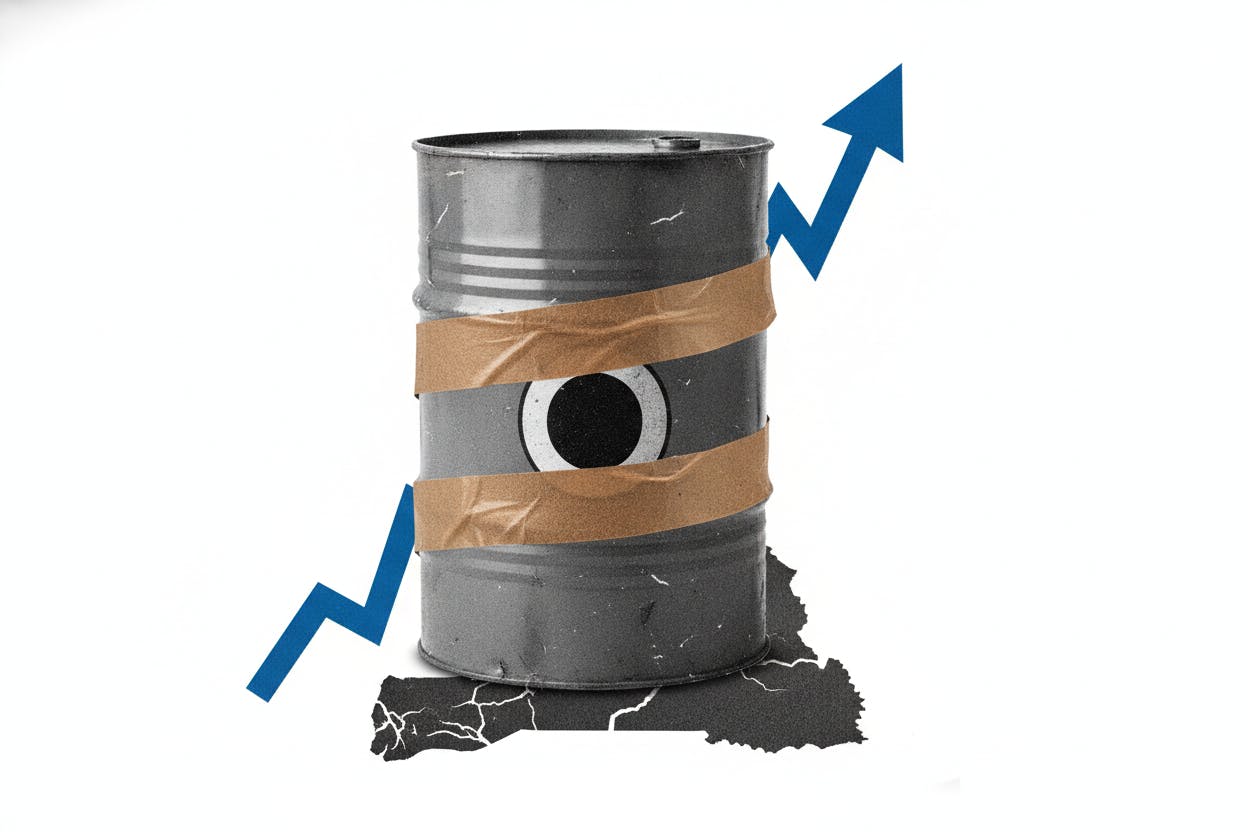
Crude oil prices climbed nearly 2% on Wednesday, extending recent gains, as escalating tensions between the United States and Iran rattled global markets. The move came after the US launched airstrikes against Iran and reimposed sanctions linked to Iranian crude sales, stoking fears of supply disruptions from one of the world's most important oil-producing regions.
At the same time, government bonds sold off, pushing yields higher, as investors demanded more compensation for the rising risks of inflation and uncertainty. The AI-led stock rally, which had powered markets higher in recent weeks, also showed signs of losing momentum.
What's driving the oil surge?
The immediate trigger for Wednesday's move was a series of US military strikes and new sanctions targeting Iran's oil exports. According to reports, the US launched airstrikes against Iranian positions and reimposed restrictions on Iranian crude sales, a move that directly threatens supply from a major OPEC producer.
Oil traders quickly repriced the risk of a broader conflict in the Middle East. Even a temporary disruption to Iranian oil flows could tighten global supply, especially at a time when inventories are already relatively low. The fear is that any escalation could draw in other producers or disrupt shipping routes through the Strait of Hormuz, a critical chokepoint for about 20% of the world's oil.
This is not the first time geopolitical tensions have jolted oil markets. Similar spikes have occurred in recent years after attacks on Saudi oil facilities or disruptions in the Red Sea. But the current backdrop of already-elevated inflation and uncertainty about central bank policy makes this move particularly significant for investors.
Bonds sell off as inflation fears return
Alongside the oil rally, government bonds came under pressure. Yields on US Treasuries and other sovereign bonds rose, meaning prices fell. That's a classic sign that investors are demanding a higher premium to hold long-term debt when inflation and geopolitical risks are rising.
Higher oil prices feed directly into inflation because energy costs affect everything from transport to manufacturing. If oil stays elevated, it could make it harder for central banks like the Federal Reserve to cut interest rates as quickly as markets had hoped. That's why bond yields moved higher on Wednesday — investors are pricing in a more cautious monetary policy outlook.
For a deeper look at how this is affecting bond markets, see our coverage on Treasury Yields Hit Four-Week Highs as Oil Surge and Heavy Auction Week Rattle Bond Markets.
AI stock rally loses steam
Adding to the cautious mood, the AI-driven stock rally that has dominated markets this year began to lose momentum. Tech stocks, particularly those tied to artificial intelligence, had been on a tear, but Wednesday's session saw some profit-taking and a shift toward defensive sectors.
The combination of rising oil prices, higher bond yields, and geopolitical uncertainty is a classic headwind for growth stocks. Higher yields make future earnings less valuable in today's terms, which hits high-valuation tech companies hardest. The AI trade, which had been a bright spot, is now facing a reality check as investors reassess risk.
For context on how this is playing out in other markets, see our report on Germany's DAX Falls 1.37% as Middle East Tensions Drive Oil Prices Higher.
What it means for investors
For everyday investors, the key takeaway is that geopolitical events can quickly reshape market dynamics. Oil-sensitive sectors like airlines, shipping, and manufacturing could face higher costs if crude stays elevated. On the other hand, energy stocks and commodity-linked assets may benefit from the price surge.
Bond investors should watch for further yield increases if oil prices continue to climb. That could make fixed-income investments more attractive relative to stocks, especially growth stocks with high valuations. Diversification across asset classes becomes more important in such an environment.
It's also worth noting that the impact varies by region. For example, oil-importing countries like India are particularly vulnerable to higher crude prices. Our article on Indian Stocks Fall as Oil Surge on US-Iran Tensions Hits Import Costs explains how this is affecting emerging markets.
Finally, keep an eye on central bank communications. If oil-driven inflation persists, the Fed and other central banks may delay rate cuts, which would have broad implications for stocks, bonds, and currencies. The next few weeks will be critical as markets digest these developments.