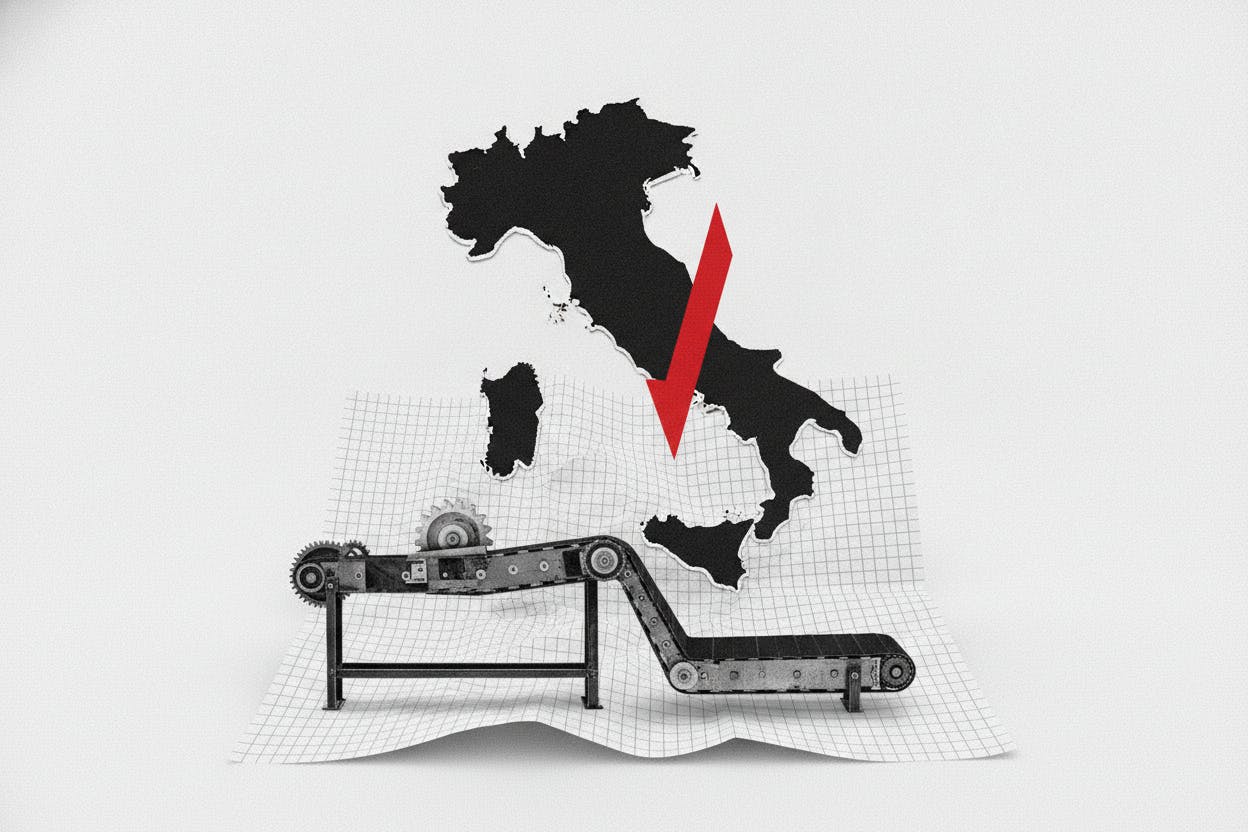
Italy's factories hit a speed bump in June, with industrial production falling 1.0% from the previous month, according to data from national statistics agency ISTAT reported by Reuters. The decline was a clear miss against economists' expectations for a small rebound, and it has raised fresh questions about the strength of the country's economic recovery.
The drop marks a reversal after a period of modest gains, and it underscores the fragility of Italy's manufacturing sector, which has been grappling with high energy costs, weak export demand, and lingering supply chain disruptions. For everyday investors, the data is a reminder that Europe's third-largest economy is not out of the woods yet.
What the numbers show
Industrial production is a key gauge of economic health, measuring the output of factories, mines, and utilities. A 1.0% month-on-month decline is significant, especially when the consensus forecast had called for a small increase. The miss suggests that the momentum seen earlier in the year may be fading.
The data also feeds into broader concerns about Italy's growth trajectory. The government has projected a recovery that would carry into 2026, but a sustained slump in factory output could undermine those assumptions. Manufacturing is a critical driver of Italian exports, and weakness here often ripples through the rest of the economy, affecting employment and investment.
It's worth noting that monthly industrial production figures can be volatile, and a single month's drop does not necessarily signal a long-term trend. However, the fact that the decline came against expectations for growth makes it more concerning, as it suggests underlying conditions are weaker than many analysts had assumed.
Why it matters for investors
For investors, the Italian industrial data is more than just a national statistic. Italy is a major player in the eurozone, and its economic health has implications for the European Central Bank's policy decisions, the value of the euro, and the performance of European stocks and bonds.
A weaker Italian economy could weigh on the eurozone's overall growth, potentially prompting the ECB to reconsider the pace of interest rate changes. Lower growth often leads to lower corporate earnings, which can drag on stock prices, particularly in sectors like manufacturing, autos, and machinery that are sensitive to industrial cycles.
Bond investors will also be watching. Italy carries a large public debt, and slower growth makes it harder for the government to service that debt, which can push up yields on Italian government bonds. Higher yields, in turn, can increase borrowing costs for the government and for businesses, creating a feedback loop that further dampens economic activity.
That said, not all is bleak. Italy's services sector has shown resilience, with a recent rebound in July as cost pressures eased, according to separate data. This suggests that the economy is not uniformly weak, and that the pain may be concentrated in manufacturing rather than across the board.
What to watch next
Investors will be looking ahead to the next few months of data to see whether June's slump is a one-off or the start of a trend. Key indicators to watch include the next industrial production release, as well as surveys of business confidence, which can provide a more forward-looking view.
Also on the radar is the broader European economic picture. The eurozone has been dealing with sluggish growth, and any signs of deterioration in major economies like Italy could reinforce calls for more supportive policy. Meanwhile, global factors such as energy prices and trade tensions remain wild cards.
For now, the June data serves as a cautionary note. It doesn't mean a recession is imminent, but it does mean that the path to 2026 growth is likely to be bumpier than hoped. Investors should keep an eye on how Italian policymakers and the ECB respond, as their actions will shape the outlook for both the economy and financial markets.
In the meantime, the slump in Italian factory output echoes similar weakness seen elsewhere, such as the recent dip in US factory orders, which also missed forecasts in June. That suggests the industrial soft patch is not unique to Italy, but part of a broader global trend that investors will need to navigate.