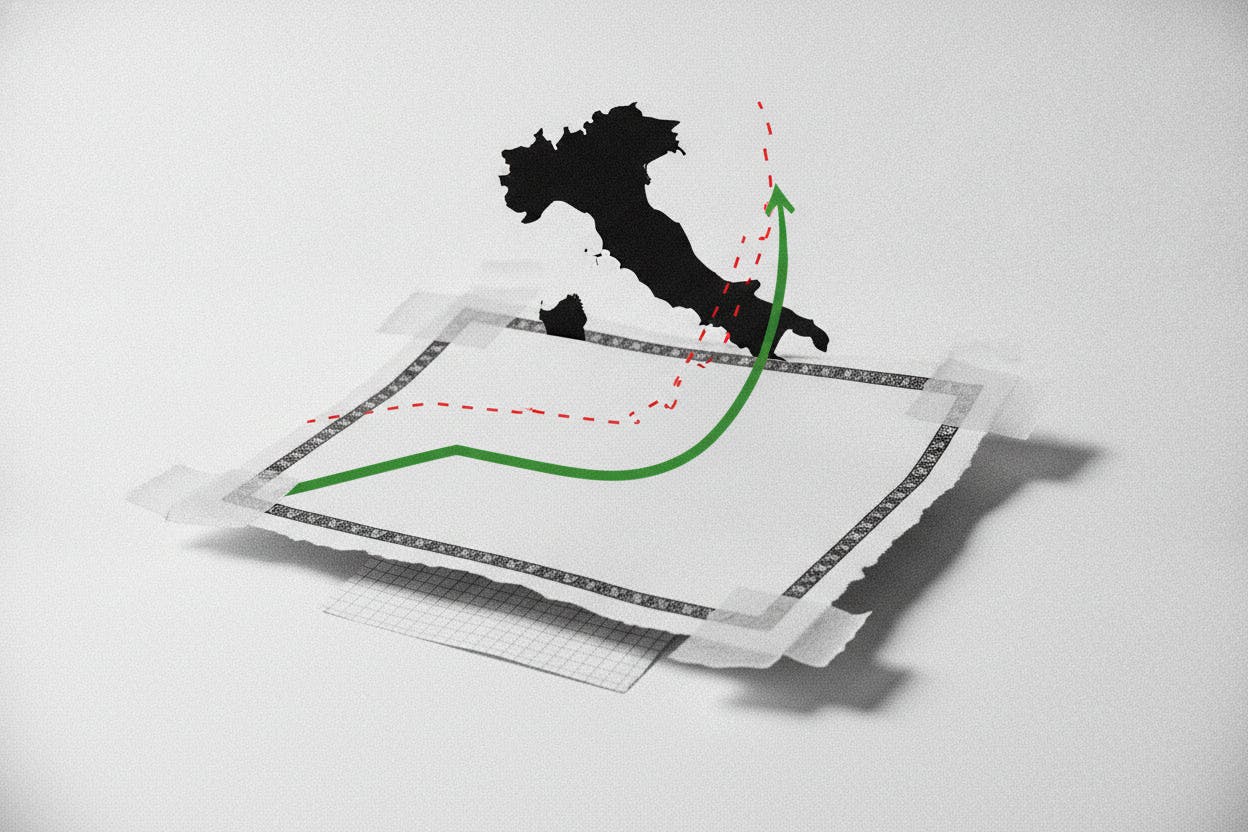
Italy's service businesses showed renewed vigor in July, according to a closely watched survey released on Monday. S&P Global's services purchasing managers' index (PMI) rose to 52.5, up from 50.2 in June, signaling that the sector—which accounts for the bulk of Italy's economic output—returned to solid growth after a sluggish spring.
The reading beat economists' expectations and marks the second consecutive month above the 50 threshold that separates expansion from contraction. The improvement was broad-based: new orders picked up, hiring ticked higher, and business confidence strengthened. At the same time, the pace of input cost inflation eased again, offering some relief to firms that have been grappling with elevated expenses.
What the PMI numbers tell us
PMIs are based on monthly surveys of purchasing managers at companies, asking them whether business conditions improved, worsened, or stayed the same compared with the previous month. A reading above 50 means the sector is expanding; below 50 signals contraction. The index is widely followed because it is one of the earliest indicators of economic health, released before official data.
Italy's services PMI had dipped to 50.2 in June, barely above the expansion line, after a softer patch in the spring. July's jump to 52.5 suggests that the sector has found its footing again. The composite PMI, which combines services and manufacturing, also rose to its highest level since November last year, indicating that the broader private sector is gaining momentum.
Under the hood, the details were encouraging. New orders improved, and employment increased, suggesting that businesses are confident enough to expand their workforces. The input cost gauge eased to 61.2 from 62.1, continuing a pullback from May's peak of 66.7. While still elevated, this trend points to a gradual cooling of cost pressures, which could help margins and, eventually, consumer prices.
Why services matter for Italy
Services are the engine of Italy's economy, accounting for roughly three-quarters of gross domestic product. Tourism, retail, finance, and business services are all part of this sector. When services are strong, it typically means more jobs, higher consumer spending, and better overall growth. Conversely, a weak services sector can drag down the entire economy.
The recent improvement comes at a time when the European Central Bank is watching inflation closely. Services inflation has been stickier than goods inflation in the euro area, partly because wages in the sector have been rising. If services costs continue to ease, it could give the ECB more confidence that inflation is moving sustainably toward its 2% target, potentially influencing its interest rate decisions later this year.
What it means for investors
For investors, the stronger services PMI is a positive signal for Italian equities and the broader euro zone economy. A healthier services sector supports corporate earnings, particularly for domestically focused companies in retail, travel, and financial services. It also reduces the risk of a recession, which is good for risk assets generally.
However, the data also highlights the unevenness of the global recovery. While Italy's services sector is picking up, other economies are showing signs of cooling. For instance, Japan's private sector growth has cooled as its services sector softened in July, and South Africa's private sector barely grew as demand weakened. These contrasts underscore that the global economy is not moving in lockstep.
For investors with exposure to European assets, the Italian data is a welcome sign. It suggests that the euro zone's third-largest economy is not a drag on the region, and it may even contribute to a more balanced recovery. Still, the easing of input costs is a double-edged sword: while it helps margins, it also reflects softer demand in some areas, which could weigh on pricing power.
Looking ahead
Investors will be watching the next few months of PMI data to see if July's improvement is sustained. The ECB's next policy meeting will also be in focus, as policymakers weigh the inflation outlook against signs of economic resilience. For now, Italy's services sector appears to have turned a corner, but the path ahead remains uncertain.
As always, it's important to remember that a single month's PMI reading is just one data point. But when combined with other indicators, it helps paint a picture of where the economy is headed. For everyday investors, the takeaway is that Italy's economy is showing signs of life, which could bode well for European markets in the near term.