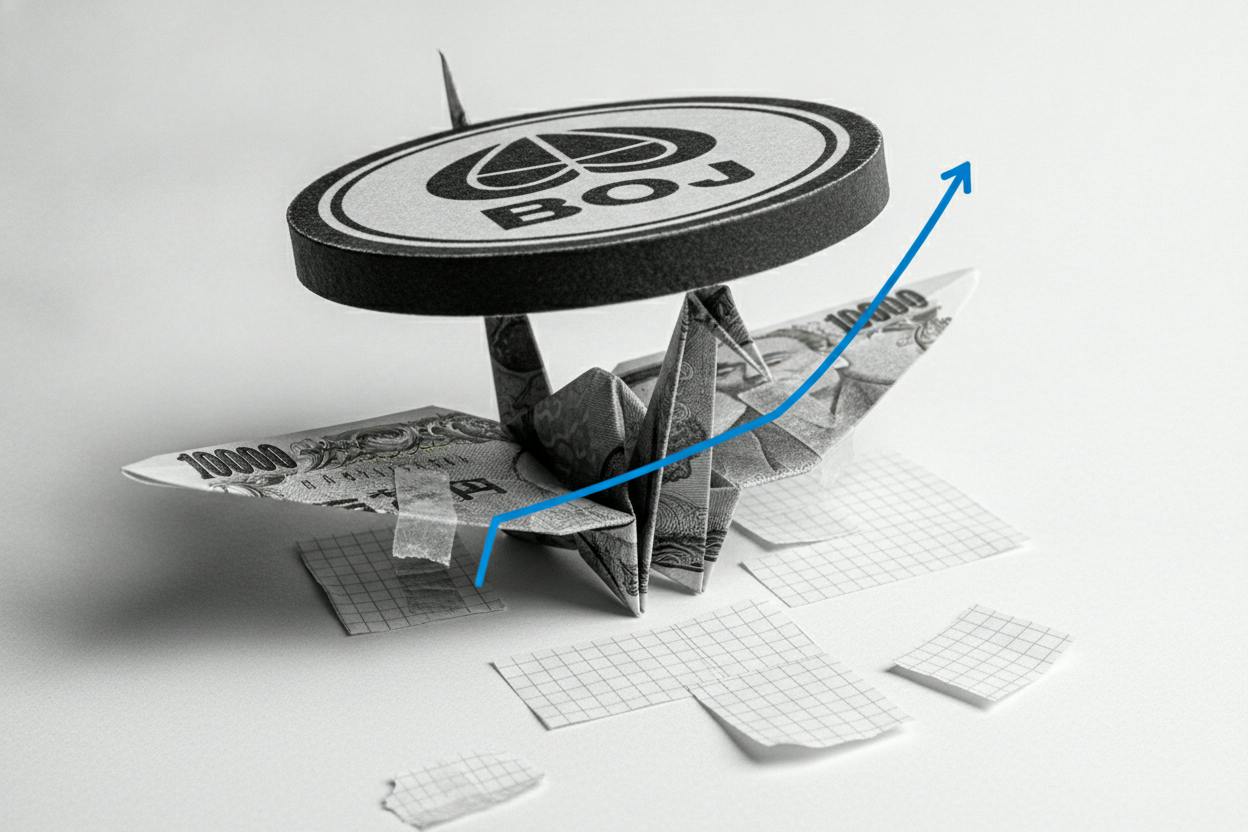
Japan's latest inflation reading has kept the Bank of Japan (BOJ) in the spotlight, with markets now pricing in a decent chance of a rate hike when the central bank concludes its policy meeting on December 18. Core consumer prices rose 2.2% in October from a year earlier, up from 2.1% in September and just below the 2.3% that economists had forecast.
The modest acceleration matters because it suggests price pressures are broadening beyond a few volatile categories. That gives the BOJ more ammunition to argue that inflation is becoming "sticky" enough to justify tightening monetary policy further. The central bank has been gradually normalizing policy after years of ultra-low interest rates, and investors are keen to see if it will pull the trigger again before the year ends.
What the data shows
Japan's core consumer price index (CPI) excludes fresh food, which tends to swing sharply with weather and seasonal factors. The 2.2% year-on-year rise in October is still above the BOJ's 2% target, a level it has now held for well over a year. That persistence is a key reason why the central bank has been slowly raising its policy rate from near zero.
The BOJ's current policy rate stands at 1.25%. A hike at the December meeting would take it to 1.5%. That might sound small, but for a country that spent decades with rates at or below zero, even incremental moves are significant. They signal that the era of ultra-cheap money is truly ending.
What's driving the inflation? The brief doesn't specify, but broadly, Japan has seen rising costs for food, energy, and services. The yen's weakness has also made imported goods more expensive, adding to the pressure. The BOJ has repeatedly said it wants to see evidence that inflation is driven by domestic demand and wage growth, not just temporary factors like import costs.
Why the December meeting matters
The BOJ's next policy meeting ends on December 18. Markets are watching closely because the central bank has been signaling that it could act if inflation stays on track. The October CPI print, while slightly below forecasts, was still an uptick from the previous month, which keeps the door open for a move.
Investors are also mindful of the global context. Central banks in other major economies, like the U.S. Federal Reserve, have been wrestling with inflation too. Some, like the Fed, have been cutting rates recently, while others are still considering hikes. Japan stands out as one of the few major economies still in tightening mode, which has implications for currency markets and global bond yields.
If the BOJ does hike, it could strengthen the yen, which has been under pressure for much of the year. A stronger yen would make Japanese exports more expensive but would also help tame import-driven inflation. For global investors, a BOJ hike could ripple through bond markets, as Japanese yields are a benchmark for many Asian markets.
What it means for investors
For everyday investors, the key takeaway is that Japan's inflation is not fading away. That means the BOJ is likely to keep raising rates, which could affect everything from Japanese stocks to the value of the yen and even global bond markets.
If you hold Japanese equities, higher rates can be a mixed bag. Banks and financial firms often benefit from wider interest margins, but companies that rely heavily on borrowing may see costs rise. Exporters could face headwinds if the yen strengthens.
For those with international portfolios, a BOJ hike could influence currency exchange rates. A stronger yen would mean that Japanese assets are worth more in dollar terms, but it could also make Japanese goods pricier abroad, potentially hurting corporate profits.
It's also worth noting that the BOJ's decisions don't happen in a vacuum. The central bank will be watching the same global factors that affect all markets, including trade tensions, geopolitical risks, and the pace of inflation in other countries. The dollar's recent strength and its impact on emerging markets is one example of how interconnected these dynamics are.
Another factor to watch is how the BOJ's stance compares with other central banks. While the Fed has been signaling potential rate cuts, the BOJ is still leaning toward hikes. That divergence could keep the yen under pressure or lead to sudden moves if the BOJ surprises the market.
For now, the December 18 meeting is the next big date on the calendar. Until then, expect plenty of speculation and market jitters as investors try to guess the BOJ's next move. As always, it's wise to stay diversified and not make drastic changes based on a single data point.
"The October inflation print keeps the BOJ on track for a December hike, but the decision will hinge on more than just one number," said a market analyst. "Wage data and the yen's level will be just as important."
In the meantime, keep an eye on how Japanese inflation evolves and what the BOJ says in the weeks leading up to the meeting. The central bank has been known to surprise, so it's best to be prepared for either outcome.