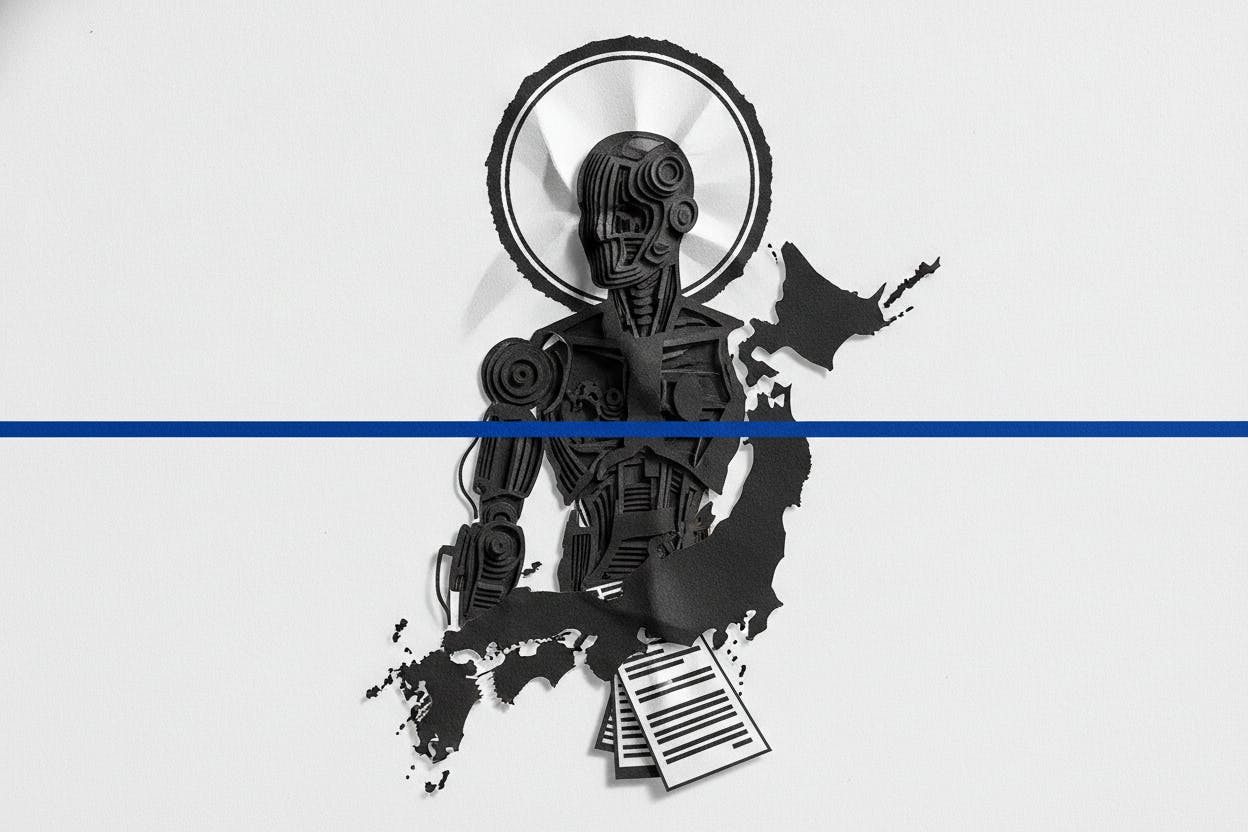
Japan's government has selected Noetra, a company backed by SoftBank Corp., to spearhead the development of a national artificial intelligence model designed specifically for robots. The project, which will run from fiscal 2026 through 2030, comes with public funding of up to 1 trillion yen (roughly $6.6 billion).
The Ministry of Economy, Trade and Industry (METI) and the New Energy and Industrial Technology Development Organization (NEDO) announced that Noetra and the National Institute of Advanced Industrial Science and Technology (AIST) won a public tender to operate the so-called 'physical AI' initiative.
What Is a 'Physical AI' Model?
Unlike standard AI models that process only text or images, a multimodal 'physical AI' platform combines language, images, video, and sensor data. This allows robots to interpret their surroundings and take physical actions—such as navigating a warehouse, assembling parts, or assisting in healthcare settings.
The goal is to create a foundational AI model that can be used across different types of robots, rather than building custom software for each machine. This approach could accelerate the adoption of robotics in manufacturing, logistics, and elder care—areas where Japan faces labor shortages due to its aging population.
Japan's push into physical AI comes as global competition in robotics heats up. Companies like Google-backed Apptronik have opened facilities to train humanoid robots for real-world tasks, while Chinese firms such as Meituan are developing open-source AI models trained on domestic chips.
Funding and Timeline
METI's budget outline has already allocated 387.3 billion yen for fiscal 2026, funded through GX Economy Transition Bonds. The total investment could reach 1 trillion yen over the five-year period, though contracts are still being finalized.
The project is part of Japan's broader strategy to maintain its edge in robotics, an industry where it has long been a leader. The country's factories recently posted their best quarter in over a decade, with the Purchasing Managers' Index hitting 54.8, signaling strong manufacturing activity.
What It Means for Investors
For everyday investors, this development signals that Japan is doubling down on AI and robotics as a national priority. Government backing of this scale can create opportunities for companies in the supply chain, from chipmakers to sensor manufacturers.
SoftBank Corp.'s involvement through Noetra highlights the telecom and tech conglomerate's bet on AI infrastructure. SoftBank has been a major investor in AI-related ventures globally, and this project could strengthen its position in Japan's robotics ecosystem.
Investors should also watch how this initiative interacts with broader market trends. Japan's Nikkei index has rallied recently, partly driven by gains in AI chip stocks, though profit-taking has capped some of those gains. The yen's weakness, which recently hit a 1986 low against the dollar, could also affect the cost of imported components for robotics.
While the project is still in its early stages, the scale of government funding suggests that Japan sees physical AI as a strategic sector. For investors with exposure to Japanese equities, companies involved in robotics, automation, and AI software could see long-term benefits from this national push.
However, it's important to remember that government-backed projects can face delays and budget adjustments. The five-year timeline means that tangible results may take time to materialize, and investors should focus on the broader trend rather than short-term milestones.