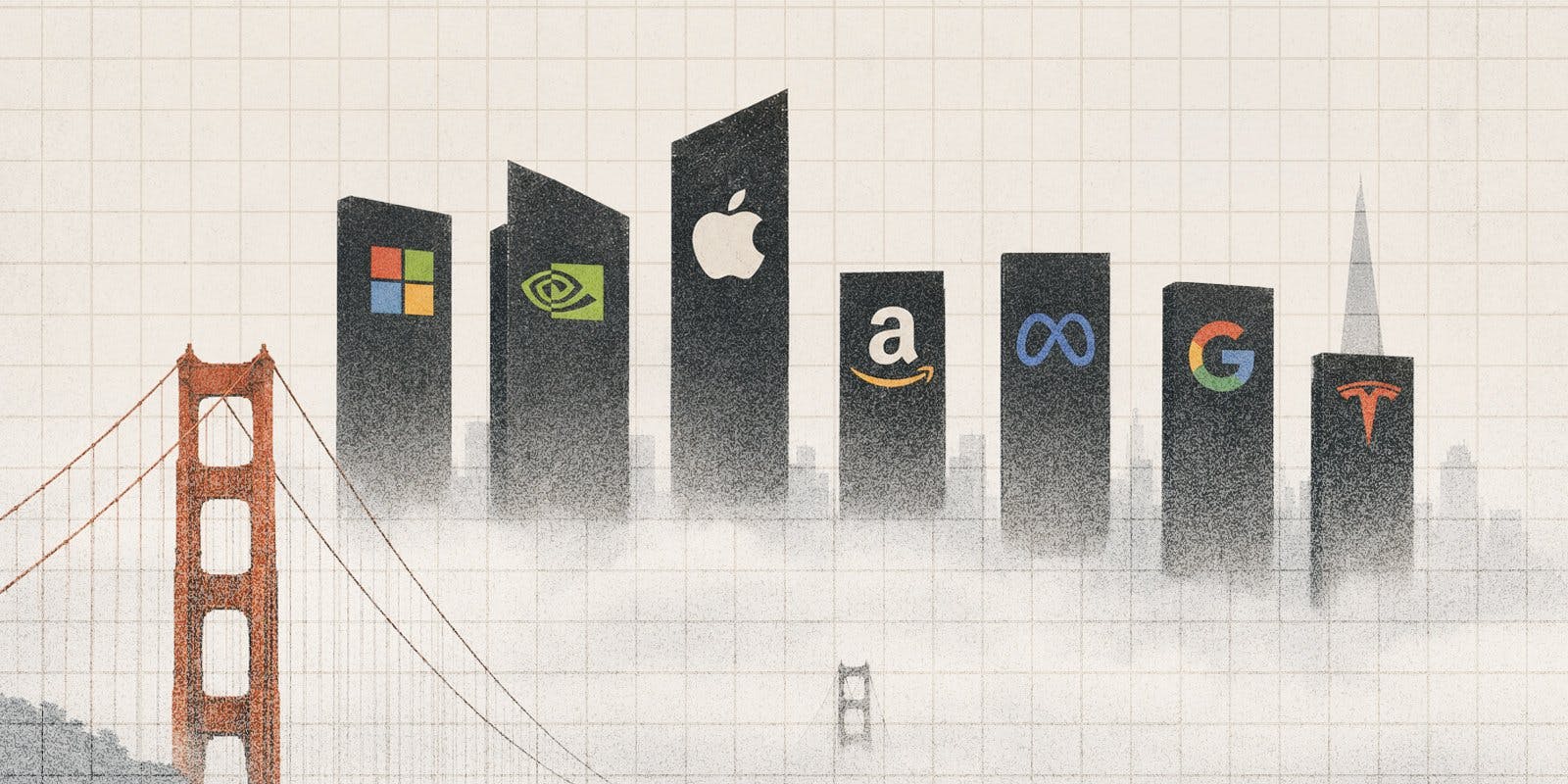
June has been a gloomy month for the Magnificent Seven—the group of tech giants that includes Microsoft, Nvidia, Apple, Amazon, Meta, Alphabet, and Tesla. All seven saw their stock prices slide during the month, as investors grew increasingly worried about the hundreds of billions of dollars these companies are pouring into artificial intelligence infrastructure, from chips to data centers.
The sell-off marks a shift in sentiment. For months, the Magnificent Seven had been the darlings of the market, driving much of the S&P 500's gains. But now, investors are questioning whether the massive spending on AI will ever translate into meaningful profits—and whether the boom might be overdone.
Why the Magnificent Seven Are Under Pressure
The core concern is simple: these companies are spending heavily on AI, but the returns are not yet visible. Microsoft, Amazon, and Alphabet are investing billions in cloud infrastructure and AI models. Nvidia, which makes the chips that power AI, has seen its stock soar, but even it is not immune to the broader worry. Apple and Tesla are also spending on AI for products like autonomous driving and smart devices.
Investors, tired of waiting for profits to materialize, have started to move their money elsewhere. The Philadelphia Semiconductor Index, which tracks US chipmakers, surged 82% in the second quarter alone. That makes sense: chip companies are directly benefiting from all that spending. With demand for chips still outstripping supply, prices—and profits—have reaped the rewards.
But the rally in chip stocks is not without risks. The Bank for International Settlements warned last week that the AI race may have already been overinvested in. If spending has happened too quickly, the boom could come to an abrupt end—potentially soon.
What It Means for Investors
For everyday investors, the June gloom for the Magnificent Seven is a reminder that no stock is invincible. Even the biggest tech companies can face headwinds when market sentiment shifts. The key takeaway is that the AI spending boom is a double-edged sword: it benefits chipmakers and other suppliers today, but it depends on continued spending by the tech giants tomorrow.
Memory chip makers have been leading the charge this year. Sandisk has surged sevenfold, while Micron, Intel, Western Digital, and Seagate have all more than tripled. But that momentum will only last if Big Tech keeps spending. If the AI investment cycle slows, those gains could reverse quickly.
Investors are also rotating out of tech and into other sectors. Banks and industrial firms have seen increased buying as money flows away from the Magnificent Seven. This rotation could make the broader market rally more sustainable, since it spreads risk across more sectors rather than relying on just a handful of tech stocks.
The Bigger Picture: A Market in Transition
The Magnificent Seven's decline in June is part of a larger trend. For years, these stocks were the engine of the US market, but their influence is waning. As investors diversify, the market becomes less vulnerable to a single sector's downturn.
This shift is healthy for long-term investors. A rally that depends on just a few stocks is inherently fragile. If the rotation continues, the market could see broader participation, which tends to be more sustainable.
However, the Bank for International Settlements' warning about AI overinvestment is a cautionary note. If the AI spending boom turns out to be a bubble, the fallout could hit not just the Magnificent Seven but also the chipmakers and other companies that have benefited from their spending.
For now, investors are watching closely. The June sell-off may be a temporary blip, or it could be the start of a larger correction. Either way, the message is clear: the AI spending story is entering a new, more uncertain phase.