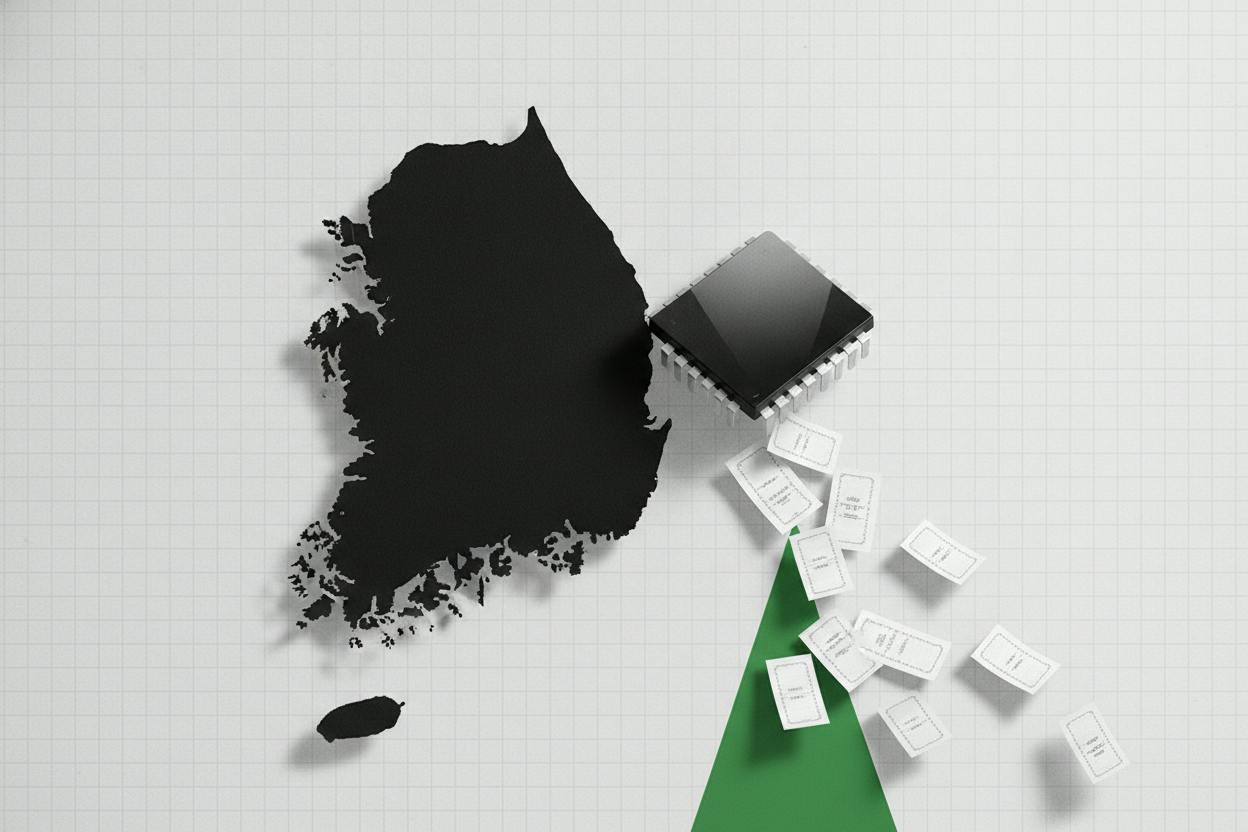
South Korea's benchmark KOSPI index closed at a two-month high on Tuesday, rising 0.90% to 7,080.92, as a rally in semiconductor stocks outweighed selling by foreign investors ahead of the Chuseok holiday break.
The day's gains were concentrated in the country's two largest chipmakers. Samsung Electronics jumped 3.25%, while SK Hynix added 1.20%, echoing a surge in US AI-related stocks the previous night, according to Reuters. The strength in those heavyweights helped push the broader index higher despite a choppy session marked by profit-taking before the market closure.
What's driving the chip rally?
The move reflects continued investor enthusiasm for companies tied to artificial intelligence. Both Samsung and SK Hynix are major producers of memory chips, including high-bandwidth memory (HBM) used in AI data centers. As demand for AI computing power grows, these firms are seen as key beneficiaries.
Tuesday's advance follows a broader trend across Asia, where chip stocks have been leading gains in South Korea and Taiwan. The overnight rally in US tech shares, driven by optimism around AI, provided a tailwind for Korean semiconductor names.
However, the market's strength was not broad-based. Decliners outnumbered advancers 548 to 311, a sign that the rally was narrow and driven by a handful of large-cap tech names rather than widespread buying. This divergence, known as weak market breadth, can sometimes signal that a rally is fragile.
Foreign investors step back before Chuseok
Foreign investors sold a net 510.1 billion won (roughly $380 million) of KOSPI shares during the session. The selling came as traders positioned themselves ahead of the Chuseok holiday, a major South Korean festival when markets are closed for several days.
Holiday-related caution is common in Asian markets, as investors often reduce exposure to avoid risks over the break. The Chuseok period can also lead to lower trading volumes, which may amplify price swings.
Despite the foreign outflows, the index managed to close higher, underscoring the strength of domestic buying interest in chip stocks. The resilience also reflects a broader recent uptrend in the KOSPI, which has been supported by improving semiconductor exports and easing oil prices.
What it means for investors
For everyday investors, the KOSPI's move highlights how concentrated gains in a few large tech names can drive the overall index. Samsung and SK Hynix together account for a significant portion of the KOSPI's market capitalization, so their performance has an outsized impact on the benchmark.
Investors should be aware that a narrow rally—where only a few stocks rise while most fall—can be less healthy than a broad advance. It means that if sentiment toward AI chips turns, the index could be more vulnerable to pullbacks.
The foreign selling ahead of Chuseok is also worth watching. While it didn't derail Tuesday's gains, sustained outflows from foreign investors can weigh on the market over time. On the other hand, domestic institutional and retail buying has been a stabilizing force in recent sessions.
Looking ahead, market participants will likely focus on global AI demand signals, US tech earnings, and any developments in the semiconductor export cycle. South Korea's chip exports have been a key driver of its economic growth, and record chip exports have helped lift the KOSPI in recent months.
For those with exposure to Korean equities, the key takeaway is that AI-driven demand for memory chips remains a powerful force, but the market's reliance on a few names means diversification and caution are prudent. As always, it's important to consider your own financial goals and risk tolerance rather than reacting to short-term market moves.