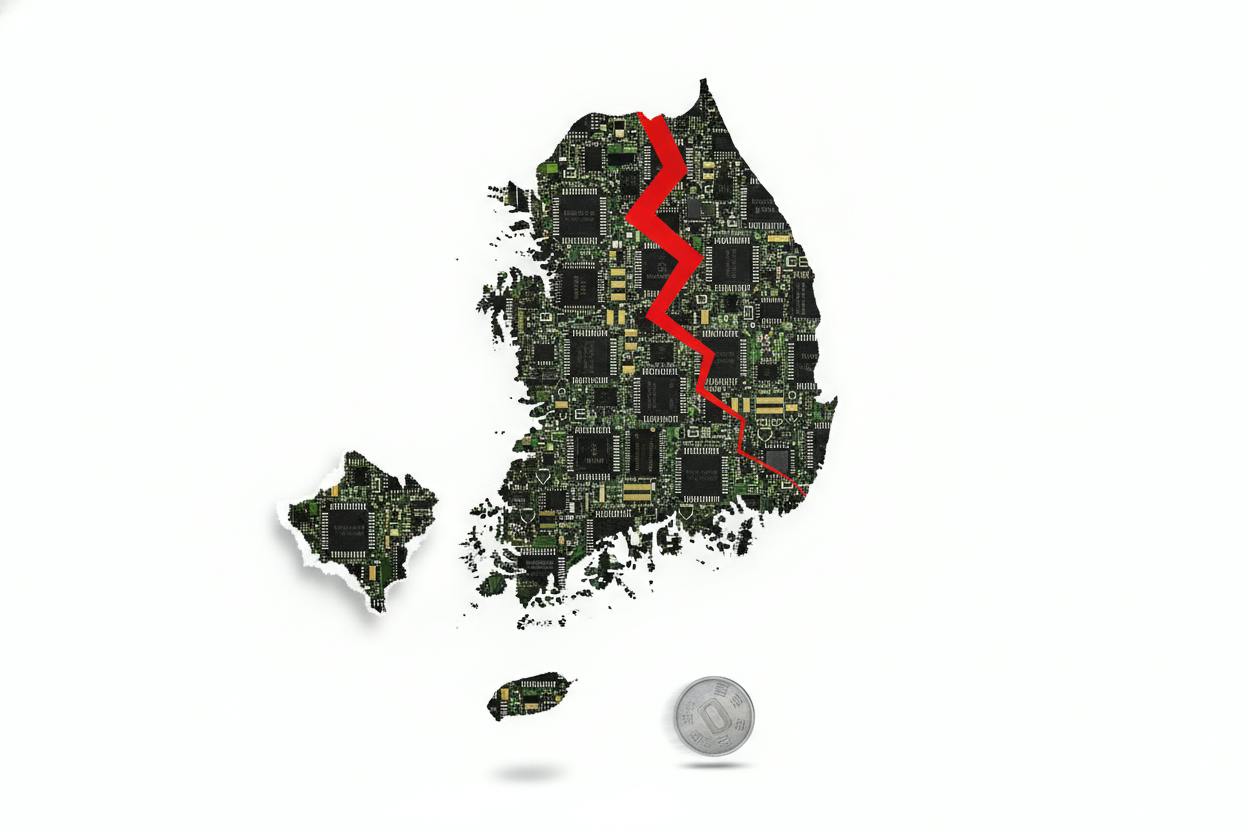
South Korea's main stock index, the KOSPI, fell more than 6% on Tuesday, briefly triggering a trading curb, as investors reacted to fears that a Chinese memory-chip maker is catching up to the global leaders. The drop was led by heavy selling in tech stocks, especially the two giants that dominate the index: Samsung Electronics and SK Hynix.
The trigger came from the US, where Micron Technology, one of the world's largest memory-chip makers, saw its shares slide on concerns that China's ChangXin Memory Technologies (CXMT) is narrowing the technology gap in memory chips. Memory chips are the components used in smartphones, data centers, and AI systems, and they have been a major driver of the recent tech boom.
Why the chip scare hit South Korea so hard
South Korea's stock market is heavily concentrated in technology, with Samsung Electronics and SK Hynix together accounting for a huge portion of the KOSPI's value. Both companies are global leaders in memory chips, particularly DRAM and NAND flash, which are used in everything from phones to servers running artificial intelligence.
For years, investors have bet that these companies would ride a wave of demand for memory chips, especially as AI applications require vast amounts of data storage and processing power. That narrative has made the KOSPI one of the best-performing major indexes in recent years, but it also means the market is highly sensitive to any sign that the competitive landscape is shifting.
If Chinese rivals like CXMT can produce memory chips that are nearly as good at a lower cost, the pricing power of Samsung and SK Hynix could weaken. That would squeeze their profit margins and make their future earnings less certain. Tuesday's sell-off was a direct response to that fear, and it hit the tech-heavy index hard.
The selling was broad, and it wasn't just local money. Overseas investors were net sellers of 2,065.3 billion won (about $1.5 billion) of Korean shares, according to Reuters. At the same time, the South Korean won weakened to 1,338.8 per dollar, and government bond yields fell—the three-year yield dropped to 3.874% and the 10-year to 4.250%. That combination of falling stocks, a weaker currency, and lower bond yields is a classic “risk-off” move, as investors shift money into safer assets.
What this means for your portfolio
For everyday investors, this episode is a reminder of how interconnected global markets are. A single piece of news about a Chinese chipmaker can ripple through markets in the US, South Korea, and beyond. If you own funds that track the KOSPI or hold shares in Samsung or SK Hynix, you're directly exposed to these swings.
But even if you don't own Korean stocks directly, the fallout can affect global tech funds and even broader market sentiment. Many international funds have exposure to Korean tech names, and a sharp drop in the KOSPI can drag down those funds' performance.
One key thing to watch is the currency effect. When foreign investors sell Korean stocks, they often convert the proceeds back into dollars, which can push the won lower. For global investors who don't hedge their currency exposure, a falling market plus a weaker won can double the pain in dollar terms. That can trigger even more selling, creating a feedback loop that puts extra pressure on the KOSPI's heavyweights.
The fact that Korean government bond yields fell suggests that some investors are moving into safer assets, which is typical during times of stress. But it also means that the market is pricing in more uncertainty about the outlook for the chip sector.
What to watch next
Investors will be watching closely to see whether the selling continues or whether the market stabilizes. The key question is whether CXMT's progress is a real threat or just a temporary scare. Memory chip technology is complex, and it takes years to perfect manufacturing processes. While Chinese companies have made strides, they still lag behind the leaders in terms of yield and performance.
That said, the market is clearly nervous. This isn't the first time that concerns about AI spending or chip competition have hit Korean stocks. Earlier this year, the KOSPI slid on doubts about AI spending, and it has also been rattled by geopolitical tensions. Each time, the market has eventually recovered, but the volatility is a reminder of the risks.
For now, the best approach for most investors is to stay diversified and not panic. If you have a long-term horizon, a single day's drop—even a sharp one—is unlikely to change the fundamental picture for the companies involved. But it's worth keeping an eye on the won and on any further news about CXMT or other Chinese chipmakers.
As always, it's important to remember that investing in individual stocks or concentrated markets carries higher risk. Index funds that spread your money across many companies and countries can help cushion the blow when one sector or region hits a rough patch.