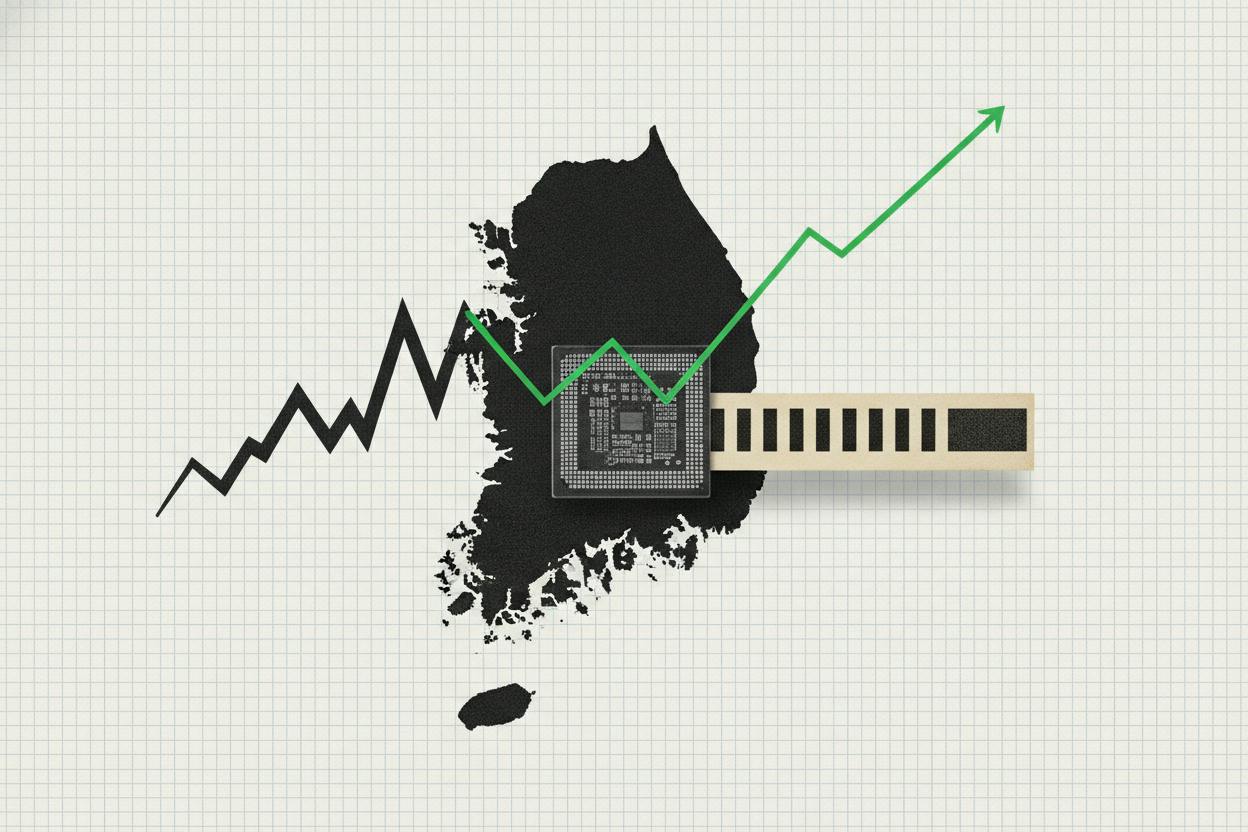
South Korean stocks snapped a five-day losing streak on Wednesday, as investors stepped back into the country's two biggest semiconductor makers. The Korea Composite Stock Price Index (KOSPI) rose, recovering some ground after Tuesday's sharp drop, with Samsung Electronics and SK Hynix leading the early gains.
The rebound came even as foreign investors were net sellers of Korean shares, a sign that the buying was driven largely by domestic and other investors looking for bargains after the recent pullback.
Why chipmakers led the bounce
Samsung Electronics and SK Hynix, which together account for a large chunk of the KOSPI's market value, had fallen sharply in recent sessions. Analysts said the declines may have been overdone, especially since there has been no clear deterioration in the companies' earnings outlook.
The bounce was also supported by a steadier tone in US-listed AI-related semiconductor stocks, which gave Korean chip investors a cue to step in. The two companies are major suppliers of memory chips used in artificial intelligence data centers, so their fortunes are closely tied to global AI demand.
Recent weeks have seen AI spending doubts weigh on chip stocks ahead of Big Tech earnings, and chip stocks have slid on concerns about a Chinese memory maker's progress. Those worries have made the sector more volatile, but Wednesday's move suggests some investors see the pullback as a chance to buy quality names at lower prices.
What's still weighing on the market
Despite the rebound, the backdrop remains cautious. Foreign investors were net sellers, which often signals that overseas funds are still reducing exposure to Korean equities. That could limit the sustainability of any rally.
In addition, South Korean government bond yields nudged higher. Rising yields can make bonds more attractive relative to stocks and can also increase borrowing costs for companies, which may weigh on equity valuations.
The KOSPI's five-day slide had been driven by a mix of global and domestic factors, including concerns about the pace of AI investment and broader tech weakness. Hong Kong tech stocks also slipped as investors questioned the payoff from AI spending, a reminder that the AI trade remains under scrutiny across Asia.
What it means for investors
For everyday investors, Wednesday's bounce is a reminder that markets rarely move in a straight line. After a sharp decline, some buyers will step in to pick up stocks they believe have fallen too far, especially if the underlying business outlook hasn't changed.
But the fact that foreign investors are still selling and bond yields are creeping up suggests the market may not be out of the woods yet. Investors should watch whether foreign selling continues and whether chip stocks can hold their gains in the coming sessions.
The semiconductor sector remains the key driver of the KOSPI, so any news about AI demand, memory chip prices, or competition from Chinese makers could move the index significantly. Chip stocks have slipped as AI startups chase cash and a China memory threat looms, and those dynamics are unlikely to disappear quickly.
For now, the rebound offers some relief, but investors should stay alert to the broader risks. A dip-buying bounce can be short-lived if the underlying concerns—such as high valuations, rising yields, or slowing AI momentum—persist.
As always, it's wise to focus on long-term fundamentals rather than trying to time short-term market moves. Diversification and a clear understanding of your own risk tolerance remain the most reliable tools for navigating volatile markets like this one.