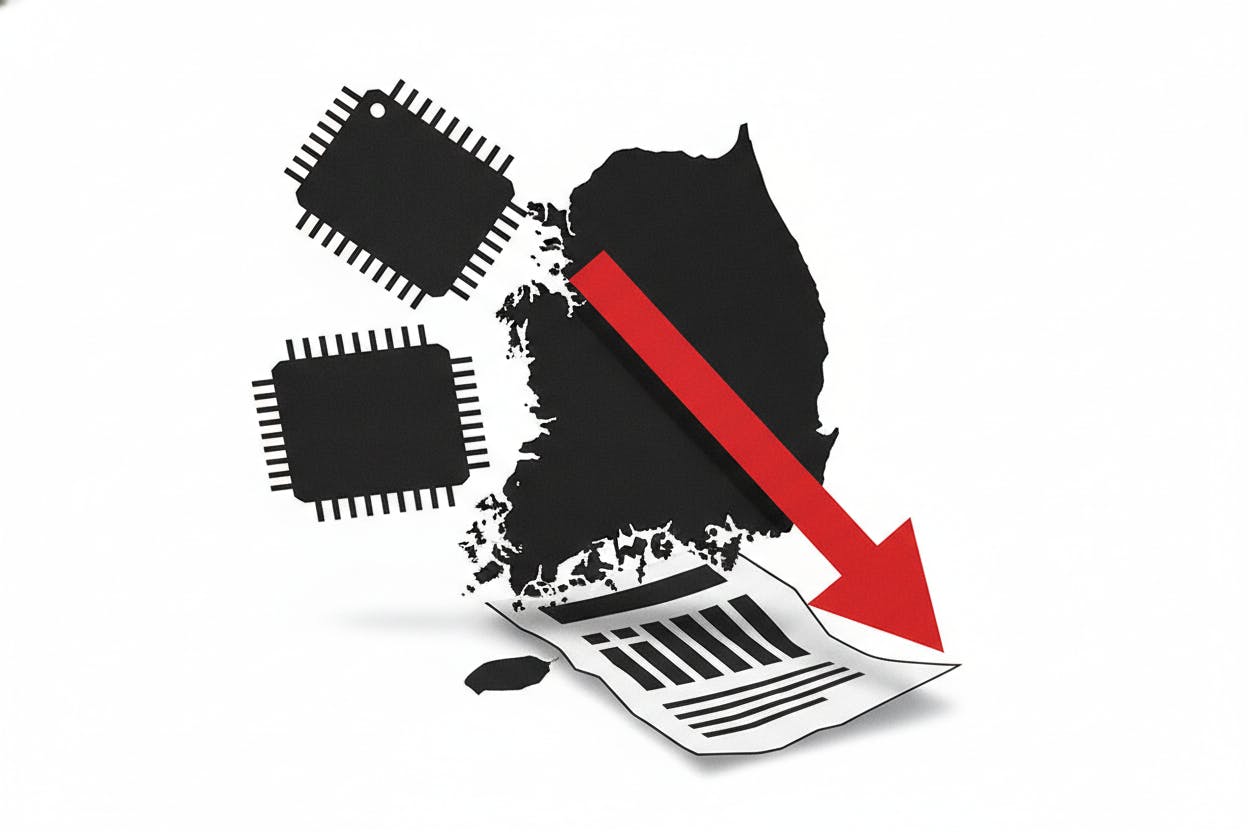
South Korea's benchmark KOSPI index tumbled 5.5% on [day], as its two largest components—Samsung Electronics and SK Hynix—each fell more than 7%. The decline came despite official data showing that the country's chip exports surged 179% in July, a figure that would normally be cause for celebration.
The sharp divergence between strong export numbers and falling stock prices underscores a key reality for investors in South Korea: the KOSPI's fate is largely tied to a handful of semiconductor makers. Together, Samsung Electronics and SK Hynix account for more than half of the index's total market value. When they slide, the entire benchmark tends to follow—even if the broader economy is doing well.
Why chip stocks fell despite booming exports
At first glance, a 179% jump in chip exports suggests robust demand for semiconductors, which are used in everything from smartphones to data centers. But investors were apparently focused on other factors. The selloff in Samsung and SK Hynix may reflect profit-taking after a strong run, concerns about valuations, or worries that the explosive growth in chip exports may be peaking.
There's also the broader context of global tech sentiment. Semiconductor stocks worldwide have been volatile as investors weigh the sustainability of artificial intelligence-driven demand. While AI has fueled a massive boom in memory chips—particularly high-bandwidth memory used in AI accelerators—some market participants worry that the pace of spending on AI infrastructure could slow. Recent earnings from SK Hynix showed record profits, yet the stock failed to rally, a sign that expectations may already be too high.
Additionally, the KOSPI's decline comes amid a broader global selloff in tech stocks. Investors have been rotating out of high-flying technology names into other sectors, a trend that has hit semiconductor companies particularly hard. The Federal Reserve's decision to hold interest rates steady has also weighed on risk appetite, as higher-for-longer rates make future earnings less attractive.
The KOSPI's concentration problem
The KOSPI's heavy reliance on Samsung and SK Hynix is both a strength and a vulnerability. When the chip cycle is up, the index can surge—as it did recently when the KOSPI jumped 16% on the back of a chip rebound. But when these giants stumble, the entire market feels the pain.
This concentration means that the KOSPI's performance often diverges from the underlying economy. Even with strong export data, the index can fall if investors are worried about the outlook for the tech sector. For everyday investors, this is a reminder that a country's economic health and its stock market are not always in sync.
What it means for investors
For those holding KOSPI-tracking funds or ETFs, this selloff is a stark illustration of concentration risk. A portfolio that mirrors the KOSPI is essentially a bet on Samsung and SK Hynix, and their fortunes are tied to the global semiconductor cycle. Diversification across sectors and geographies can help mitigate this risk.
The strong chip export data, however, suggests that the underlying demand for semiconductors remains robust. If the selloff is driven by valuation concerns rather than a deterioration in fundamentals, it could present a buying opportunity for long-term investors. But timing the bottom is notoriously difficult, and the volatility in tech stocks is likely to continue.
Investors should also watch for any signs that the AI-driven demand for memory chips is slowing. Samsung's AI chip outlook has been a major driver of South Korean stocks, and any negative news could trigger further declines. Conversely, if chip prices remain strong and demand stays high, the recent drop may prove to be a temporary setback.
In the meantime, the KOSPI's slide serves as a reminder that even the most promising economic data can be overshadowed by market sentiment. For investors, staying focused on long-term fundamentals—rather than short-term price swings—is often the wiser course.