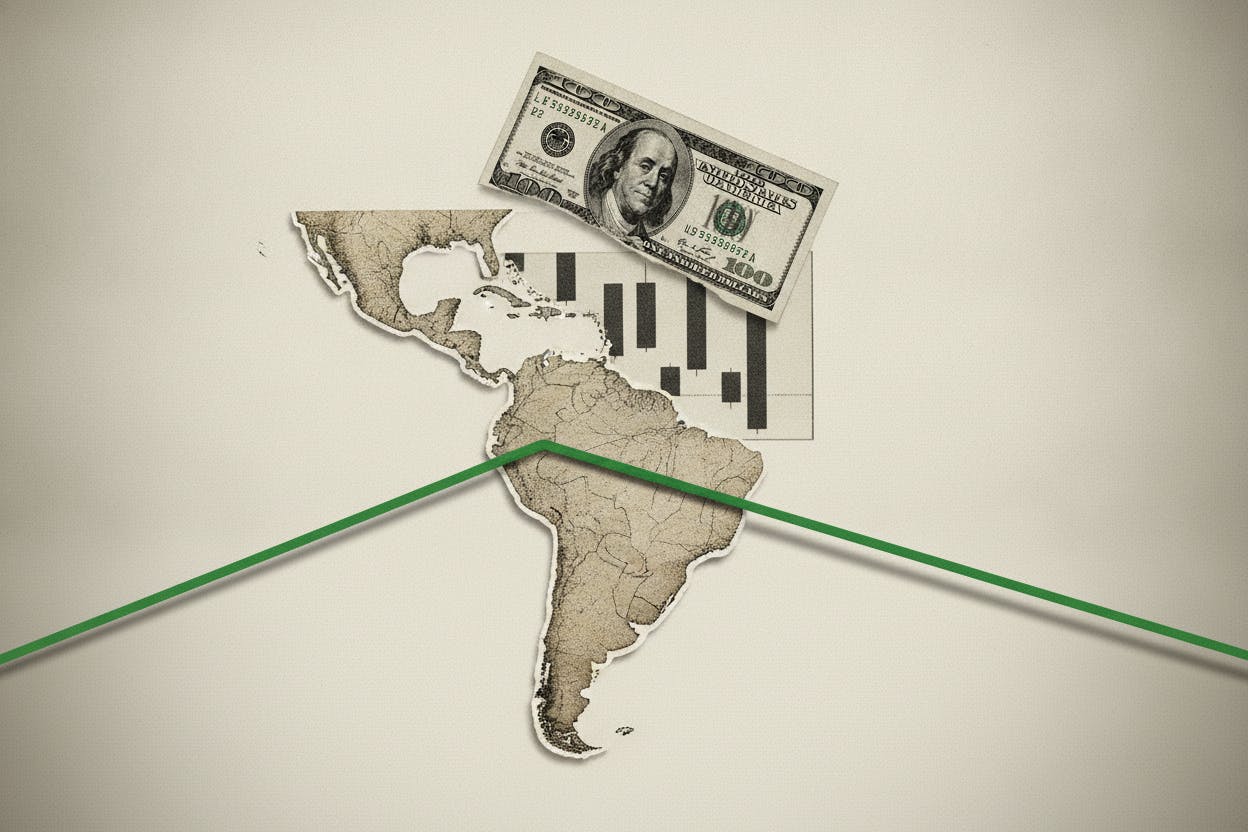
Latin American currencies rose on Tuesday as the US dollar weakened for a third consecutive session, giving a modest boost to the region's foreign-exchange markets. The regional FX gauge gained 0.4%, while MSCI Latin America stocks slipped 0.1%, a reminder that currencies and equities don't always move in lockstep.
The dollar's slide comes as softer US economic data has led traders to dial back expectations for a near-term Federal Reserve rate hike. When the Fed is seen as less likely to raise rates, the dollar tends to lose some of its appeal, and emerging-market currencies often benefit as investors seek higher yields elsewhere.
What's driving the move?
The latest leg of the dollar's decline follows a string of US data that has pointed to a cooling economy. That has prompted markets to reassess the path of Fed policy, with many now betting that the central bank will hold rates steady or even cut them later this year. Lower US rates reduce the interest-rate advantage of holding dollars, which can weigh on the greenback and support currencies in developing economies.
For Latin America, the effect was most visible in Brazil, where the real rebounded 0.6% ahead of October's presidential election. The real had been under pressure in recent weeks as investors weighed political uncertainty, but the softer dollar provided some relief. Other regional currencies also firmed, though the gains were modest.
The divergence between currencies and stocks is worth noting. While a weaker dollar can lift export-oriented companies by making their goods cheaper abroad, it can also signal concerns about global growth, which tends to hit equity markets. That helps explain why regional stocks barely moved even as currencies gained.
What it means for investors
For everyday investors, the key takeaway is that currency movements can have a direct impact on the value of international investments. If you hold funds or stocks that are exposed to Latin America, a stronger local currency can boost your returns when converted back to dollars or other home currencies. Conversely, a weaker dollar can make US assets less attractive to foreign buyers, which can affect global capital flows.
It's also a reminder that markets don't move in unison. Currencies, stocks, and bonds each respond to different forces, and a single economic data point can have opposite effects on different asset classes. That's why diversification across regions and asset types remains a core principle for long-term investors.
The broader trend of dollar weakness has been a theme across emerging markets. Similar moves have been seen in Asia, where currencies have hit records as the dollar softened, and in other regions where traders are watching inflation data for clues on central bank policy. The Aussie and Kiwi dollars have also climbed to multi-week highs as Fed hike bets faded.
For Latin America specifically, the upcoming Brazilian election adds a layer of uncertainty. Currency markets often react to political headlines, and investors will be watching for any signs of fiscal policy shifts. However, the immediate driver remains the global macro picture, particularly the Fed's next move.
Looking ahead
Traders will be watching upcoming US economic releases for further clues on the Fed's path. If data continues to come in soft, the dollar could weaken further, providing additional support for emerging-market currencies. On the other hand, any surprise strength in US data could reverse the trend quickly.
For now, the message for investors is to stay informed but not overreact to daily currency swings. While short-term moves can be volatile, long-term returns are driven by fundamentals like economic growth, corporate earnings, and policy stability. Keeping a diversified portfolio that includes both domestic and international exposure can help smooth out the bumps.
As always, it's important to remember that past performance is not a guarantee of future results, and currency movements are just one piece of the investing puzzle.