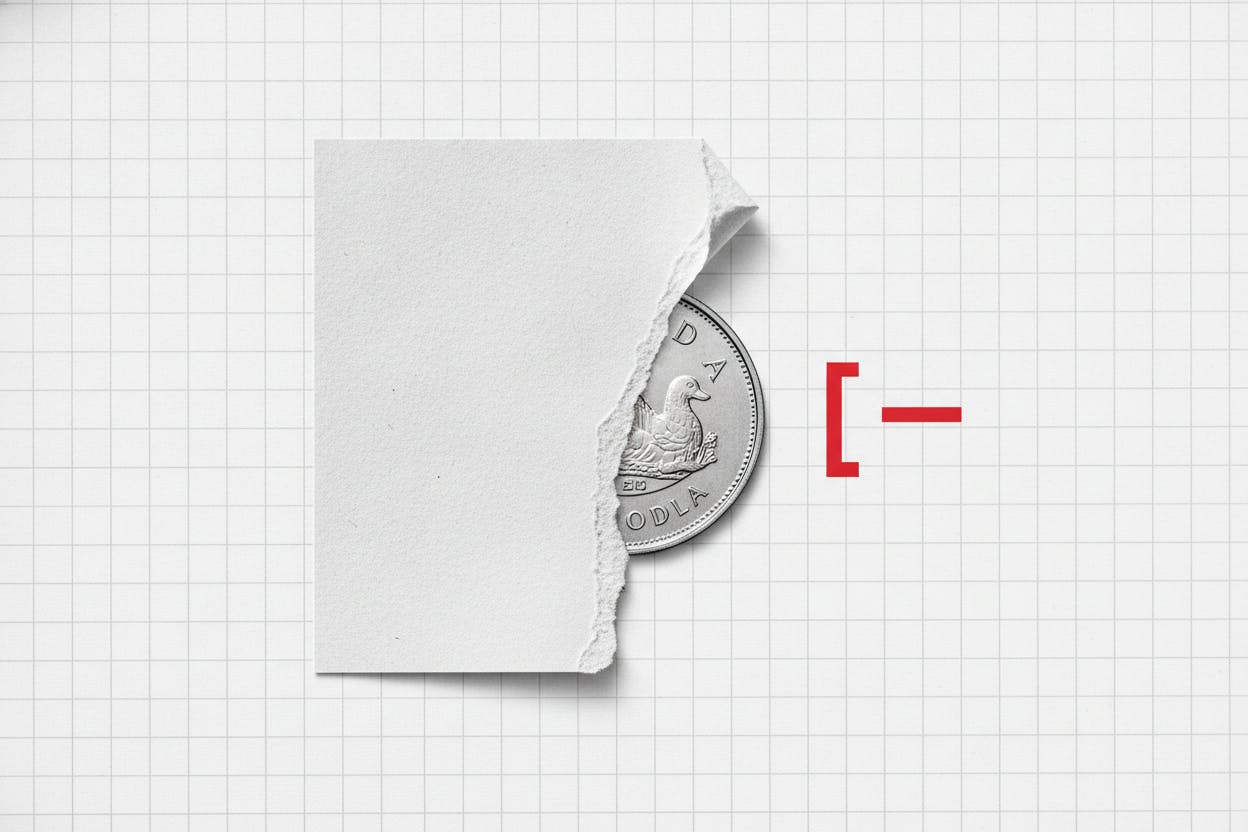
Canada's dollar, known as the loonie, got a quick but modest boost after the United States delayed planned 50% tariffs on some Canadian goods for three days. The postponement, announced late Tuesday, gave negotiators more time to finalize details after reports of a tentative agreement between the two countries.
However, according to Commerzbank Research, the currency's reaction was far from exuberant. In a Wednesday note, the German bank said the relatively small move suggests traders are still not convinced that the deal will be completed smoothly or that the final terms will be as favorable to Canada as hoped.
What happened?
The US had threatened to impose 50% tariffs on certain Canadian products, a move that would have hit exporters and potentially strained the close economic relationship between the neighbors. The three-day pause provides a window for negotiators to work out remaining issues, but it also leaves businesses and investors in limbo.
For the loonie, the delay was a welcome reprieve. The currency had been under pressure in recent weeks due to tariff threats and broader market uncertainty. The brief rally reflects some relief, but the lack of a stronger move indicates that investors are not ready to celebrate.
Commerzbank's analysts pointed out that the modest response suggests the market is pricing in a significant chance that the deal could still fall apart, or that the final agreement might not be as beneficial for Canada as initially hoped.
Why the loonie matters
The loonie is more than just a currency—it's a barometer of Canada's economic health and its close ties to the US, its largest trading partner. When trade tensions rise, the loonie tends to weaken because investors worry about reduced demand for Canadian exports, particularly in sectors like energy, autos, and agriculture.
Tariffs can directly raise costs for Canadian producers, making their goods less competitive in the US market. That can hurt corporate profits, lead to job losses, and slow overall economic growth. For everyday Canadians, a weaker loonie also means imported goods become more expensive, which can feed into inflation.
The currency's recent performance has been closely watched. In a separate development, the loonie lagged its peers as oil prices cooled and tariff risks loomed, highlighting the multiple pressures facing the currency. More recently, the loonie hit a two-month high after Canada's July inflation rose to 3%, a sign that the Bank of Canada might need to keep interest rates higher for longer.
What investors are watching
The key question now is whether the US and Canada can turn this temporary pause into a permanent resolution. Investors will be looking for concrete signs of progress, such as a formal announcement or a signed agreement. Until then, the loonie is likely to remain sensitive to headlines from the negotiations.
Commerzbank's caution reflects a broader sentiment in the markets: tariffs have been used as a negotiating tool, and the outcome is far from certain. Even if a deal is reached, the details matter. If the final terms are less favorable than expected—for example, if they include quotas or other restrictions—the loonie could give back its gains.
For Canadian businesses, the uncertainty is costly. Companies that rely on cross-border trade may delay investment decisions or seek alternative suppliers, which can weigh on economic growth. The three-day pause offers a temporary reprieve, but it does not eliminate the underlying risk.
What it means for investors
For everyday investors, the loonie's movements can have a direct impact on portfolios. A weaker loonie can boost the returns of Canadian investors holding US stocks, but it can also increase the cost of imported goods and services. Conversely, a stronger loonie can help with purchasing power but may hurt exporters.
Investors with exposure to Canadian equities, particularly in sectors like manufacturing or natural resources, should keep an eye on trade developments. Tariffs can squeeze profit margins and reduce earnings, which could weigh on stock prices. The Toronto stock market recently slid as metals slumped and the loonie weakened, underscoring the link between trade sentiment and market performance.
It's also worth noting that the US tariff situation is part of a broader global trade picture. Other countries are also facing tariff threats, and the outcome of these negotiations could set a precedent. For now, the three-day pause is a positive sign, but it's far from a resolution.
As always, investors should focus on the long term and avoid making impulsive decisions based on short-term currency moves. Diversification and a clear understanding of your own risk tolerance are key. The loonie's fate is tied to the trade talks, but the broader economic fundamentals—such as inflation, interest rates, and employment—will ultimately drive the currency's direction.
In the coming days, watch for any official statements from both governments. A breakthrough could give the loonie a more sustained boost, while a breakdown could send it lower. Until then, the market's cautious stance seems justified.