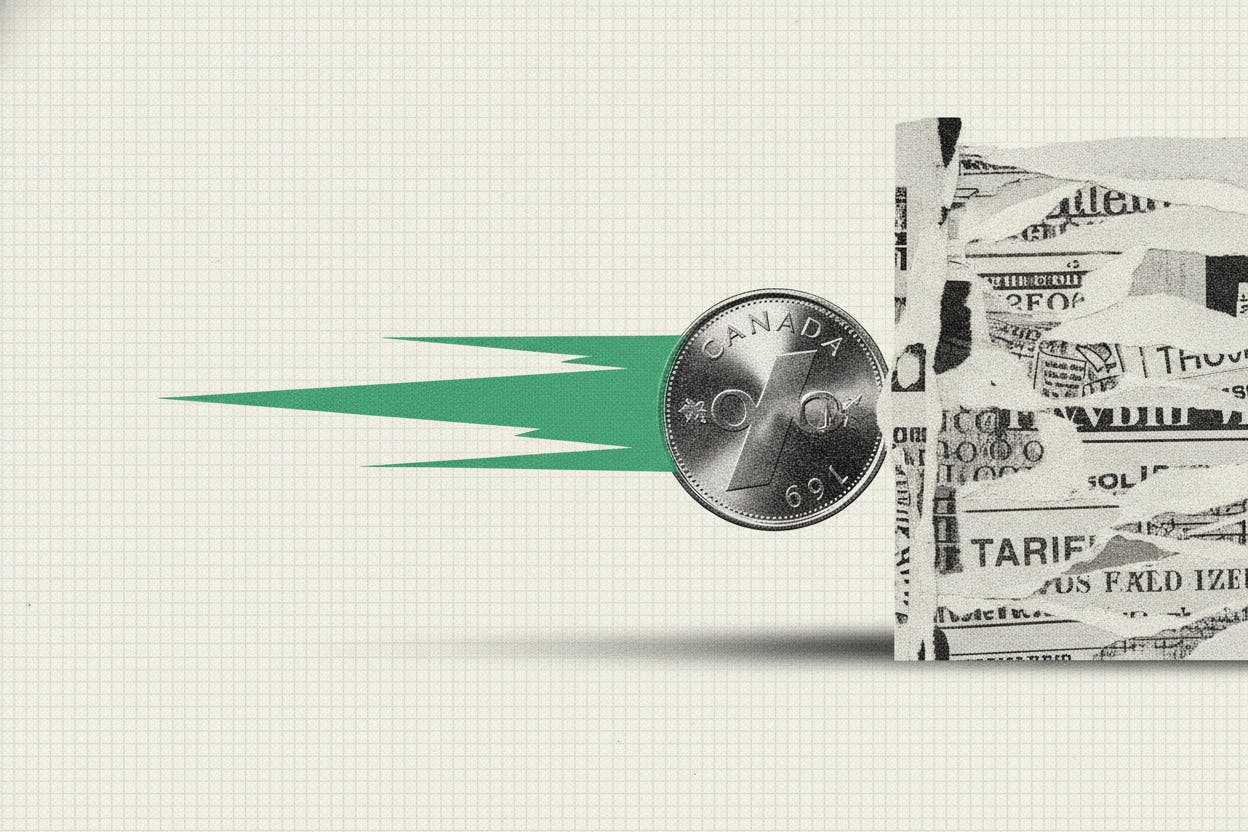
The Canadian dollar's August rally has hit a wall. After climbing from 1.4026 to 1.3897 against the US dollar, the loonie's momentum faded as US-Canada trade talks broke down, according to MUFG, a Japanese bank.
Currencies don't just move on growth and inflation—they also move on expectations. MUFG says traders had positioned for a breakthrough in negotiations, and when that optimism faded, so did demand for Canada's currency.
What happened
The US dollar fell against the Canadian dollar in August, a sign that investors were becoming more optimistic about Canada's economic prospects. But that optimism was short-lived. The breakdown in trade talks has introduced a concrete problem: the US has imposed a 50% tariff on $20 billion of Canadian imports, and Canada is retaliating "dollar for dollar."
MUFG notes that the immediate impact has been limited because the measures are fairly targeted. But the bigger picture is that trade tensions are back in focus, and that's a headwind for a currency that had been riding high on hopes of a resolution.
Why it matters for investors
For everyday investors, currency moves can have a ripple effect. A weaker Canadian dollar makes imported goods more expensive, which can feed into inflation. It also affects the returns on foreign investments when converted back to Canadian dollars.
For those holding US stocks or funds, a softer loonie can actually boost returns when measured in Canadian dollars. But for Canadians planning to travel or buy goods priced in US dollars, it means less purchasing power.
The trade dispute also adds uncertainty for businesses that rely on cross-border supply chains. Companies in sectors like manufacturing and agriculture, which are directly exposed to tariffs, could see their margins squeezed.
What to watch next
Investors will be watching for any signs of a thaw in trade relations, as well as economic data that could influence the Bank of Canada's next move. The cooling in Canada's factory growth in August, partly due to tariff concerns, is one indicator to keep an eye on.
Broader market sentiment also plays a role. The US dollar's recent strength ahead of key data and central bank meetings could put further pressure on the loonie.
For now, the trade wall is holding. Whether the loonie can break through will depend on whether negotiators can find common ground—and on how the global economy responds to the ongoing tariff standoff.



