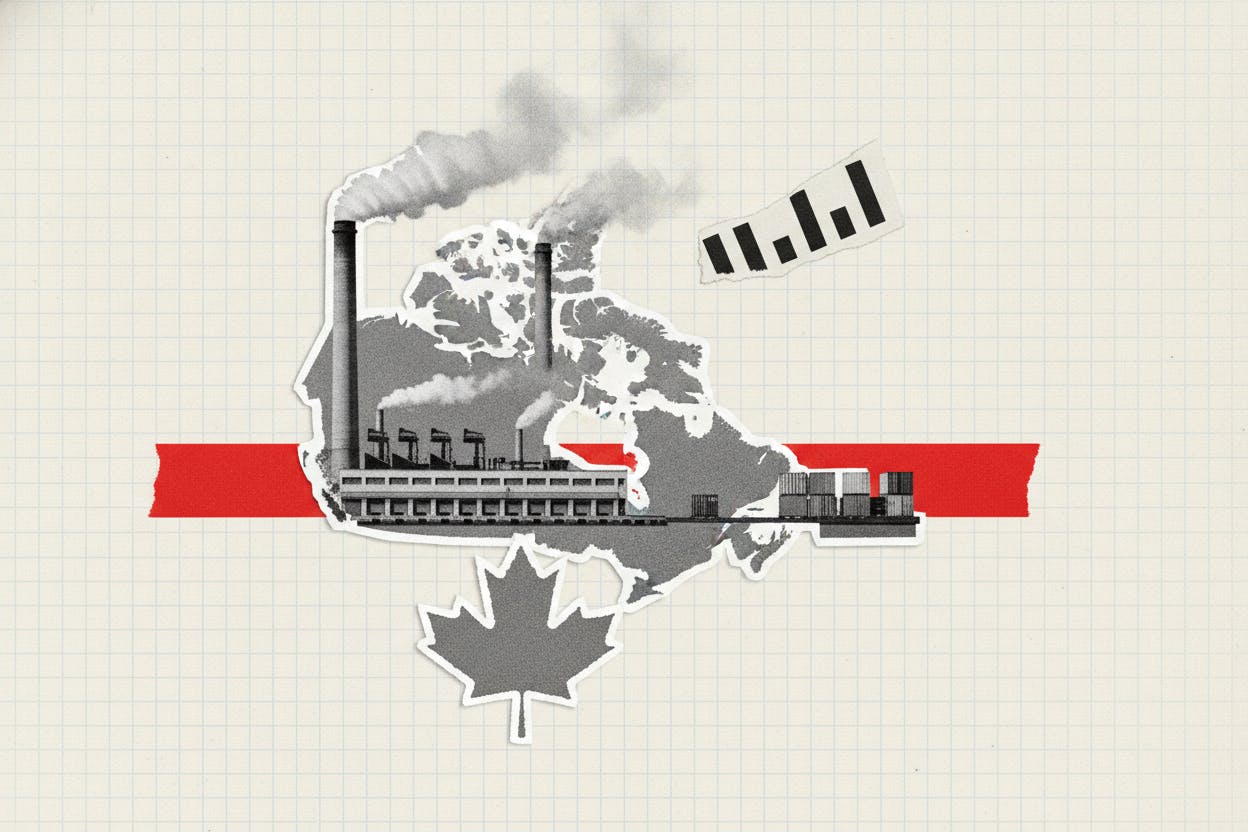
Canada's manufacturing sector kept growing in August, but the data may already be stale. S&P Global's Canada Manufacturing Purchasing Managers' Index (PMI) eased to 53.0 from 53.5 in July, marking a fifth consecutive month of expansion. The reading, released on September 1, came just days after the United States imposed fresh 50% tariffs on $20 billion worth of Canadian imports on August 22.
The PMI is a monthly survey of purchasing managers at factories across the country. A reading above 50 signals that more firms are expanding than contracting, so 53.0 still points to solid growth—just slightly slower than the month before. The index is closely watched by investors as a real-time gauge of industrial health.
What the details show
Beneath the headline, the picture was mixed but generally positive. Output rose to 52.8, and employment climbed to 52.0, suggesting that factories were still adding work and hiring as the month drew to a close. That's a sign that the expansion had momentum even as the pace cooled.
However, the timing of the survey matters. S&P Global's Paul Smith noted that most responses were collected before US-Canada trade talks collapsed and the new tariffs were announced. That means the August PMI likely captures a world before the latest trade shock—and the September reading could look very different.
This is a common challenge with economic data: by the time it's published, the situation may have moved on. For investors, the key question is whether the tariff hit will reverse the recent gains in output and hiring.
The tariff cloud
The US tariffs, announced on August 22, target $20 billion of Canadian goods—a significant chunk of the bilateral trade relationship. The move came after negotiations over trade terms broke down, raising the risk of a broader trade conflict between the two neighbors.
For Canadian manufacturers, the tariffs could raise costs, disrupt supply chains, and reduce demand from the US, which is by far Canada's largest trading partner. Companies that export heavily to the US are likely to feel the most pain, while those focused on domestic demand may be more insulated.
The situation echoes similar trade tensions seen in other parts of the world. For instance, Germany's factory sector has been dealing with its own export challenges, and China's factories have seen export orders surge despite global headwinds. Each country's experience highlights how trade policy can quickly shift the outlook for manufacturers.
What it means for investors
For everyday investors, the PMI is a useful barometer for the broader economy. A sustained slowdown in manufacturing could weigh on corporate earnings, particularly for companies in industrials, materials, and transportation. It could also influence the Bank of Canada's interest rate decisions, as weaker growth might prompt the central bank to cut rates to support the economy.
But it's important not to overreact to a single month's data. The August reading still shows expansion, and the employment component suggests confidence among producers. The real test will come in the next few months, as the impact of the tariffs filters through.
Investors should also watch how other economies are faring. For example, Malaysia's factory growth has cooled to near-stall, while South Africa's factory slump has deepened. These divergent trends underscore that global manufacturing is facing uneven pressures, from trade disputes to supply chain disruptions.
For now, Canadian investors should keep an eye on trade headlines and the next PMI release. If the September reading drops below 50, that would signal contraction and could be a red flag for the economy. Until then, the August data offers a cautiously optimistic snapshot—one that may already be out of date.