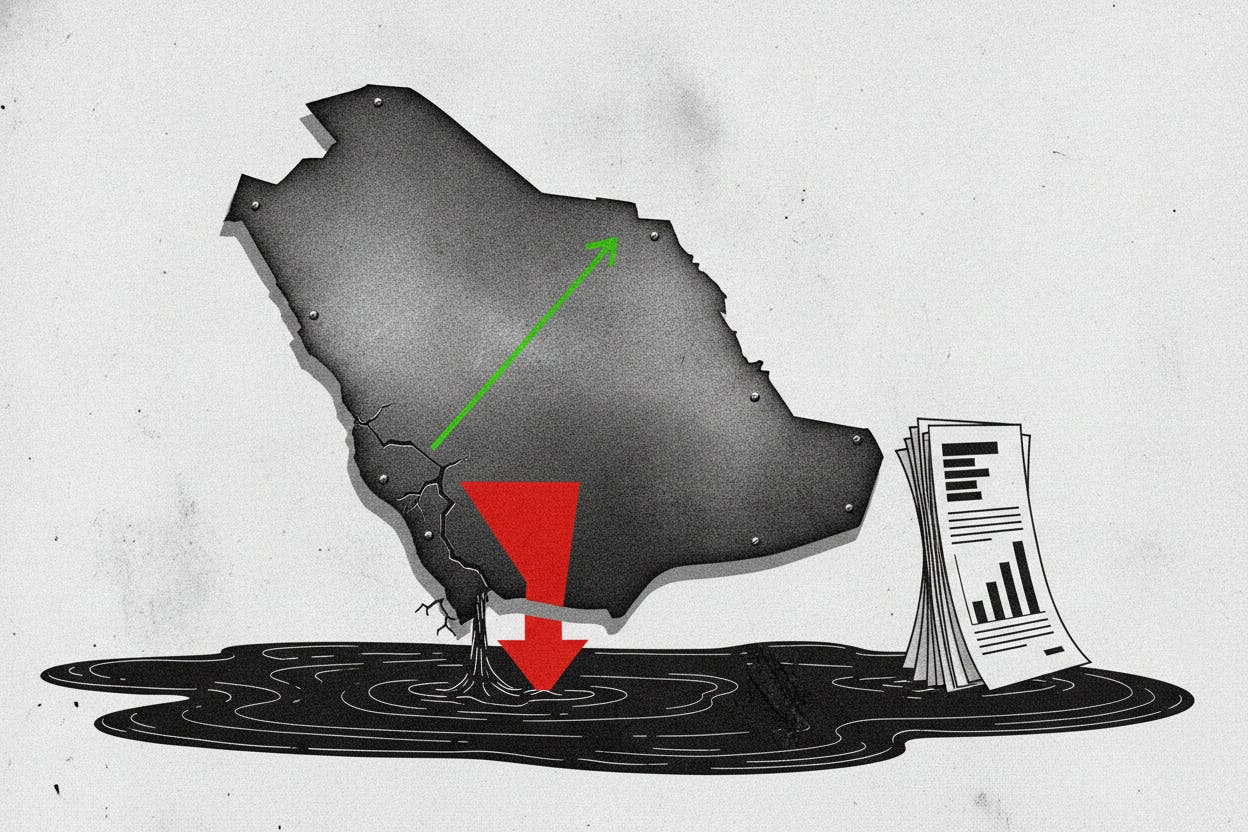
Saudi Arabia's economy contracted in the second quarter, as a sharp reduction in crude oil output outweighed modest gains in other sectors, according to final data released by the government's statistics agency.
Real gross domestic product fell 4.7% year over year in the April-to-June period, the General Authority for Statistics reported. That was slightly better than an earlier preliminary estimate, but it marked a clear slowdown from the previous quarter, when the economy had grown.
Oil output cuts hit hard
The main drag was the oil sector. Oil activities plunged 24.8% compared with the same period a year earlier, shaving 5.4 percentage points off headline growth. The decline reflects Saudi Arabia's ongoing production cuts, part of a broader effort by OPEC+ to support global crude prices.
For everyday investors, this is a reminder of how heavily the kingdom's fortunes still depend on oil, despite years of diversification efforts. When Riyadh trims output, it directly hits government revenues and overall economic activity.
Non-oil growth disappoints
Outside the oil patch, growth was tepid. Non-oil activities expanded just 0.9% year over year, as did government activities. Some services segments, such as community, social, and personal services, continued to grow, but the overall picture was one of stagnation rather than the robust expansion the kingdom has been aiming for.
The weak non-oil numbers are notable because Saudi Arabia has been pouring billions into projects like NEOM and other mega-developments as part of its Vision 2030 plan to wean the economy off hydrocarbons. So far, the payoff in terms of broad-based growth has been limited.
What it means for investors
For investors with exposure to Saudi stocks or funds, the data underscores the risks of a concentrated oil-dependent economy. When oil prices soften or production is cut, the ripple effects are felt across the entire market.
However, there are pockets of resilience. The Saudi stock market has shown some strength recently, partly on hopes that non-oil growth will pick up. But the latest figures suggest those hopes are still a work in progress.
Investors should also keep an eye on global oil demand. If demand weakens further, Saudi Arabia may need to extend or deepen production cuts, which would put more pressure on GDP. Conversely, if prices rise enough, the kingdom could ease cuts and boost output, giving the economy a lift.
Broader context
Saudi Arabia is not alone in facing economic headwinds. Other oil-dependent economies have also struggled with output cuts and volatile prices. For instance, South Africa's economy contracted recently as geopolitical tensions affected demand.
Meanwhile, the global energy market remains sensitive to supply disruptions. Oil prices can spike on geopolitical events, which can be a double-edged sword for Saudi Arabia: higher prices help revenues, but they also encourage more production from rivals and can dampen global demand.
For now, the key question for investors is whether Saudi Arabia can accelerate its non-oil growth. The government has set ambitious targets, but the latest data suggest the transition is slower than hoped. As always, diversification takes time, and the kingdom's heavy reliance on oil remains a central risk for anyone with money in the region.