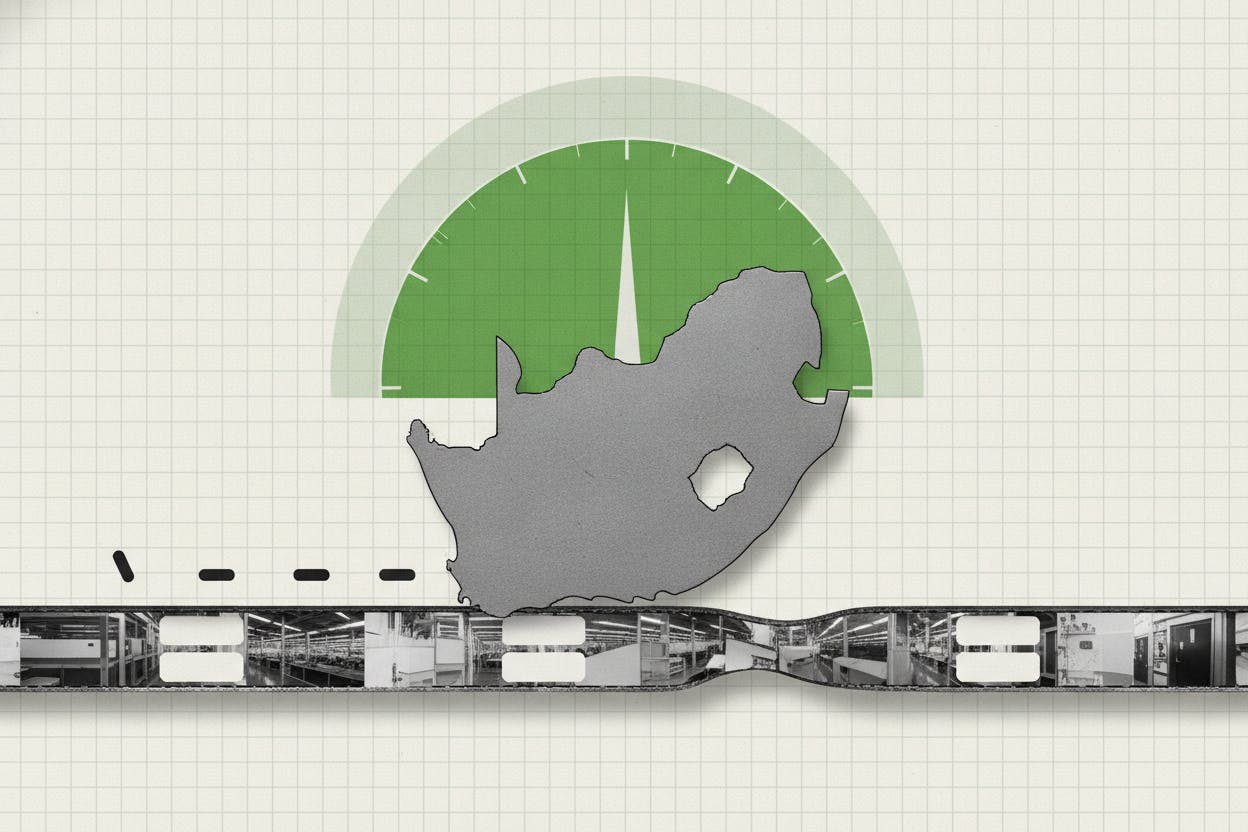
South Africa's factory sector had another tough month in August, with a key survey showing activity contracting at a faster pace. Absa's purchasing managers' index (PMI) fell to 45.8 from 46.8 in July, a reading that points to a continued downturn in manufacturing.
A PMI is a monthly survey of purchasing managers at factories. A reading above 50 signals expansion, while anything below 50 indicates contraction. So at 45.8, the sector is clearly in negative territory, and the drop suggests the weakness that began earlier in the year is persisting into the second half.
What's behind the decline?
The details of the survey were even more downbeat. The business-activity gauge tumbled to 40.2, a level that indicates a sharp contraction in output. New sales also weakened, meaning demand from both domestic and international customers is not picking up.
This is not an isolated problem. Across the globe, manufacturers are facing similar headwinds. In Europe, German manufacturing showed surprising strength in August, but other economies are struggling. Poland's factory slump deepened as its PMI fell to 48.3, and Greece's expansion is an exception rather than the rule. In Asia, China's factory activity picked up on the back of export orders, but South Korea's growth cooled.
For South Africa, the manufacturing sector is a crucial part of the economy, employing hundreds of thousands of people and contributing significantly to GDP. A prolonged contraction can weigh on economic growth, tax revenues, and job creation.
A glimmer of optimism
Despite the grim headline numbers, there is a small silver lining. The survey's six-month outlook index climbed back above 50, meaning manufacturers themselves are feeling more optimistic about the next half-year. This could reflect hopes for lower interest rates, improved energy supply, or a pick-up in global demand.
However, optimism alone doesn't pay the bills. The gap between expectations and reality is often wide, and the current data suggests that any recovery is still a ways off.
What it means for investors
For everyday investors, this report is a reminder that South Africa's economy is still struggling to gain momentum. The manufacturing weakness could translate into softer corporate earnings for companies with heavy exposure to the domestic industrial sector, such as those in construction, engineering, and consumer goods.
It also has implications for the rand. A weak factory sector can reduce foreign investor confidence, putting pressure on the currency. The rand had steadied ahead of this data, but the disappointing numbers could renew downward pressure.
On the positive side, a weak economy might prompt the South African Reserve Bank to consider cutting interest rates sooner rather than later. Lower rates would reduce borrowing costs for businesses and consumers, potentially giving the economy a much-needed boost. But that is a double-edged sword: rate cuts could also weaken the rand further and fuel inflation.
For now, the message is clear: South Africa's factories are in a rough patch, and the road to recovery looks bumpy. Investors should keep an eye on upcoming economic data, including inflation and employment figures, to gauge whether the pessimism in the factory sector is spreading to the broader economy.