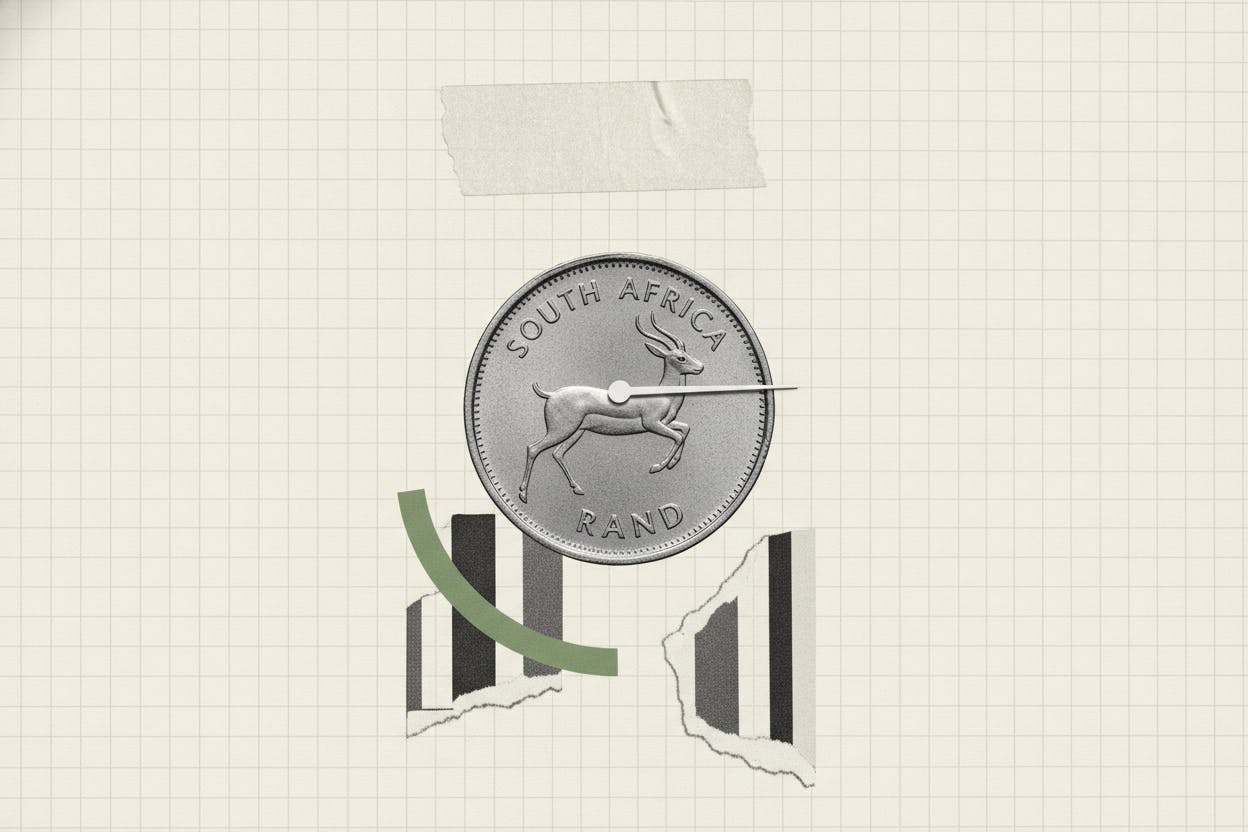
South Africa's rand held steady early on Tuesday, with investors holding off on big bets ahead of two key data releases that could signal the health of the country's manufacturing sector and consumer demand.
At 0545 GMT, the rand was trading at 16.1008 per US dollar, barely changed from its previous close of 16.1049. The benchmark 2035 government bond yield also sat at 8.63%, reflecting what traders call a classic “wait for the data” stance.
What's on the calendar
The first release is the Absa manufacturing purchasing managers' index (PMI), due at 0900 GMT. The PMI is a monthly survey of factory managers that asks about new orders, output, employment and inventories. A reading above 50 signals that the manufacturing sector is expanding, while a reading below 50 points to contraction.
Because the PMI comes out earlier than most official statistics, it is widely watched as an early gauge of whether factories are gaining or losing momentum. July's report already showed weaker demand, so investors will be looking to see if that trend continued into August.
The second release is vehicle sales figures for August. Car sales are considered a useful proxy for consumer confidence and spending on big-ticket items. When households feel secure in their jobs and finances, they are more likely to buy a new car; when they don't, they tend to delay such purchases.
Why it matters for the rand
The rand is highly sensitive to global and domestic economic signals. A stronger-than-expected PMI or vehicle sales number could boost the currency, as it would suggest the economy is holding up better than feared. Conversely, weak data could put downward pressure on the rand, especially if it raises expectations that the central bank might need to cut interest rates to support growth.
For everyday investors, the rand's value matters because it influences the price of imported goods, inflation, and the returns on local assets. A weaker rand tends to push up the cost of imports, which can feed into higher consumer prices. It also affects South African companies that earn revenue abroad, as their foreign earnings translate into more rand when the currency is soft.
Broader context
South Africa's economy has been grappling with slow growth, high unemployment and persistent power supply problems. The manufacturing sector, which accounts for a significant share of the country's output, has been under pressure from these headwinds as well as from global factors like supply chain disruptions and fluctuating commodity prices.
The data comes at a time when global markets are also watching the path of interest rates in major economies. The US Federal Reserve's decisions on rates have a direct impact on emerging market currencies like the rand, as higher US rates tend to draw capital away from riskier assets.
Investors will also be keeping an eye on oil prices, which have been a source of volatility for many emerging markets. Higher oil prices can worsen a country's trade balance and put additional pressure on its currency. For a sense of how these forces are playing out elsewhere, see our coverage of oil above $90 and rising yields hitting Southeast Asian stocks.
What to watch next
Beyond the PMI and vehicle sales, investors will be looking ahead to the South African Reserve Bank's next policy meeting. The central bank has been in a tightening cycle to combat inflation, but recent data showing weaker demand could prompt it to pause or even reverse course.
For now, the market seems to be in a holding pattern, waiting for clearer signals on the direction of the economy. The rand's stability suggests that traders are not expecting any major surprises, but the data could easily shift sentiment.
As always, it's important for investors to remember that currencies can be volatile and that short-term moves are often driven by speculation. For those with a longer-term horizon, the focus should be on the underlying fundamentals of the economy and the companies they invest in.
For more on how manufacturing trends are shaping up in other parts of the world, you can read about China's factory activity picking up in August and Japan's factory growth accelerating on AI and chip demand.