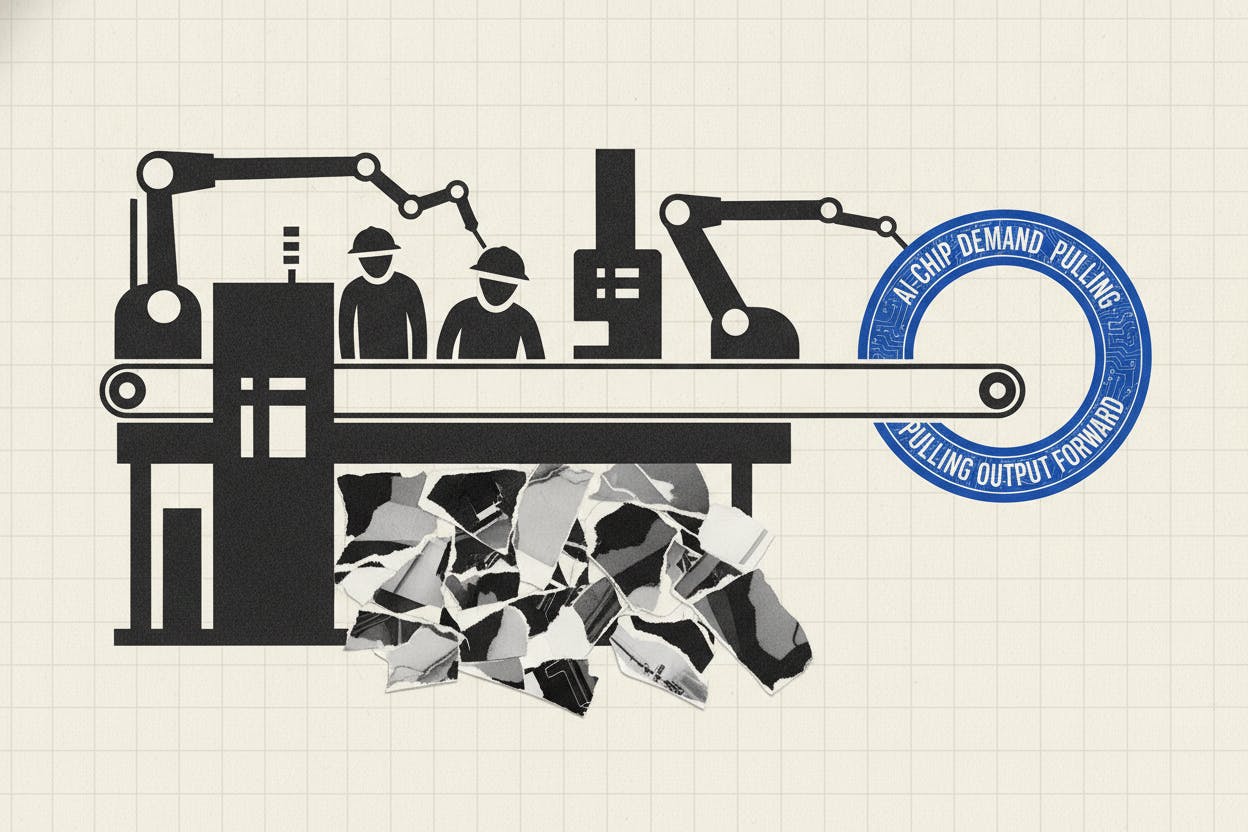
Japan's manufacturing sector continued its strong run in August, with a key business survey showing the fastest growth in new orders and exports in over six years. The pickup is being driven by demand for semiconductors and equipment linked to artificial intelligence, a sign that the global AI boom is filtering through to the world's fourth-largest economy.
The au Jibun Bank Japan Manufacturing Purchasing Managers' Index (PMI), compiled by S&P Global, rose to 54.9 in August from 54.5 in July, according to a survey reported by Reuters. Any reading above 50 signals expansion, and this marked the eighth consecutive month in that zone. The headline number was solid, but the details were the real story.
Exports surge on AI and chip demand
Export orders grew at their fastest pace since early 2018, with respondents pointing to stronger demand from North America and parts of Asia. The report highlighted that the growth was particularly linked to semiconductors and AI-related equipment, which have become a bright spot for Japanese manufacturers.
This is not an isolated trend. Across the region, South Korea's factory growth cooled in August, but its export orders also surged, underscoring how deeply the AI supply chain is boosting Asian exporters. Japan, with its strength in semiconductor materials and precision equipment, is a key beneficiary.
The survey also showed that unfinished work continued to pile up, a sign that order books are filling faster than factories can clear them. That backlog often points to sustained production in the months ahead, as companies work through existing orders.
What's driving the AI demand?
Artificial intelligence requires vast computing power, which in turn demands advanced chips, memory, and cooling systems. Japanese firms are well-positioned in several parts of this supply chain, from silicon wafers to chip-making equipment. The global push to build AI data centers has created a surge in demand for these components.
This is part of a broader pattern. In the United States, HPE's AI server demand is outpacing supply, and analysts see similar strength in storage and networking gear. The ripple effects are being felt across the globe, and Japan's factories are catching the wave.
What it means for investors
For everyday investors, this data point is more than just a number. A strong manufacturing sector in Japan is a positive signal for the global economy, especially if it reflects durable demand rather than a one-off boost. It also suggests that companies tied to the AI supply chain, not just in Japan but globally, may continue to see robust order books.
However, it's important to keep perspective. The PMI is a survey of business sentiment, not a hard measure of output. It can be volatile, and one month's reading doesn't guarantee a trend. Still, eight straight months of expansion, with accelerating export orders, is a meaningful run.
For investors with exposure to Japanese equities or global tech funds, this is a supportive backdrop. But it's also worth noting that the AI trade has been a major driver of market gains over the past year, and valuations in some areas are stretched. As always, diversification and a long-term view are key.
Risks and watch points
While the outlook is positive, there are risks. The global economy faces headwinds from high interest rates, and any slowdown in AI spending could quickly reverse the trend. Japan's own economy has been fragile, with weak consumer spending and a struggling yen. A factory recovery alone may not be enough to lift the broader economy.
Investors will be watching upcoming data, including industrial production and export figures, to see if the PMI strength translates into actual output. They'll also be keeping an eye on central bank policy, both in Japan and the U.S., as rate decisions can affect currency markets and corporate profits.
In the meantime, the message from Japan's factories is clear: AI demand is real, and it's showing up in order books. For investors, that's a signal worth noting, even if it doesn't call for any immediate action.