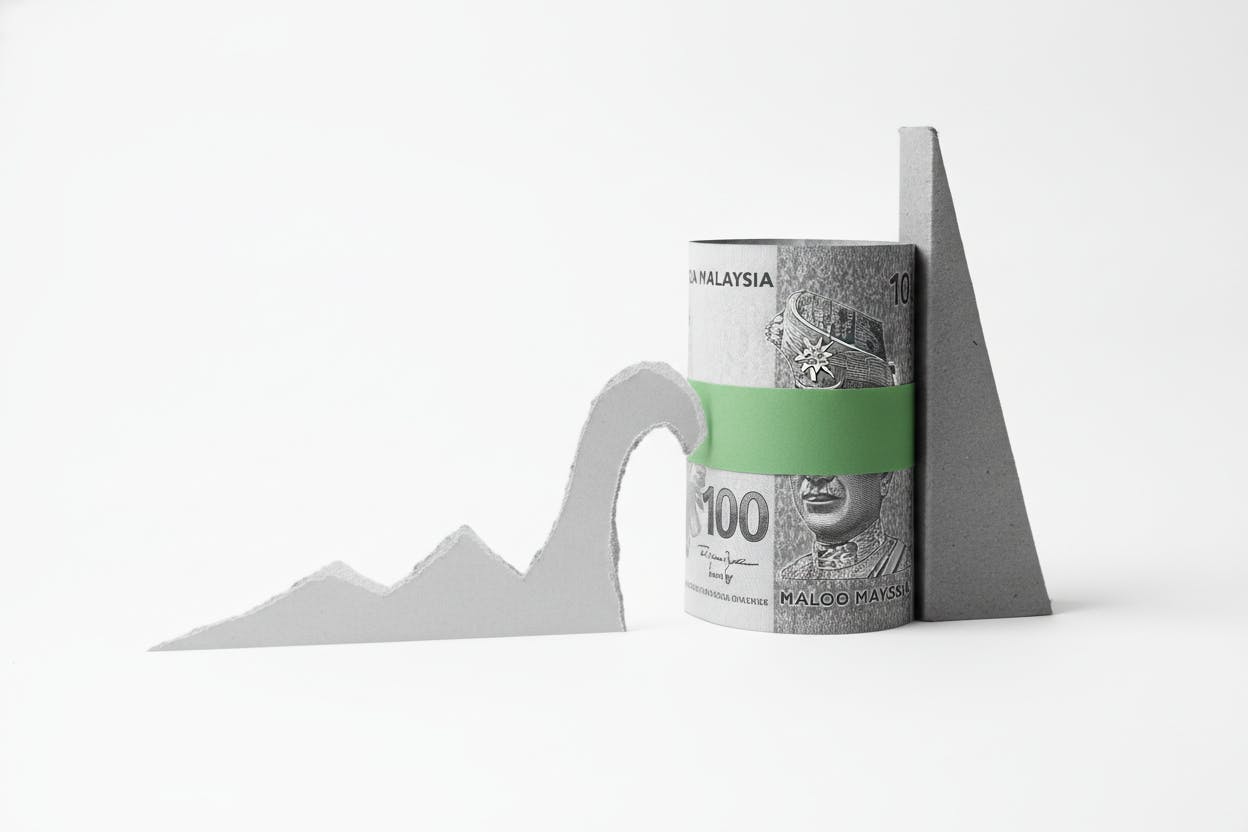
Malaysia's central bank is projecting the economy will maintain steady growth of 4% to 5% in 2026, even as rising energy prices linked to the conflict in the Middle East threaten to push up inflation. The outlook, delivered at the Sasana Symposium 2026 by Bank Negara Malaysia (BNM), signals confidence that the country's recent economic momentum can be sustained.
Strong 2025 sets the stage
Malaysia's economy grew 5.2% in 2025, a solid performance that BNM Governor Datuk Seri Abdul Rasheed Ghaffour attributed to what he called "carefully designed and sequenced reforms." Those reforms helped keep inflation contained last year and supported the ringgit, which emerged as the best-performing currency in the region.
The central bank's 2026 forecast of 4%-5% growth is slightly below last year's pace but still represents a healthy expansion for a developing economy. For context, many developed economies are struggling to grow much above 2%.
What's driving the outlook
BNM's confidence rests on several pillars. First, domestic demand remains resilient, supported by consumer spending and investment. Second, the reforms mentioned by the governor — which include subsidy rationalization and fiscal consolidation — are designed to strengthen the economy's fundamentals over the long term.
The ringgit's strength is particularly noteworthy. A strong currency helps keep import costs down, which in turn helps contain inflation. It also makes Malaysian assets more attractive to foreign investors, potentially drawing capital inflows that further support the economy.
However, the central bank acknowledged a key risk: higher energy prices stemming from the ongoing war in the Middle East. Malaysia is a net energy exporter, so higher oil and gas prices can boost government revenues and corporate profits in the energy sector. But they also raise costs for consumers and businesses, feeding into broader inflation.
Inflation and the ringgit in focus
Inflation remained well-behaved in 2025, thanks in part to the ringgit's strength and the government's subsidy reforms, which were phased in gradually to avoid shocking the system. BNM's playbook for 2026 appears to be more of the same: maintain policy discipline, keep the currency stable, and manage inflation expectations.
The central bank's ability to keep inflation in check is crucial for everyday Malaysians. High inflation erodes purchasing power, especially for those on fixed incomes. A stable ringgit helps by making imported goods — from food to electronics — more affordable.
What it means for investors
For investors, BNM's steady outlook is a positive signal. A stable, growing economy with contained inflation is generally supportive for both stocks and bonds. Malaysian equities could benefit from continued domestic demand and foreign investor interest, particularly if the ringgit remains strong.
The energy sector is a wild card. If Middle East tensions push oil prices significantly higher, Malaysia's energy companies could see a boost in profits. But the broader economy could feel the pinch from higher costs, potentially weighing on consumer stocks and interest-rate-sensitive sectors.
Investors should also watch how the central bank manages monetary policy. If inflation does pick up, BNM may need to raise interest rates, which would cool growth and could pressure stock valuations. For now, the central bank seems comfortable with the current trajectory.
For context, other central banks in the region are facing similar challenges. The loonie has held steady as oil price swings affect Canada's economy, while Quebec's economy has stalled under the weight of US tariff threats. Malaysia's relatively strong position stands out.
The bottom line
Bank Negara Malaysia is signaling that the country's economic reforms are paying off and that the foundation is in place for another year of solid growth. The 4%-5% target is realistic, though not guaranteed. Geopolitical risks, particularly around energy prices, remain the biggest threat to the outlook.
For everyday investors, the key takeaway is that Malaysia's economy is on a relatively stable footing compared to many peers. That stability can provide a supportive backdrop for long-term investment, though short-term volatility from global events is always possible.