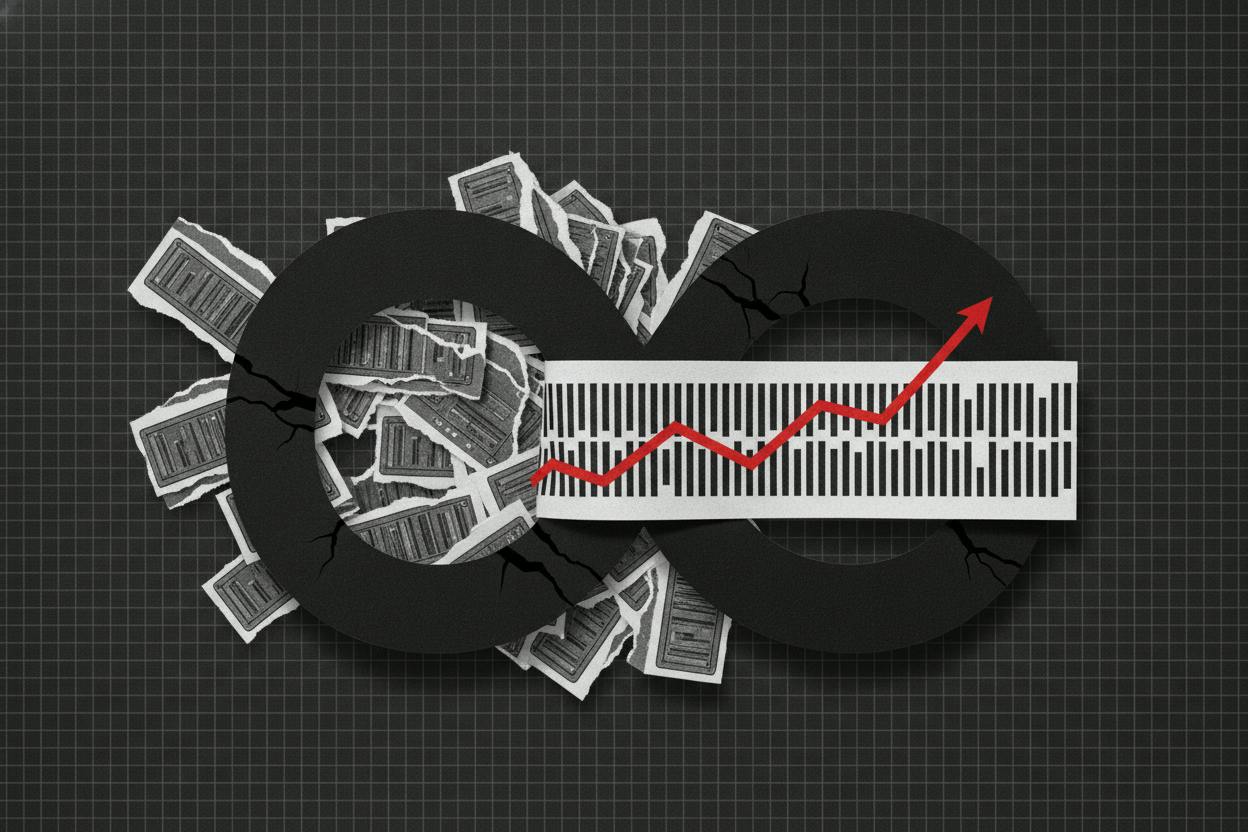
Meta Platforms, the parent of Facebook and Instagram, rattled credit markets on Thursday after lifting its annual capital expenditure forecast and posting its first quarterly free cash flow deficit in over a decade. The cost to insure the company's debt against default jumped to an all-time high, and its stock slid 6.1%.
The social media giant raised the low end of its 2025 capital expenditure guidance to $135–145 billion, up from a previous $130–145 billion, according to Reuters. That signals an even more aggressive buildout of artificial intelligence infrastructure, including data centers and computing power. But the announcement landed alongside a third-quarter free cash flow deficit of $2.12 billion—the company's first cash-flow-negative quarter since 2012.
Free cash flow, the money left after operating expenses and capital spending, is a key measure of a company's financial flexibility. A deficit means Meta is spending more than it generates, which raises questions about how it will fund future investments without tapping debt markets.
What the credit market is telling us
The clearest stress signal came from credit default swaps (CDS), which are essentially insurance contracts that pay out if a borrower defaults. Meta's five-year CDS widened by 7.6 basis points to a record 114.79 basis points, according to Markit data cited by Reuters. A basis point is one-hundredth of a percentage point, so this "insurance premium" now costs more than ever to protect against a Meta default.
When CDS costs rise, bond investors typically demand a higher credit spread—the extra yield over safer government bonds—to lend to the company. That means if Meta needs to issue new debt or refinance existing bonds, it could face higher interest costs.
This isn't just a derivatives sideshow. CDS pricing is a real-time read on what bond investors think it should cost to take on Meta's credit risk. At a record level, that gauge suggests the market wants more compensation to fund the company, which can translate into higher borrowing costs.
AI buildout premium spreading
The pressure isn't unique to Meta. Reuters noted similar strain at other large tech issuers: Oracle's five-year CDS is near a record, and Amazon's is close to its highest level since March 2020. This suggests credit markets are reassessing debt-heavy AI expansion more broadly.
Investors have grown increasingly wary of the massive capital spending required for AI, which may not deliver returns for years. The concern is that companies are committing billions to data centers and chips without clear near-term profitability. As Meta's AI spending warning earlier this year showed, even a hint of overinvestment can spook markets.
Other companies are feeling the squeeze too. Tesla's AI spending has pressured its margins, and its operating expenses climbed 39% as it invests heavily in AI. Meanwhile, some firms are tying executive bonuses to capital spending discipline, as Micron has done, to reassure investors.
What it means for investors
For everyday investors, the key takeaway is that credit markets are becoming more selective about funding AI buildouts. Meta's record CDS level shows that even a company with a strong balance sheet and dominant social media franchises faces higher perceived risk when it leans heavily into capital-intensive projects.
This could have ripple effects. If large tech borrowers face higher credit costs, they may pass those costs on or slow spending. That could affect the broader tech sector, which has been a major driver of market gains. As Nasdaq futures slid on AI spending fears, the market is clearly watching this closely.
For bond investors, the message is to demand adequate compensation for AI-related credit risk. For equity investors, the focus should be on whether companies can generate enough cash flow to fund their AI ambitions without straining their balance sheets.
Meta's AI plans may still pay off, but the hurdle rate for debt-funded spending just rose at the same time its cash flow turned negative. And if Oracle and Amazon are seeing similar CDS strain, it hints that credit markets may start charging a higher "AI buildout premium" across large tech borrowers—not just the most leveraged players.
As the market digests this news, investors will likely watch for further updates on Meta's spending plans and cash flow, as well as any signs that other tech giants are facing similar credit pressure. The era of cheap money for AI may be ending, and that could reshape the investment landscape for years to come.