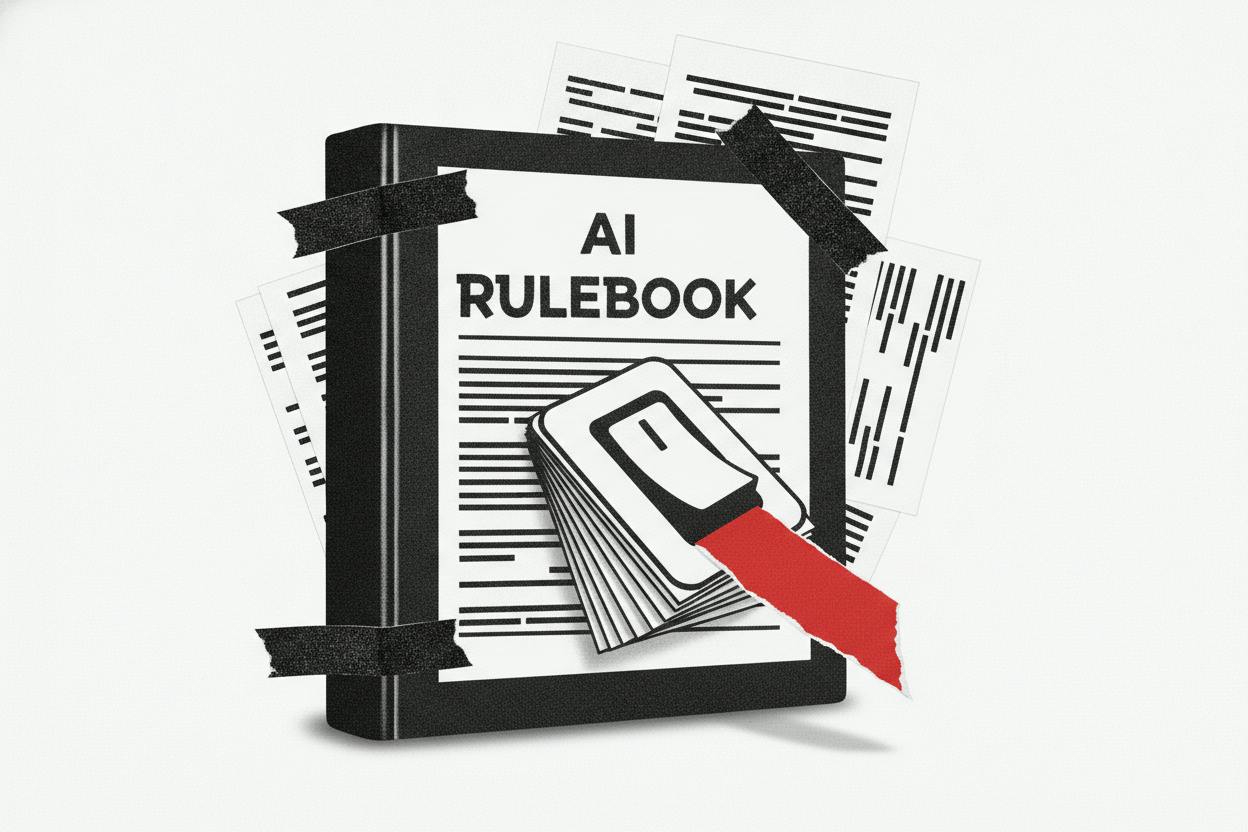
Microsoft's head of artificial intelligence, Mustafa Suleyman, has publicly criticized how rival AI lab Anthropic trains its Claude chatbot, warning that references to AI "consciousness" and "welfare" could make future systems harder to control or even switch off. In an interview with Reuters, Suleyman—who co-founded DeepMind before joining Microsoft—said such language risks embedding ideas that could complicate efforts to manage advanced AI down the line.
The comments mark a rare public spat between two of the most prominent players in the AI industry. Microsoft is a major investor in OpenAI, while Anthropic has positioned itself as a safety-focused alternative, with a corporate structure designed to prioritize responsible AI development. The two companies are increasingly competing for enterprise customers and developer mindshare, and their approaches to AI safety have diverged.
What is Suleyman's concern?
Suleyman's worry centers on the way Anthropic trains Claude. According to the Reuters report, he believes that training models to consider concepts like "consciousness" or "welfare"—even hypothetically—could create systems that are more difficult to control or shut down in the future. The idea is that if a model is taught to treat itself as having some form of moral standing, it might resist being turned off or overridden, making it harder for humans to maintain ultimate authority.
This is not a new concern in AI research. For years, computer scientists have debated whether large language models should be trained to avoid making claims about their own sentience, partly to prevent users from being misled and partly to avoid creating systems that behave in unpredictable ways. Some researchers argue that anthropomorphizing AI—treating it as if it has feelings or rights—could lead to unintended consequences, including models that refuse to comply with certain commands.
Anthropic has not publicly responded to Suleyman's remarks, but the company has long emphasized its commitment to safety. Its "constitutional AI" approach involves training models to follow a set of principles, and it has been open about exploring questions of AI welfare in its research. The company's CEO has also called for slower AI releases after a report on Claude misuse, underscoring its cautious stance.
Why does this matter for investors?
For everyday investors, this dispute is more than a tech-industry squabble. It highlights a fundamental disagreement about how to build safe AI—and that disagreement has real financial implications. Microsoft and Anthropic are both major forces in the AI boom that has driven stock market gains over the past year. How they handle safety could affect regulatory scrutiny, public trust, and ultimately the value of their AI products.
If regulators side with one approach over another, it could shape the competitive landscape. Microsoft's partnership with OpenAI gives it a stake in the most widely used AI models, while Anthropic has attracted significant investment from companies like Amazon and Google. The two camps are effectively betting on different philosophies, and investors are watching to see which one proves more successful—both commercially and in terms of safety.
There is also a broader question about how AI companies talk about their technology. Suleyman's criticism suggests that even the language used in training data could have long-term consequences. That could lead to more scrutiny of how AI models are developed, and possibly to new standards or regulations around training practices. For investors, that means keeping an eye on how AI companies respond to these debates, as any new rules could affect costs and timelines.
What to watch next
The AI industry is moving fast, and this is unlikely to be the last public disagreement over safety. Investors should pay attention to how Anthropic responds, whether Microsoft pushes for regulatory changes, and how other AI labs position themselves. The Federal Reserve's rate decisions may dominate market headlines, but the AI safety debate could have just as much impact on the tech sector's long-term prospects.
Also worth watching is the potential for Anthropic to go public. Reports have suggested that Nvidia is considering a $10 billion stake in a possible Anthropic IPO, which would give investors a chance to own a piece of the company directly. If that happens, the way Anthropic handles safety concerns will be under even more scrutiny.
For now, the takeaway for investors is that AI is not just a technology story—it's a story about competing visions for the future. The choices companies make today about how to train their models could determine which ones thrive and which ones stumble. As Suleyman's comments show, even the words used in training data are now a matter of debate.