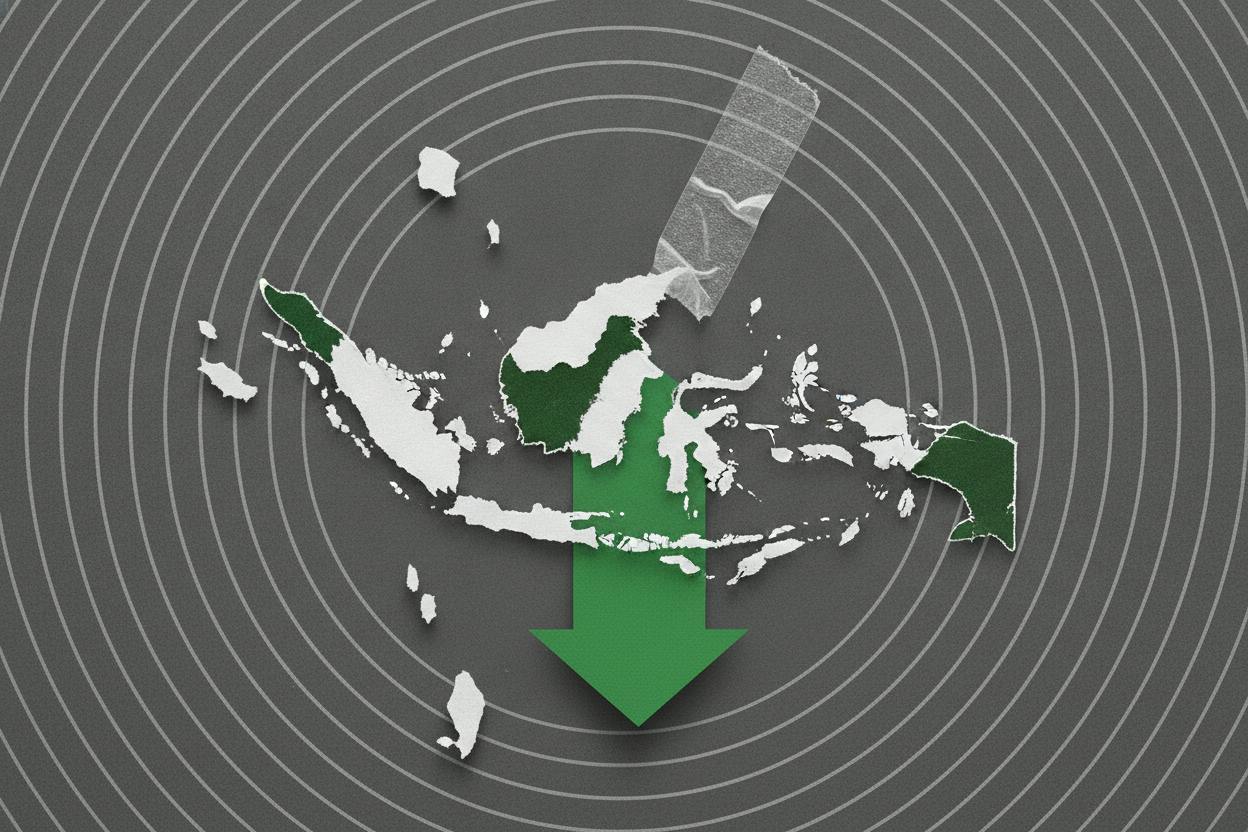
Indonesia's financial markets are facing a fresh wave of uncertainty after index provider MSCI said it may remove the country from its major emerging-market indexes next year. The warning landed just as Jakarta's benchmark stock index suffered its worst daily drop in nearly three decades, and it threatens to accelerate selling by foreign investors who track MSCI's widely used benchmarks.
For everyday investors, the news is a reminder that index inclusion matters. When a country is part of a major index like the MSCI Emerging Markets Index, global funds that mirror that index are effectively required to hold its stocks. If Indonesia is downgraded to "standalone" status, those funds would need to sell their Indonesian positions, potentially triggering billions of dollars in outflows.
What MSCI's warning means
MSCI said it may shift Indonesia to standalone status next year, a move that would effectively demote the country from the emerging-market tier it has occupied for decades. The decision is not final—MSCI typically consults with market participants and reviews feedback before making changes—but the warning alone has already rattled investors.
The timing is particularly painful. Indonesia's benchmark index just recorded its steepest one-day fall in nearly 30 years, a drop that has left many investors nursing losses. The rupiah, the country's currency, is also under pressure, and a potential MSCI downgrade could add to that strain by encouraging foreign investors to pull money out of both stocks and bonds.
This is not the first time MSCI has flagged such a move. Earlier this year, the index provider warned that both Turkey and Indonesia could lose their emerging-market status, as MSCI warned Turkey and Indonesia could lose emerging market status. The latest statement suggests Indonesia's case is still very much on the table.
Why index status matters
Index providers like MSCI, FTSE Russell, and S&P Dow Jones act as gatekeepers for global capital. Their indexes are used by pension funds, mutual funds, and exchange-traded funds (ETFs) that manage trillions of dollars. When a country is included in a major index, those funds must hold its securities to match the index's performance. When a country is removed, they must sell.
For Indonesia, a downgrade to standalone status would mean its stocks would no longer be part of the MSCI Emerging Markets Index, which is the benchmark for many global emerging-market funds. Instead, Indonesian shares would be tracked in a smaller, less-liquid "standalone" index that far fewer funds follow. The result is typically a wave of selling as index-tracking funds rebalance their portfolios.
Analysts estimate that billions of dollars could flow out of Indonesian markets if the downgrade goes through. That would put additional pressure on the rupiah, which has already been weakened by a strong US dollar and concerns about global trade. A weaker currency makes imports more expensive and can fuel inflation, which in turn can hurt domestic consumers and businesses.
What it means for investors
For investors who hold Indonesian stocks directly or through emerging-market funds, the MSCI warning is a signal to pay attention. Even if the downgrade does not happen, the uncertainty alone can weigh on prices. Index-tracking funds may start trimming their Indonesian positions in advance, and active managers may reduce exposure to avoid being caught in a potential sell-off.
The situation is also a reminder that emerging-market investing carries specific risks. Countries can be reclassified, currencies can swing, and political or economic shocks can hit suddenly. Diversification across countries and asset classes can help cushion the impact of any single market's troubles.
For those invested in broad emerging-market ETFs, the impact may be muted because Indonesia is a relatively small part of the overall index. But for investors with a heavier allocation to Indonesia, the potential for outflows and currency weakness is a real concern.
Broader market context
The MSCI warning comes amid a broader period of volatility in global markets. Investors have been rotating out of technology stocks and into energy, as tech ETFs slide again as investors rotate into energy. There are also growing worries about debt levels, particularly around artificial intelligence infrastructure, with AI-linked bonds sliding as investors question how the boom gets paid back.
These concerns have contributed to a risk-off mood in markets, which tends to hit emerging-market assets hardest. When global investors become cautious, they often pull money out of riskier markets like Indonesia and move it into safer havens like US Treasuries, which have seen strong demand from foreign buyers, as foreign investors boosted US Treasury holdings to $9.33 trillion in August.
For Indonesia, the combination of a domestic market slump, a weakening currency, and a potential MSCI downgrade creates a challenging environment. The government and central bank may need to step in with measures to stabilize the market and reassure investors, but the ultimate decision rests with MSCI.
Investors should watch for MSCI's final decision, which is expected next year. In the meantime, the warning itself is a reminder that index changes can have real financial consequences, and that even the largest markets are not immune to the whims of global capital flows.



